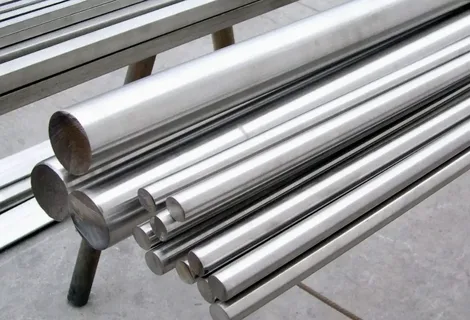
High Temperature Furnaces, Kilns & Reactors work with the usual steel grades being fully exploited after just a few months. The Stainless Steel 309 Round Bar retains its strength where conventional steels lose their form through scaling, distortion and cracking from constant heat exposure. The SS 309 is an austenitic alloy that has the right proportions of chromium and nickel to suit the rigorous requirements of high temperatures. That is why manufacturers looking for high temperature stainless steel 309 round bars look for it.
What Is Stainless Steel 309 Round Bar?
The chemical structure of SS 309 round bars contains about 22-24% chromium and 12-15% nickel, which varies from the conventional 304 and 316 series of metals. This combination of chromium and nickel creates an oxide film on its surface. The film is stable and does not degrade even above 1000°C temperature. Ductility and tensile strength of the metal are retained when subjected to many cycles of heating and cooling. SS 309 Round Bars possess weldability and machinability properties. Microstructure prevents the formation of grains under prolonged heat exposure. They are provided by the manufacturer in various diameters for fabrication of furnaces and structures.
Key Properties of 309 Stainless Steel Bars
Several characteristics make 309 stainless steel suitable for environments where lesser grades fail within a short service life.
Excellent High-Temperature Resistance
309 bars have been proven to be effective with both continuous and intermittent heating and withstand mechanical deformation at temperatures up to 1093°C. This type of steel will not break down or bend before time in environments with cyclical thermal treatment, where the equipment experiences heating and cooling due to shift work.
Superior Oxidation Resistance
The high concentration of chromium results in formation of a dense oxide scale layer that prevents further oxidation of the bar material. The ability to resist oxidation is maintained for long production runs of components operating in oxygen-containing atmospheres at high temperatures without re-coating.
Good Mechanical Strength
309 bars are able to carry loads at elevated temperatures above 800°C in the environment. Supports and fixtures made of 309 bars do not deform due to thermal expansion during the work at the plant.
Corrosion Resistance
In addition to heat resistance, 309 bars exhibit resistance to corrosion by moderately corrosive process gases and chemicals. Corrosion and oxidation resistance provides long service life of components in plants with combined heat and fume environments.
Good Fabrication and Weldability
309 bars are processed in workshops with the help of ordinary tools without any special equipment. Joints welded out of 309 bars have the same oxidation resistance of the base material.
Common Industrial Applications of SS 309 Round Bars
From furnace internals to refinery components, 309 stainless steel bars show up wherever heat resistance and structural reliability both matter.
Furnace and Kiln Equipment
Heating element supports and radiant tube hangers rely on 309 bars to retain their shape when exposed to direct flame. This grade is used for furnace door frames, muffle linings and burner mounts where the temperature regularly exceeds 900°C during continuous operation.
Heat Treatment Plants
Fixtures, jigs, and basket frames that carry components through annealing furnaces need a material that survives thousands of heating cycles. 309 bars hold dimensional accuracy across carburizing and tempering processes without warping or scaling failure.
Power Generation Industry
Boiler baffles, burner components, and high-temperature structural brackets inside power plants use 309 bars for their oxidation resistance. These parts sit close to combustion zones where flue gas temperatures stay elevated through continuous plant operation.
Petrochemical Industry
Reactor internals, catalyst support grids, and process equipment exposed to both heat and corrosive vapors use 309 bars in petrochemical units. The combination of thermal and chemical resistance reduces unplanned shutdowns for component replacement.
Cement Industry
309 bars are used in areas where the temperatures run continuously above 1000°C: kiln support rollers, thermal processing fixtures and high wear zones near the burning chamber. Cement kilns run 24 hours a day, so material that resists scaling can greatly reduce the number of maintenance shutdowns.
Oil and Gas Industry
Exhaust stack components, refinery heater tubes, and high-temperature flare system fittings use 309 bars for their resistance to thermal fatigue. Refinery furnaces cycle through startup and shutdown repeatedly, and 309 bars handle that cycling without surface degradation.
Advantages of SS 309 Round Bars in Industrial Use
Plants that switch to 309 bars for high-heat applications report fewer unplanned stoppages and lower replacement frequency across furnace and kiln components.
- 309 bars resist heat and oxidation even at temperatures that cause standard grades to scale within weeks.
- Components built from 309 bars run for years in furnace zones without structural failure or surface breakdown.
- Fewer component replacements translate directly into less unplanned downtime across continuous production lines.
- 309 bars hold mechanical properties through repeated thermal cycling without developing fatigue cracks at welds or joints.
- Continuous high-temperature operations, including kilns and boilers, run on 309 bars without intermediate cooling breaks for maintenance.
Factors to Consider When Selecting 309 Stainless Steel Bars
Choosing the right bar grade for a specific application depends on several operational and design variables.
Operating Temperature Range
Match the bar grade to the actual peak and average temperatures the component will face during operation. 309 bars suit continuous service up to 1093°C, but applications running hotter need a higher-alloy grade like 310.
Exposure to Oxidation and Scaling Conditions
Check whether the component sits in an oxygen-rich atmosphere or experiences cyclic oxidation. Repeated heating and cooling accelerate scale formation, so confirm the bar’s oxidation resistance matches the cycle frequency expected in service.
Mechanical Load Requirements
Calculate the load the component carries at operating temperature, not just at room temperature. 309 bars lose some strength as temperature rises, so size structural members with high-temperature strength data in mind.
Fabrication and Welding Needs
Confirm the fabrication shop has experience welding austenitic stainless grades, since improper technique reduces oxidation resistance at the joint. Post-weld cleaning removes heat tint that can otherwise become a corrosion starting point.
Industry Specific Compliance Standards
Power plants, petrochemical units, and pressure vessel fabricators often require material certifications and test reports specific to their sector. Confirm the supplier provides mill certificates and traceability documents matching the project’s compliance checklist before placing an order.
Conclusion
Stainless Steel 309 Round Bar still remains reliable for those who use machinery operating in very hot environments. The properties like oxidation resistance, structural stability, and weldability ensure less frequent malfunctions of the parts used in furnaces, cement industry, petrochemical industry, and power generation plants. The bars made of 309 stainless steel and the SS 309 round bars still show their worth in areas where heat, cycle, and corrosion are present.