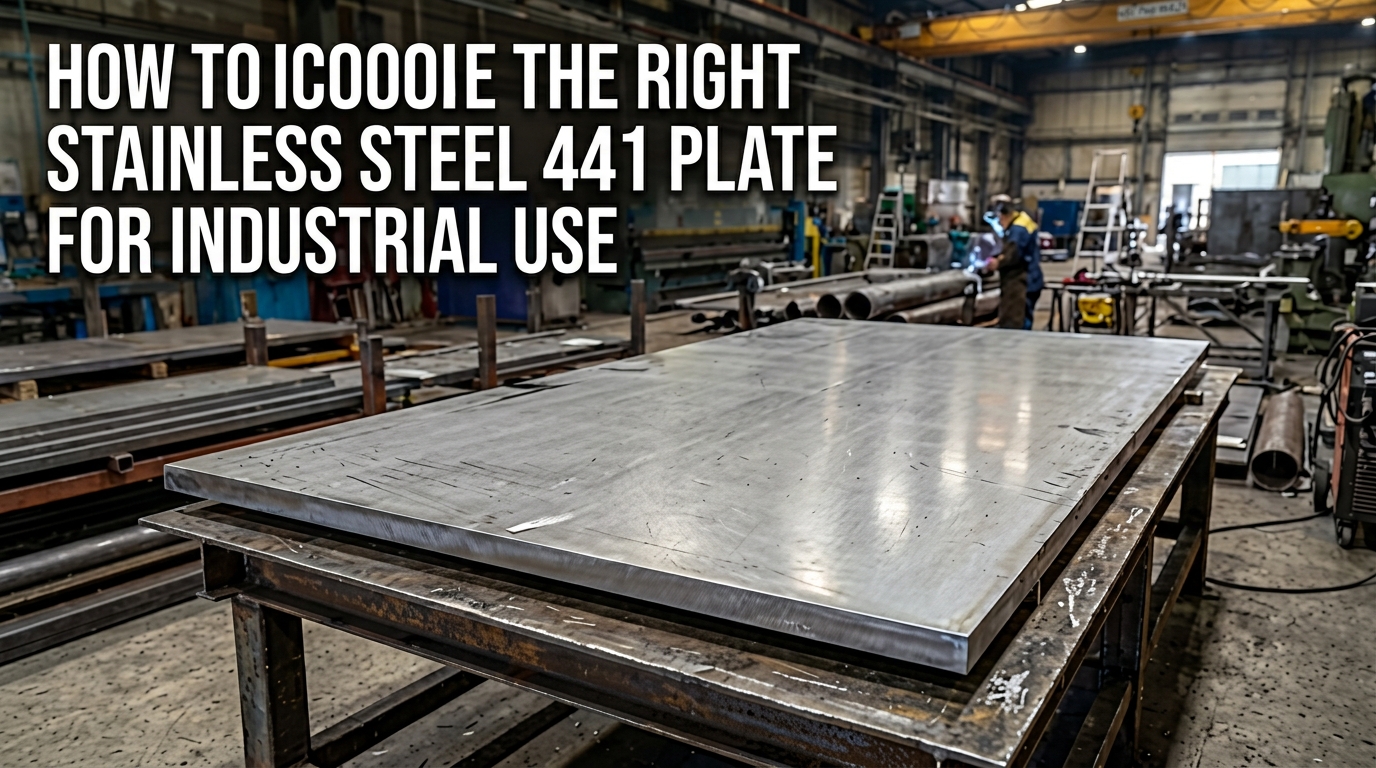
The wrong choice of plate grade costs you twice, once in the purchase and again in the replacement. 441 stainless steel Plate can withstand temperatures that cause 304 to oxide scale, yet at a price below most austenitics. This combination makes it a popular first option for exhaust systems, heat exchangers and high-temperature processing equipment. Choosing the ideal combination is not just about the pricing sheet but matching thickness, finish and mechanical qualities to real operational situations.
Understanding Stainless Steel 441 Plates
Grade 441 belongs to the ferritic family, built around chromium with titanium and niobium stabilization rather than the nickel content that defines austenitic grades. That stabilization controls grain growth during welding, a failure point in unstabilized ferritic steels. The result is a plate that resists oxidation up to 900°C continuous service while avoiding the cost premium nickel adds to 304 and 316.
Why Stainless Steel 441 Is Used in Industrial Applications
High-temperature resistance is the primary draw. SS 441 maintains structural stability where standard ferritic grades scale and crack under thermal cycling. Without nickel in the mix, 441 plates run cheaper than 304 or 316 at equivalent gauge, which is why fabricators specify it for high-volume, high-heat parts where austenitic pricing doesn’t make commercial sense.
Factors to Consider Before Selecting SS 441 Plates
Operating Temperature Requirements
Confirm the maximum sustained temperature and cycling frequency. SS 441 handles continuous service to roughly 900°C, but thermal cycling frequency affects fatigue life more than peak temperature alone.
Corrosion Exposure Conditions
Ferritic grades resist oxidation well but offer less chloride resistance than 316. If the application involves saltwater spray or de-icing salt, factor that in before finalizing the grade.
Fabrication and Welding Requirements
Titanium and niobium stabilization in 441 reduces sensitization risk during welding, but filler metal selection still matters. Match filler chemistry to the base metal to avoid weld-zone cracking.
Required Mechanical Strength
Ferritic 441 delivers solid yield strength at room temperature, but strength drops at elevated service temperatures. Check load requirements against the alloy’s high-temperature strength curve, not just room-temperature data.
Surface Finish Selection
Mill finish suits structural components where appearance doesn’t matter. Brushed or polished finishes cost more but matter in visible automotive trim and architectural applications.
Understanding Stainless Steel 441 Plate Sizes and Thickness Selection
Thickness Selection Based on Load
Thinner gauges suit exhaust components and heat shields where weight reduction matters more than load capacity. Thicker plates handle structural applications. Match thickness to the actual stress profile rather than defaulting to the thickest available option.
Standard Width and Length Considerations
Standard stainless steel 441 plate sizes typically run in coil-derived sheet widths and standard mill lengths, keeping unit costs lower than custom-cut stock. Check standard dimensions before specifying sizes that trigger minimum order quantities.
Custom Size Requirements
Custom cutting adds cost and lead time but eliminates secondary fabrication waste on large production runs. For low-volume projects, standard sizes with in-house trimming are usually the more economical path.
Common SS 441 Plate Uses Across Industries
SS 441 Plate uses span several sectors where heat resistance and cost efficiency intersect. Automotive manufacturers specify it for exhaust systems and catalytic converter housings exposed to continuous thermal cycling. 441 is used for parts that operate below the point at which austenitic grades are needed, as selected by heat exchanger fabricators. Industrial processing equipment, fabrication projects and structural applications in moderate-temperature environments round out the use cases where the budget rules out nickel-bearing alloys but the temperature rules out carbon steel.
Common Mistakes Buyers Should Avoid
Selecting plate thickness based on habit rather than load calculation wastes material budget. Ignoring the service environment, particularly chloride exposure, leads to premature corrosion in applications better suited to austenitic grades. Choosing a supplier purely on price, without checking certification and dimensional consistency, creates fabrication problems downstream. Overlooking weldability during the design phase forces costly rework once plates reach the shop floor.
How to Source Quality Stainless Steel 441 Plates
Material certifications should confirm chemical composition and mechanical test results for every batch. Standard compliance with ASTM A240 protects against off-spec material entering a critical application. Supplier reliability shows up in consistent lead times over repeated purchases. Dimensional consistency matters as much as alloy chemistry; warped or out-of-tolerance plates cause fitting problems during fabrication. Packaging that prevents surface damage in transit protects the finish buyers paid for. Goodluck Metal Corporation, along with other certified suppliers of ferritic stainless steel plates, maintains these standards across structural and high-temperature stainless steel plate orders.
Conclusion
The right SS 441 plate specification comes down to matching three variables: operating temperature, mechanical load, and budget. A plate sized for the wrong thermal cycle fails early; one oversized for the application wastes procurement budget. Confirm the operating environment, calculate the actual load requirement, and verify supplier certifications before placing the order. This sequence prevents the rework costs that come from guessing on specification.