Choosing between martensitic stainless steels often comes down to one wrong assumption: that all grades within the family perform similarly. SS 420 and SS 410 are placed in the same metallurgical category, yet their real-world behaviour differs in ways that directly affect service life, finishing time, and total project cost. Engineers comparing a 420 Stainless Round Bar against an SS 410 bar face a genuine decision, not a minor specification adjustment. Hardness targets, corrosion exposure levels, and machinability constraints all point toward one grade or the other.
What is SS 420?
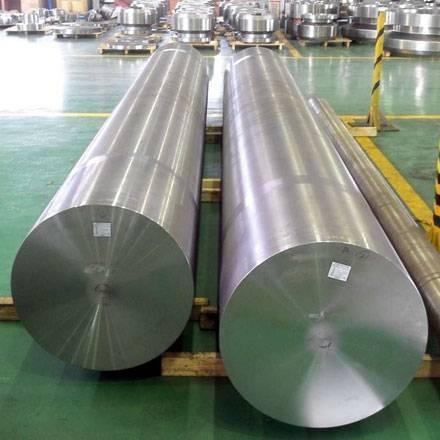
Most other martensitic grades have a lower carbon content than SS 420. It has 12-14% chromium and 0.15% minimum carbon. This chemistry drives hardness values above 50 HRC after heat treatment, which accounts for manufacturers reaching for 420 Stainless Steel Round Bars when building cutting edges, wear surfaces and precision components. Chemical Composition of Stainless Steel 420 Bars helps buyers to understand the chromium content, carbon range and how these figures translate into real hardness and corrosion resistance when a specific service condition exists before the material is selected. Typical applications include surgical blades, pump shafts, valve trim and industrial knives where wear is the design life limiting factor.
What is 410 Stainless Steel?
SS 410 has a tighter carbon ceiling of 0.15% max which keeps the microstructure more forgiving during fabrication. Chromium is 11.5-13.5% – similar to SS 420 but not same in performance outcome. The reduced carbon content gives 480–620 MPa of tensile strength in the annealed condition, and true weldability that SS 420 does not have without the use of preheat and post-weld heat treatment. Where moderate corrosion resistance and easy machinability are more important than maximum hardness, SS 410 often means a lower total cost per finished part. That is why SS 410 is frequently used for parts for steam and gas turbines, structural fasteners, and general purpose valve bodies.
420 SS Round Bar vs 410 Stainless Steel: Key Differences
Chemical Composition
Carbon separates these two grades at the specification level. SS 420 runs at 0.15% carbon minimum, while SS 410 caps carbon at 0.15% maximum, placing the two grades at opposite ends of the same boundary. Both carry similar chromium ranges (11.5–14%), but the carbon gap changes heat treatment response in measurable ways. SS 420 has higher carbon content and therefore forms more carbide in the process of hardening creating harder martensitic structures. Lower carbon limits the maximum achievable hardness in SS 410 but improves toughness and corrosion resistance in the annealed condition.
Hardness and Strength
After full hardening and tempering, SS 420 reaches 50–56 HRC, which places it among the hardest standard stainless grades available. SS 410 peaks at approximately 35–40 HRC under optimal heat treatment. That 15-point HRC gap matters in cutting and wear applications. SS 410 compensates with better ductility and impact resistance, making it a sound choice where components absorb dynamic loads rather than resist abrasion.
Corrosion Resistance
SS 420 is superior to SS 410 in the hardened condition in mildly corrosive environments such as fresh water, food contact service and low-chloride atmospheres. Its higher density of chromium carbide forms a tighter passive layer following heat treatment. SS 410 is resistant in atmospheric and steam conditions but chloride exposure above moderate concentrations brings both grades to their limits.
Wear Resistance
SS 420 dominates here without qualification. SS 420 is the material of choice for applications involving repeated metal-to-metal contact, abrasive slurries or cutting contact. The increased hardness prevents surface deformation. SS 410 will wear faster under abrasive loads. It is a poor substitute in knife blades, valve seats and shaft bearings where surface integrity drives service intervals.
Machinability and Weldability
SS 410 machines and welds without requiring the careful procedural controls that SS 420 demands. SS 420 200-300 °C before welding and post weld annealing to avoid cracking. If you skip those steps, the heat-affected zone becomes brittle enough to fail under light mechanical stress. SS 410 can be welded by conventional procedures and can be machined by conventional methods at reasonable tool life, reducing fabrication time and cost for complex geometries.
Heat Treatment Capability
Both grades hardened but SS 420 has a wider performance window. The steel can be hardened at 980-1035°C and oil or air quenched, followed by tempering at 150-370°C to obtain the desired hardness of ~50-56 HRC. Similar austenitising is used for hardening SS 410 but it offers a narrower hardness range. SS 420 gives engineers more options for applications where fine control of final hardness and wear behaviour is needed.
Price Comparison
The cost of stainless steel round bars is slightly higher than the comparable SS 410 stock. Higher carbon content, tighter chemistry control and processing requirements to achieve a consistent hardness response all add cost. The gap is at standard mill sizes, depending on order volume and specification requirements. The higher material cost of SS 420 is justified in most production situations for high wear applications by the longer service life of the parts.
Applications of SS 420 and SS 410 Round Bar
Medical equipment: 420 provides the hardness for scalpels, dental tools and orthopedic instruments where edge retention is important.
Food processing: Both grades are used in food contact machinery. SS 420 is preferred for blades, while SS 410 is preferred for structural components.
Pump shafts: In rotating shaft assemblies operating in abrasive or erosive fluid environments, the hardness of SS 420 helps reduce bearing wear.
Valves: SS 420 is used for valve trim and seats in services where hardness controls sealing performance and erosion resistance.
Surgical tools: High-carbon SS 420 maintains a sharper edge longer than lower-carbon grades, so you need to regrind less often.
Cutlery: Most stainless steel kitchen knives are made from SS 420 or SS 420HC for corrosion resistance and edge retention.
Automotive components: SS 410 finds application in exhaust components, fasteners and brackets where moderate heat resistance and weldability are of greater importance than hardness.
Why Choose a Reliable SS 420 Bar Manufacturer?
Material certification acceptable from dependable supply. A qualified Stainless Steel 420 Bar Manufacturer offers mill test reports regarding heat number traceability, mechanical test results, and chemical analysis against the specified standard. Before bars’ precision machining, independent verification of dimensional tolerance conformance, surface finish and straightness tolerances is required. One such company is Piyush Steel, which has been in the metal products business since 1983 and is ISO 9001:2008 certified, which has the quality infrastructure to provide bars that are consistently up to global specifications. When you buy verified 420 Stainless Steel Round Bars from a supplier, you’ll also get access to custom cut lengths, surface finishes and heat treatment options that most distributors don’t carry. Material traceability documentation reduces project risk, especially in medical and aerospace programs, where incoming inspection failures directly impact the schedule.
Conclusion
SS 420 has higher hardness (above 50 HRC), improved wear resistance and better performance in mildly corrosive conditions. It is the right choice for cutting tools, precision shafts and surgical instruments. SS 410 is relatively inexpensive per kg. It is good for welding and has a good strength for structural and moderate duty applications where hardness is not the overriding factor. The right choice is determined by what the application requires, not which grade has a higher specification number. Please contact a certified supplier for technical support, material test reports and pricing on the size range you need.