Seafood is a highly perishable product because of its sensitivity to the conditions in the supply chain. After harvesting from the sea, it is important to maintain proper temperature and handling conditions. A break in the cold chain, at any point from harvesting through to delivery, can cause detrimental effects to the quality, freshness, and ultimately market value of the seafood product being shipped or stored.
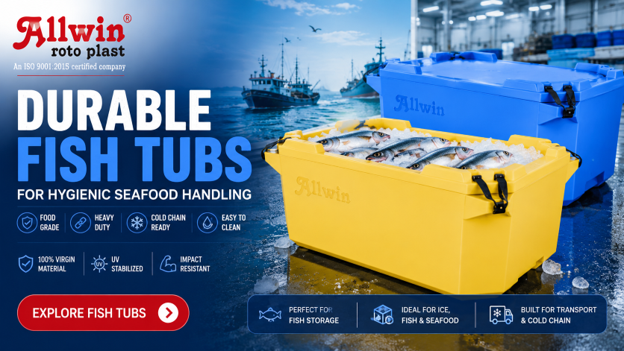
Because of the above issues, the seafood industry is migrating to dedicated storage solutions (versus traditional containers) to store and ship seafood products. Fishing tubs are the most common of these dedicated storage solutions due to the ease of handling, superior hygiene, and improved product quality when shipping and storing seafood products.
The Growing Need for Reliable Fish Storage
Fish must be stored in controlled environments and kept cool during transportation to maintain their quality (whether it’s a fishing vessel returning to port, a seafood processing facility, or a wholesale distributor supplying fresh products to market). However, traditional containers often fail to hold temperature for an acceptable period of time, especially in harsh ocean environments.
Modern insulated fish tubs provide a strong transport solution that will hold temperature long enough to maintain the freshness of the product while helping to eliminate spoilage.
Properly choosing the right storage equipment can directly affect both the operational efficiency of your business and the quality of the product you sell. Businesses that manage high volumes of seafood daily must have commercial-grade insulated fish tubs that maintain consistent temperatures, extend product freshness beyond standard storage, protect against temperature fluctuations during transport, and consistently deliver high-quality products to their customers.
Hygiene is another major advantage of insulated fish bins; they are manufactured from food-grade materials that are easy to clean and will not corrode.
Seafood Industry Applications
Due to their versatility, fishing tubs can be used for a variety of purposes across the seafood industry.
Fishing operations will use fishing tubs to hold fresh catches as soon as they come off the fishing boat. Processing facilities will use fishing tubs to move seafood throughout the supply chain. Distributors and wholesalers will use insulating containers to ensure that the seafood being delivered maintains quality.
Live fish can be safely handled and transported by using plastic fishing containers in aquaculture; these containers can withstand repeated daily use under extreme conditions, while being easy to clean.
Another important use of a fishing container for large seafood companies is as an industrial container for storing and handling seafood and as an industrial container for storing and handling seafood. The ability to stack containers on one another maximizes storage space in vehicles, processing plants, and warehouses.
Choosing the Right Fish Tub
Not all fish storage solutions are the same. Selecting the right product depends on several operational factors.
Capacity is usually one of the first things to think about. Businesses that deal with larger volumes may find that insulated 100-liter fish tubs would give them enough storage but are still manageable for handling and shipping.
Also, material quality is very important. A reliable plastic tub for fish should provide excellent impact resistance and a long service life as well as consistent insulation performance. This means that, after repeated uses, the container and its ability to provide adequate insulation will not be compromised.
Before making a buying decision, businesses will look not only at the capacity and material quality but also consider ease of handling, cleaning requirements, and compatibility with their current method of transporting the filled tubs.
Supporting Cold Chain Efficiency
The cold chain is a crucial part of the seafood industry. The step between pulling fish out of the water and delivering them to retail stores is influenced by temperature control, which plays an important role in the longevity and quality of this product.
An effectively insulated storage box for fish helps to maintain optimal temperature during shipment. Using one of these insulated containers throughout the seafood supply chain will also help reduce product loss caused by degradation or damage from heat exposure.
As seafood businesses expand their supply chains into other countries and regions, insulated storage containers are becoming vital to maintaining the quality of the product throughout the entire supply chain.
Why Quality Manufacturers Matter
An insulated fish box’s performance is greatly influenced by both the design of the product and the quality of its construction. A manufacturer that produces insulated fish boxes of high-quality uses only top notch materials, advanced methods of production and rigorous testing requirements to help ensure a high degree of performance.
Partnering with an experienced insulated fish tub producer allows organizations to gain access to the durable, innovative products they need for demanding seafood processing applications. Quality manufacturing will improve the insulation factor, extend the life of the product, and enhance the reliability of operation.
Final Thoughts
To preserve seafood freshness, one needs more than ice; in order to do so will need a storage facility that provides hygienic conditions, maintains temperature, provides for easy handling, and can provide access to the tops or bottoms of storage compartments whenever need be.
Insulated fish tubs are becoming more commonly used, and they can provide companies with improved service and help them maintain the quality of their seafood products through efficient day-to-day operations.
As the seafood industry continues its evolution, businesses can improve their results by investing in reliable insulated storage options; this will help minimize waste, improve cold chain performance, and allow fresh seafood products to be provided to their customers every time.