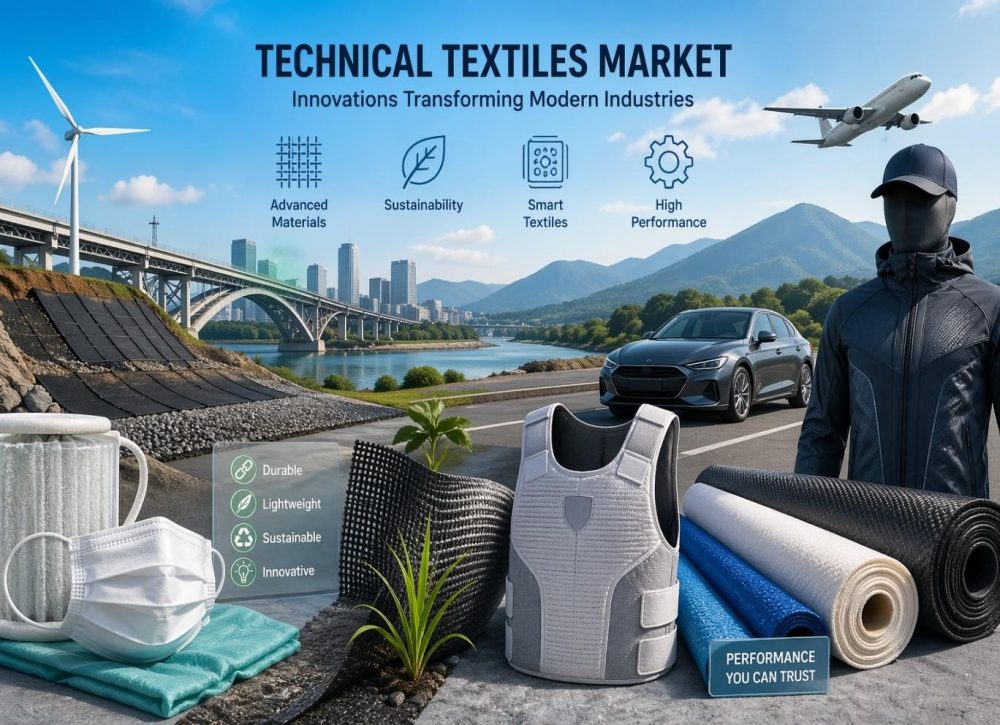
The technical textiles market represents one of the most dynamic and rapidly growing segments of the global textile industry. Unlike traditional textiles that focus on aesthetics and comfort, technical textile focuses on functional performance and specific industry requirements.
These textiles are build using specific fibres, advanced manufacturing techniques and scientific processes to deliver properties such as high strength, durability, flexibility, resistance to extreme temperatures and protection against chemical or biological hazards.
Today technical textile play a critical role in defence, healthcare, automotive, agriculture, construction and sports. For instance, they are used in medical implants and surgery masks, airbags and seatbelts, crop protection fabric and high-performance sportswear.
Innovation is the single most important reason for this fast-paced development. The use of technology such as intelligent and wearable textiles along with the use of nanotechnology has enabled the development of smart and advanced textiles.
The textile industry is gradually becoming one of the main drivers of growth across the globe as industries keep evolving. Following are some of the key innovations that are rapidly transforming the technical textile industry and making them critical to modern industrial development.
Smart And Wearable Textiles
Smart and wearable textiles, often referred to as e-textiles, represents one of the most exciting innovations in the technical textiles market. These are an advanced segment of technical textile that integrate electronic components such as sensors, conductive fibres and microcontroller into fabrics. Depending on their capability, smart textile can be classified as active, passive or ultra smart.
These textiles use technologies such as conductive yarn for signal transmission, sensors to monitor health and movement and nanotechnology to enhance properties such as durability, water resistance and antimicrobial protection.
In the future, with the advancement of artificial intelligence and Internet of Things (IoT), smart textiles are expected to become more integrated into daily life, offering personalised monitoring, safety and convenience.
Sustainable and Eco-Friendly Materials
Sustainable and eco friendly materials are becoming a central focus in technical textiles market as industries shift towards environmentally responsible production and consumption.
Traditional management practices in the textile industry have been associated with heavy usage of water sources, chemical contamination and waste management, resulting in the adoption of green technologies.
The utilization of water in dyeing processes, energy-efficient manufacturing operations and fishing without chemicals are some of the methods that have been involved in this process. Besides, firms are embracing the concept of circular economy where textiles are made to be reusable, recyclable and biodegradable.
The trend towards sustainable practices does not only arise from economic conservation alone but through government regulations and rising customer awareness, with eco-materials being an important factor in future success in technical textiles.
AI & Digital Transformation
AI and digital transformation have become critical components of the transformation of the technical industry market since they play a crucial role in making the production process faster, smarter and more efficient.
The implementation of AI allows analysing large datasets related to the performance of materials, productivity in the manufacturing process and demand for products on the market. Such analysis leads to the creation of more precise and high-performance materials without having to go through the lengthy process of trial and error.
Along with this, digital technologies such as automation, robotics and Internet of Things (IoT) are employed to convert the textile industry manufacturing process to a digitally optimized manufacturing process. It also enhances the management of the supply chain through material and product traceability to ensure timely delivery of products.
Lastly, digitalization and AI contribute to sustainability objectives through resource optimization and minimal wastage and overproduction. Thus, AI and digitalization enable the technical textiles industry to be profitable while meeting sustainability objectives.
Advanced Manufacturing
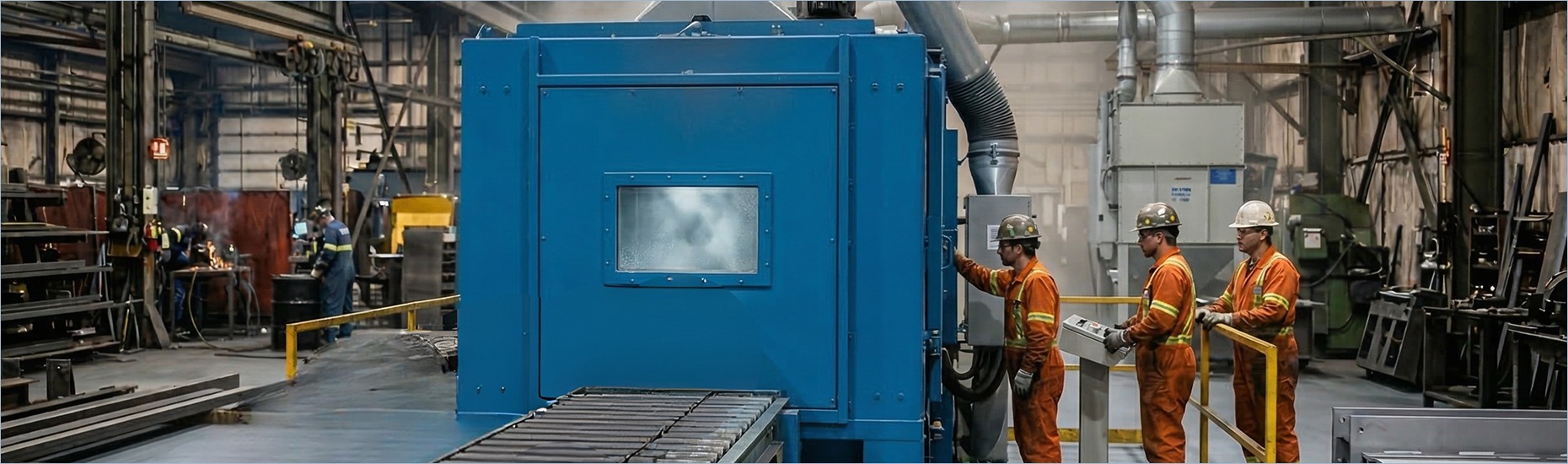
Advanced manufacturing processes such as 3D weaving and nonwovens have brought a lot of change within the technical textiles sector because they bring about better performance characteristics as well as quicker production of the materials.
The advanced manufacturing process involves a revolutionary method of interweaving the fibres in three dimensions (3D) instead of the conventional way which involves interweaving them across their length and breadth. This produces strong, robust and durable fabric that is resistant to delamination or layer separation.
In the case of nonwoven textiles, these types of fabrics are made through a process that involves bonding of fibres using mechanical, chemical and thermal processes. As compared to normal weaving, nonwovens can be produced on large scale due to low costs involved in their production.
Therefore, both of these methods are playing a crucial role in revolutionizing the technical textiles sector.
Future Outlook
The future looks bright for the technical textiles industry since the sector is set to grow into one that is technology-based and innovation-focused. With quick progress being made in the development of smart textiles, nanotechnology, advanced manufacturing technologies and digitalization, the use of technical textiles in daily lives and industrial sectors is set to increase even further.
Global issues like climate change, resource shortages and increased safety demands will also be an important factor in driving the growth of sustainable and high-performing technical textiles.
Over the next few years, the market is set to witness greater adoption of eco friendly materials, AI driven production and intelligent textile solution, making the products more intelligent, durable and environmentally responsible.