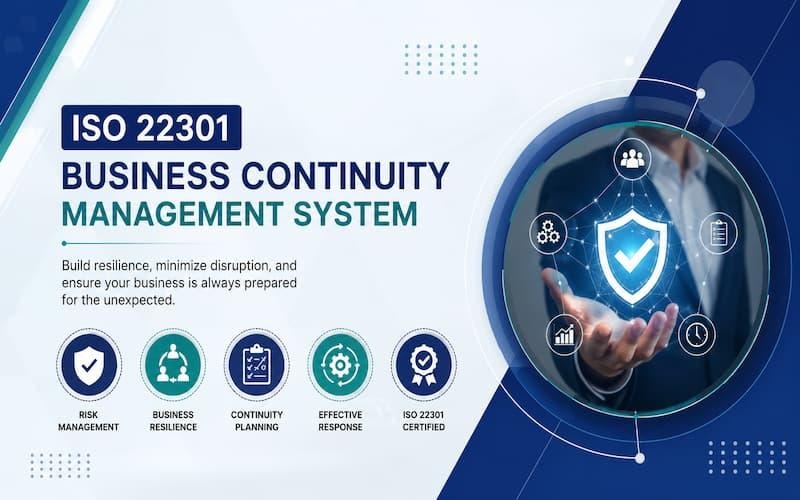
Organizations are exposed to many risks in this competitive business world such as cyber attack, natural disaster, supply chain failure, operation failure etc. A lack of preparedness can have a profound effect on customer trust, financial results and brand credibility when these unexpected events occur. Adopting a business continuity management system iso framework can enable organizations to develop effective strategies to ensure continuity of business operation during disruption and to limit losses and protect the reputation of the organization.
ISO 22301 certification is among the most popular business continuity standards on the market. This standard is used worldwide by companies to build resilience, keeping services going and to show stakeholders their commitment. In the long run, even in the face of challenges, understanding the importance of ISO 22301 Protect Business Reputation is crucial for companies aiming to build customer trust, comply with regulations, and succeed in the long term.
Knowing ISO 22301 and Business Continuity
The international standard for Business Continuity Management Systems (BCMS) is ISO 22301. It offers organisations a framework to help identify risk, evaluate risk, and put in place processes to help maintain critical business functions in the event of an unexpected disruption. ISO 22301 will help organisations to plan, test and continuously improve – rather than react when an emergency happens.
Whether big or small, or in a business or industry or not, reputation is key to every business. Customers, investors, employees and business partners demand that organisations provide reliable products and services on an on-going basis. One incident that results in long downtime, or poor communication can have a serious impact on public opinion. That’s why ISO 22301 Protect Business Reputation, with a focus on ensuring that organizations are operating and responding when they are facing challenging times.
Why Business Reputation Matters
Your reputation is created over the years through consistent quality service, performance and customer satisfaction. But if a service disruption or delay occurs, customers can be affected within hours of the incident, and their data may be lost, or a crisis may not be managed effectively.
During emergencies, if the organizations are not effective, customers lose faith in the organizations and switch to other competitors. Negative experiences can be further magnified by media coverage and social media discussions. But ISO 22301 is not just a set of standards; it is an indication of responsibility and preparedness, making organisations trustworthy during unforeseen events. The fact that ISO 22301 Protect Business Reputation is gaining importance in all industry sectors is one of the primary reasons.
Supports business continuity in case of disruptions
Unexpected events, such as power outages, cyberattacks, pandemics, equipment failures and natural disasters, can disrupt business operations. ISO 22301 requires organisations to plan ahead for recovery of critical business processes in the event of disruption.
During a crisis, staff are aware of their responsibilities, a recovery plan is available and essential services are maintained with a few minor disruptions. Delays are reduced, suppliers are kept up to date and operations are restored more quickly. Organizations keep on providing services with reliability, which is why ISO 22301 is about Protect Business Reputation and lower customer dissatisfaction, thus maintaining customer confidence.
Strengthens Customer Trust
Consistently meeting commitments, even in the face of challenges, is preferred by customers. ISO 22301 provides for the systematic management of product quality, service availability and communication during emergency.
Businesses that keep providing service to customers during disruptions, confirm reliability and professionalism. The customers feel preparedness and gain more loyalty in the long run. This boost in confidence is a direct impact on the brand’s equity. Consequently, ISO 22301 will be used to tell the world that the organisation cares for customers and is prepared to give them the best service, even under tough conditions.
Improves Crisis Communication
When it comes to emergency response, lack of communication can be more detrimental than the impact of the emergency. Customers, suppliers, employees and investors want accurate and timely information.
Under ISO 22301, organisations should create communication plans to specify who is communicating, what information is being shared, and how communications are being shared. Clear communication helps to avoid misunderstandings, eliminates confusion, and helps to put everyone at ease that the situation is being handled.
In the crisis context, transparency and openness in communication convey a sense of reliability and responsibility. Hence, ISO 22301 Protect Business Reputation, which emphasizes the need for consistent and professional communication throughout an incident.
Minimizes Financial Losses
The disruption may lead to monetary losses, contractual fines, legal costs, and further recovery costs. An unstable finance can negatively impact an organisation’s reputation by way of the customer service, employee confidence and investor relationships.
By focusing on preventive planning, periodic testing and continuous improvement, ISO 22301 enables companies to bounce back faster and minimize downtime in their operations. A speedy recovery keeps companies profitable and able to satisfy their customer’s expectations. As a result, ISO 22301 Protect Business Reputation, focusing on reducing potential financial impacts that may impact the public’s perception.
Enhances Regulatory Compliance
Organizations have to be able to have effective business continuity plans as part of their requirements in many industries due to legal and regulatory obligations. Compliance is a critical requirement in many financial institutions, healthcare providers, IT companies, government agencies, and manufacturing firms.
Many regulatory requirements internationally are congruent with ISO 22301, such as documented procedures, risk assessment, monitoring and review etc. Compliance will show professionalism and responsibility, and minimise legal risks. With regular compliance, stakeholders become increasingly confident in ISO 22301, advancing its role in Protecting Business Reputation in regulated industries.
Makes sure that relationships with stakeholders are kept and safeguarded
Keeping the right relationships within the business is essential to the success of any business, not just with customers and suppliers, but also with investors, employees and business partners. Communication or contractual obstructions can break down these good relationships.
By using ISO 22301, organisations can identify stakeholders’ expectations, prepare contingency plans in the event of an emergency and remain in continuous collaboration. When organisations demonstrate their resilience by meeting commitments even when faced with operational challenges, stakeholders are more confident in the organisation’s resilience. Another key motivator for maintaining these relationships is ISO 22301 Protect Business Reputation that covers a variety of industries.
Helps build staff confidence and readiness
Staff have an important part to play in emergencies. Lack of guidance can lead to further confusion and delays, exacerbating the effects of disruption.
Routine employee training, awareness programs, emergency exercises and documented response procedures are all required by ISO 22301 Staff are well trained and deal effectively with incidents minimising downtime and ensuring service continuity.
When employees know what to do, they are more likely to be confident in an emergency situation and will respond more effectively and efficiently which will bring positive benefits to the organization. This internal preparedness further enhances the contribution of ISO 22301 to the protection of the organisational reputation.
Encourages Continuous Improvement
Technology advancements, cyber security risks, economic uncertainty and environmental concerns mean risks are constantly changing across the business. Another key part of ISO 22301 is to keep business continuity plans effective through regular audits, management review, risk assessment and testing.
Organizations regularly review incident and exercise lessons learned, and make procedures changes to reflect the lessons. This forward-thinking approach enhances resilience and portrays excellence and reliability in operation.
Builds Competitive Advantage
Having an ISO 22301 certification can set your business apart in the competitive market, as customers are increasingly looking for businesses that are resilient and reliable. This certification provides customers with assurance that the organisation has recognised systems in place to manage disruption on an international level.
Business Continuity capabilities are included in the evaluation of suppliers by many government contracts, multinational partnerships and large procurement projects. Businesses with ISO 22301 thus benefit from enhanced opportunities and boost their trustworthiness as reliable business partners.
Long-Term benefits for brand reputation
Business reputation protection is not just about handling crises; it’s about fostering trust and confidence over time with customers and stakeholders. By establishing a culture of preparedness, accountability, and continual improvement within the organisation, ISO 22301 helps to drive improvements. SO 22301 helps drive improvements by establishing a culture of preparedness, accountability, and continual improvement within the organisation.
With time, organizations gain reputation for their resilience, reliability and professional risk management practices. When a customer has a positive experience with a brand during challenging times, it will lead to greater brand loyalty, positive word of mouth and market credibility, which will lead to sustainable business growth.
Conclusion
While business disruptions are inevitable, reputational damage does not have to be. Business continuity plans developed under the ISO 22301 framework provide a thorough approach to preparing business continuity that allows organizations to effectively prepare, respond, recover, and keep stakeholders informed. The standard offers a structured approach to organizational resilience, from enhancing crisis communication to reducing downtime and compliance with regulations.
In the end, ISO 22301 Protect Business Reputation to ensure businesses can keep their customers and other stakeholders in trust and show their operational excellence in uncertain times. By adopting ISO 22301, organisations can better protect their brand image, minimise business risks and ensure long-term sustainable success in an increasingly unpredictable world.