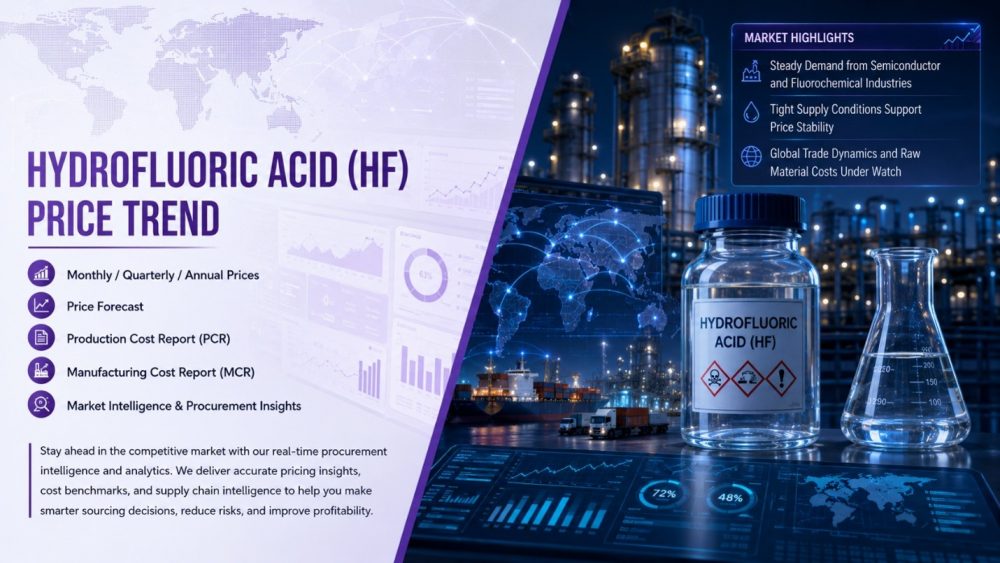
Hydrofluoric Acid (HF) is one of the crucial industrial chemicals that find a variety of applications in almost all the industrial sectors, including fluorochemicals, petroleum refining, metal processing, electronics manufacturing, pharmaceuticals, etc. Since HF has various industrial applications, changes in the Hydrofluoric Acid price have generally been influenced by general market scenario, availability of raw material, supply chain changes, and trend of the industrial demand.
The Hydrofluoric Acid (HF) Prices in Q1 2026 exhibited regional variations and was driven by the production cost, end-use consumption, trades, economic situations, etc. All market participants keep an eye on these prices while manufacturers and purchasing managers keep track of the changing prices.
Hydrofluoric Acid Prices in Q1 2026
The latest market assessment for April 2026 showed varying price levels across major regions:
- China (FOB): USD 2,199.62 per metric ton
- USA (FOB): USD 2,708.96 per metric ton
- Germany (FOB): USD 3,060.43 per metric tonWhen comparing prices across these countries, Germany exhibited the highest prices for HF whereas China is considered to have the most competitive prices among the regions evaluated. Regional differences in HF prices result from factors including production costs, environmental standards and cost of labor and also supply-demand situations.
Key Factors Influencing Hydrofluoric Acid Prices
Raw Material Availability
One of the main driving forces behind the Fluoric Acid price is the availability of the main raw material-fluorspar. The fluorspar output, transportation prices and any government regulations on the export will influence the production price of HF and any interruption in the fluorspar production may contribute to the rising prices of Fluoric Acid.
Energy and production costs
Production of Fluoric Acid is an energy-intensive process. Increase in electricity, natural gas and fuels have been driving up the cost of production and the prices. In regions where electricity prices were higher the producers sustained high production costs and hence a higher Fluoric Acid prices in Q1 2026.
Demand from industrial sectors
Downstream industries continued to absorb Fluoric Acid during the quarter. The acid is crucial in the manufacturing of fluoropolymers, refrigerants, materials for lithium-ion batteries and electronic components. Driven by increased production in electronics industries and the growing demand from clean-tech industries the long-term growth forecast remained strong.
Environmental regulations
Increasing awareness on environmental issues is a rising concern in the chemical industries. Strict regulations applied on the chemical manufacturers would result in a rise in the production costs and thus would be reflected in the Fluoric Acid prices. Germany’s higher price could partially be accounted for this fact.
Regional Market Analysis
China
China remained as one of the biggest producers & exporters of Hydrofluoric acid in the world with its larger chemical manufacturing base and comparatively lower manufacturing cost leading to a competitive pricing. Strong domestic demand, primarily from the electronics, fluorochemical and the industrial application manufacturing sector lent a steady market during the quarter.
The exports market too played a pivotal role in deciding the market sentiment as buyers looked at shipping costs, stock levels and the global demand to predict further price movements.
United States
Demand in the U.S market remained steady from the refining sector as well as the chemical and advanced manufacturing industries. The production costs remained influenced by energy costs and supply chain logistics. While domestic demand continued to keep market fundamentals stable, buyers’ procurement managers remained cautious regarding their procurement strategies given the current industrial needs.
Germany
Germany witnessed the highest price levels for Hydrofluoric acid of all the markets analyzed. A combination of factors such as high environmental norms, increased labor costs, and high operational expenses were contributing towards the premium price environment. Strong demand for specialty chemicals, automotive and the industrial application sector supported activity.
Buyers in Germany concentrated on securing supply and making long term deals to avoid any risks with their procurement.
Market Outlook
Going forward the Hydrofluoric Acid market is likely to remain driven by some of these underlying factors. Fluorspar supply conditions, energy market price swings, industrial output growth and global trade flows will all remain drivers of the pricing trend. The increased utilization of electric vehicles, batteries, and advanced electronics is predicted to drive long term demand for fluorine compounds and thereby Hydrofluoric Acid.
On the flipside, an increased focus on environmentally friendly methods and regulation may drive production costs up in certain countries. Procurement managers, manufacturers, and market analysts need to pay attention to trends in raw materials and regional supply demand balances to make the best sourcing and investment decision.
Conclusion
Overall, the Hydrofluoric Acid price trend in Q1 2026 highlighted the impact of both regional economic environments and the price impact of production costs and industrial demand in this market. China had a price competitive advantage; the US market condition remained stable; while Germany’s operating cost was the highest, showing a diverse price scenario in the global Hydrofluoric Acid market.
As industries widely adopt and continuously seek more new applications for fluorinated materials in electronics, chemicals and energy sectors, Hydrofluoric Acid is expected to keep its strategic importance. Companies that closely monitor market dynamics and sourcing trends will be better equipped for future price changes and supply chain volatilities.