Industrial flow control depends on accuracy. A misregulated valve in a high-pressure pipeline is not only an efficiency problem but also a measurable safety and operational risk. Carbon Steel Needle Valves address this directly, providing fine-threaded control of the stem to regulate fluid flow in systems where even the slightest variation is important. Stainless steel simply cannot match the tensile strength, resistance to mechanical fatigue and cost profile at scale that carbon steel provides as a base material. The global buying data shows a clear upward trend in the use of Carbon Steel Industrial Needle Valves in oil, gas, power and chemical industries. The reason is simple. It works well and is affordable.
What Are Carbon Steel Needle Valves?
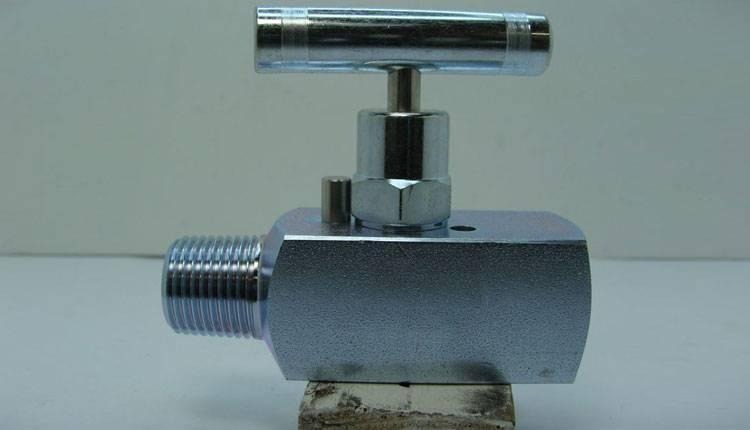
At its core, a carbon steel needle valve is a manually operated shut-off and metering device. The defining element is a slender, tapered plunger, machined to a needle-like geometry, that advances axially into a matching conical seat. Small rotations of the handwheel produce precise, incremental changes in the orifice opening. No other standard valve type offers that degree of metering granularity.
The body is forged from carbon steel grades such as ASTM A105 or A105N, both of which deliver the tensile strength and pressure integrity required in heavy industrial service. Forged construction, as opposed to cast, eliminates internal porosity and produces a denser grain structure that resists fatigue under cyclic loading. For complete dimensional data and pressure ratings, refer to the Specifications of Carbon Steel Needle Valves on the product page.
These valves appear consistently in oil refineries, chemical processing plants, power generation facilities, and shipboard instrumentation systems, wherever fluid metering accuracy and seal integrity operate as hard requirements, not preferences.
Key Features of Carbon Steel Needle Valves
The design and material properties of Carbon Steel Needle Valves translate directly into specific, measurable performance characteristics. Each feature below reflects engineering decisions grounded in real operating demands.
High Pressure Resistance
Standard variants handle working pressures up to 6000 PSIG. Higher-rated configurations are also available, making these valves dependable across both standard instrumentation service and demanding high-pressure pipelines.
Precise Flow Control
Fine-thread stem engagement converts minor handwheel movement into exact orifice adjustment. This metering precision makes the Carbon Steel Industrial Needle Valve the preferred choice in gauge connections and analytical instrument lines.
Leak-Proof Sealing
Vee-pattern stems are standard, creating a pressure-tight seal that holds even at elevated service temperatures. PTFE and Grafoil packing variants extend sealing reliability across a broad band of operating conditions.
Compact and Durable Design
Forged body construction is available in both inline and angle patterns, allowing installation in spatially constrained piping configurations without any reduction in mechanical strength or pressure rating.
Corrosion and Wear Resistance
Forged carbon steel maintains exceptional structural integrity under cyclic mechanical loading. The material retains dimensional stability and surface integrity for long periods of service in non-aqueous and dry gas service.
Temperature Handling Capability
PTFE-packed valves operate reliably up to 232°C. Grafoil packing raises the service ceiling to 371°C, accommodating steam lines and high-temperature hydrocarbon process streams without packing degradation.
Easy Installation and Maintenance
The end connection options are BSPT, NPT, socket weld and dual ferrule tube fittings to cover most of the existing industrial piping standards. The integral bonnet design allows in-line repacking without taking the valve out of service.
Benefits of Using Carbon Steel Needle Valves
Beyond individual features, the real measure of a valve is how it performs across months and years of continuous industrial service. Carbon Steel Needle Valves hold up well by that standard.
Excellent Durability
Forged carbon steel absorbs cyclic pressure loads without the microstructural fatigue that affects lesser materials. These valves sustain rated performance in demanding operations where constant pressure variation is a daily reality.
Cost-Effective Solution
Per-unit costs run significantly lower than stainless steel or nickel alloy equivalents, without sacrificing pressure rating or mechanical integrity. For projects requiring valves in volume, that cost differential is substantial.
Reliable Performance
The fine-thread needle mechanism maintains repeatable, accurate flow adjustment over extended service periods. Instrumentation systems that depend on consistent fluid metering benefit directly from this mechanical stability.
Long Service Life
100% factory testing before dispatch, combined with forged body construction, keeps field failure rates low. Maintenance intervals extend, and replacement costs drop proportionally over the valve’s operating life.
Versatile Industrial Applications
These valves can be used with a variety of media, pressure profiles and process temperatures, in industries ranging from oil and gas wellheads to hydraulic actuator circuits and water treatment dosing lines.
Industrial Applications of Carbon Steel Needle Valves
Carbon Steel Industrial Needle Valve products appear across sectors where pressure control and flow accuracy directly affect both output quality and personnel safety.
Oil and Gas
Wellhead instrumentation, chemical injection lines and gauge connections in upstream and downstream operations all rely on these valves. Pressure spikes and hydrocarbon exposure are routine; valve integrity must hold regardless.
Chemical Processing
Reactors, heat exchangers and process sampling points demand precise fluid metering. Carbon steel needle valves handle the pressure and temperature requirements of most chemical service environments without specialised alloy upgrades.
Power Generation
Boiler instrumentation and steam distribution lines operate at temperatures and pressures that eliminate many valve types from consideration. Grafoil-packed carbon steel needle valves meet these thermal and mechanical demands consistently.
Hydraulic Systems
Stable actuator response depends on accurate flow metering at the valve level. The fine-thread needle stem delivers the control resolution that hydraulic circuit performance requires.
Marine Industries
Shipboard piping systems place a premium on compact, vibration-resistant components. Carbon steel needle valves satisfy both the spatial constraints and the pressure ratings typical of marine instrumentation circuits.
Water Treatment Plants
Accurate and leak-free flow control is required for chemical dosing lines and instrument tapping points. These valves ensure feed rate accuracy and measurement reliability at every step of the water treatment process.
Instrumentation Systems
Pressure transmitters, gauges and analytical instruments depend on valves that isolate and meter with consistency. Needle valves serve this function across process control panels in virtually every heavy industry segment.
Why Choose a Reliable Carbon Steel Needle Valve Manufacturer?
A Carbon Steel Needle Valve Manufacturer operating under recognised quality frameworks produces valves tested against ASTM, ASME, BS, and DIN standards, with mill test certificates, PMI reports, and third-party inspection documentation available as standard. Precision at the forging and machining stages determines whether a valve holds its rated pressure across years of service rather than months. Established manufacturers also provide customisation across end connections, body patterns, packing materials and pressure ratings, as well as global export capability to project sites throughout the Middle East, Europe and Southeast Asia.
Factors to Consider Before Buying Carbon Steel Needle Valves
Selecting the right valve requires matching specific technical parameters to your operating conditions before procurement.
- Verify that the valve pressure rating meets or exceeds the maximum operating pressure in your pipeline system, including any anticipated surge conditions.
- Confirm the temperature rating against both normal operating temperature and peak thermal excursion values for your specific process fluid.
- Match the end connection type, whether NPT, BSPT, socket weld or dual ferrule, to your existing piping layout before placing an order.
- Size the valve based on the required flow coefficient and orifice geometry rather than defaulting automatically to nominal pipe diameter.
- Confirm that the specified carbon steel grade is chemically compatible with your process media, particularly in wet or mildly corrosive service conditions.
- Ensure the valve carries compliance certification for the industrial standards applicable to your project, whether ASTM, ASME or regional regulatory requirements.
Conclusion
Carbon Steel Needle Valves combine precise flow control, high-pressure resistance and long service life into a cost-effective package suited for demanding industrial environments. Their forged construction and temperature-rated sealing systems make them dependable across oil and gas, chemical, power and hydraulic applications. To source high-quality valves built to international standards, contact a trusted Carbon Steel Needle Valve Manufacturer for product inquiries and customized solutions tailored to your project specifications.