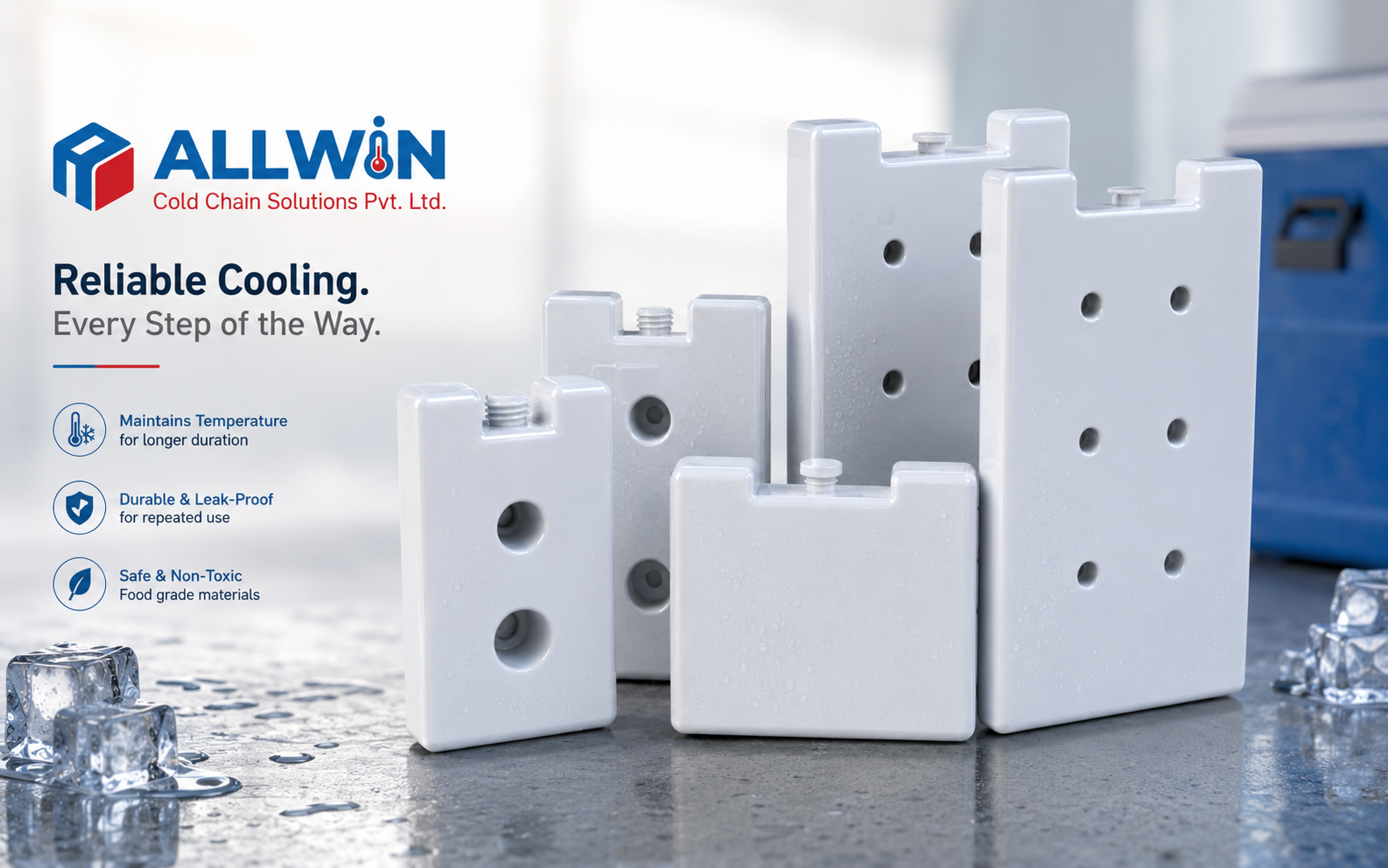
Once temperature-sensitive goods are dispatched from their warehousing centers, controlling the shipping environment becomes quite difficult. Shipments may spend hours on a vehicle, go through several handling stages, or even travel across different climates and temperatures during their transit to the customer. Temperature changes for pharmaceuticals, food items, laboratory materials, and other temperature-sensitive products directly affect their quality and usefulness.
However, this is where chill pads can be useful. As part of a good cold chain strategy, these cooling agents in insulated packaging deliver reliable temperature control for products.
Why Temperature Control Matters During Shipping
Temperature-controlled logistics aren’t all about keeping something cool; it’s about keeping it within a specific temperature range at all stages of transport and storage. If temperature-controlled goods can at any time get too warm or too cool, then the goods could have quality issues.
With all this in mind, the conventional use of ice is unlikely to provide the level of control or be as convenient as the various cooling pads that are commercially available. These specialized cooling pads allow businesses to decide on a medium or structure for their cooling to the dictates of their goods.
Any goods that are kept in refrigerated transport must have any cooling system used working in conjunction with insulated packaging so that they are not affected by temperature fluctuations during their travels.
What Are Chill Pads?
Chill pads are cooling components designed to support temperature-controlled transportation. They are placed inside insulated shipping containers or packaging around temperature-sensitive products.
Customizing Your Needs: As mentioned above, coolant pads can be custom-made to meet many specific applications, in different temperature ranges, sizes, and weights, making them appropriate for a broad array of shipments with varying levels of cooling demand. As they are contained, versus ice, cooling pads can be much less messy to unpack and simpler to carry into. The size format also helps you place the cold source more directly around your items with much less waste of space within the shipping container.
Choosing the Right Cooling Pads for Shipping
The optimal solution to suit all shipping needs varies. It is dependent on the sensitivity of the product, the transit time, how the product is packaged, the surrounding environment, and also the core temperature that it is to reach.
Consider the Required Temperature Range
For some applications, chilled storage is required, while in others the temperatures need to be much lower. The cooling fluid should ideally be chosen based on the minimum temperatures that have to be reached.
Match the Pad to the Packaging
Size and shape of the cooling device may count. If you have a right-sized pad on your insulated shipper, that may result in a better cold space.
Consider Shipment Duration
In longer journeys, planning of thermal characteristics requires a bit more rigor. Careful selection of the number, size, and type of cooling units (e.g., in the form of pads and/or other means to introduce external cold) and the locations of their placement based on the transit duration and the climate will be taken into consideration.
Look at Handling Requirements
In hectic logistics, package components require easy storage, handling, and placement. Sturdy cooling devices may improve the speed of packing and preparation.
Cold Chain Applications of Cooling Pads
The use of cold chain chill pads extends across several temperature-sensitive industries.
Pharmaceutical and life science industries can benefit from these options when shipping temperature-sensitive medicines and health care goods. Food and beverage manufacturers rely on solutions for safe cooling and the prevention of spoilage when shipping and storing products.
E-commerce operations can benefit from packaging that helps maintain cool temperatures as much as is desired for refrigerated or frozen items.
The cold chain cooling pads should always be employed not as isolated cooling units, but as an element of the bigger thermally insulated product to be packaged.
How Temperature Control Pads Support Product Protection
The main purpose of temperature control pads is to help manage the thermal conditions surrounding a shipment. When correctly selected and positioned, they work with insulated packaging to slow temperature changes and maintain the desired internal environment.
This becomes especially important when shipments are exposed to fluctuating ambient temperatures during loading, transportation, and delivery.
A well-designed temperature-controlled packaging system combines insulation, cooling components, and appropriate packing methods. The objective is to create a stable internal environment for as long as the shipment requires it.
Are Freezing Pads Suitable for Every Shipment?
Perhaps, perhaps. Because what a particular product can withstand depends greatly, not all shipments require freezing temperatures. And too cold can just be a disaster for sensitive materials expecting refrigeration temperatures.
While freezing pads may be appropriate in situations with low temperatures, others need moderate refrigeration temperatures.
It goes back to the temperature needs of the material being transported and the climate where the material will be transported. This explains why the goal of a cold chain strategy is to package the temperature requirements of the material, not simply the coldest packaging we can find.
Chill Pads vs. Traditional Ice
An ice pad or traditional ice approach can offer refrigeration, but specially formulated coolant solutions can offer practical benefits related to shipping packaging and transportability. These can be created in multiple shapes, sizes, and dimensions to seamlessly fit into an insulated shipping package.
For commercial cold chain operations, the goal is not simply to add a cooling source. It is to create a controlled thermal environment that remains suitable throughout transportation.
Building a More Reliable Cold Chain
Achieving optimal temperature-controlled shipping requires many components to function in harmony: insulated shipping containers/packages, cooling components, product/pack configurations, and temperature monitoring to help ensure sensitive products maintain their viability.
Chill pads will play a role in the system by offering a consistant temperature-control to support the maintenance of temperature throughout the shipment. The correct pad chosen based on temperature requirements, delivery time, configuration, pack design, and the sensitivity of your product will ensure a more reliable cold chain and minimize variability in transportation.
As temperature-controlled logistics is constantly growing in pharmaceuticals, food products, healthcare, laboratory, and E-commerce, practical and flexible cooling solutions will play a crucial role in product transit safely.