Digital transformation is no longer only about shifting operations online. Nowadays, companies want technologies that make things more transparent, enhance security, automate workflows, and help build trust between customers and partners. Blockchain has kind of risen as one of the most promising tools to reach those aims.
At first, blockchain was mostly tied to cryptocurrencies; however, it has grown into a strong business technology that is reshaping sectors like finance, healthcare, supply chain logistics, real estate, retail, manufacturing, and even public administration services. More and more organizations are looking into blockchain application development services so they can craft secure, decentralized solutions that smooth day-to-day operations while also lowering expenses and risks.
As adoption keeps increasing, understanding the real value of blockchain and the elements that impact blockchain app development cost is becoming essential for businesses planning their next digital push.
What Is Blockchain App Development?
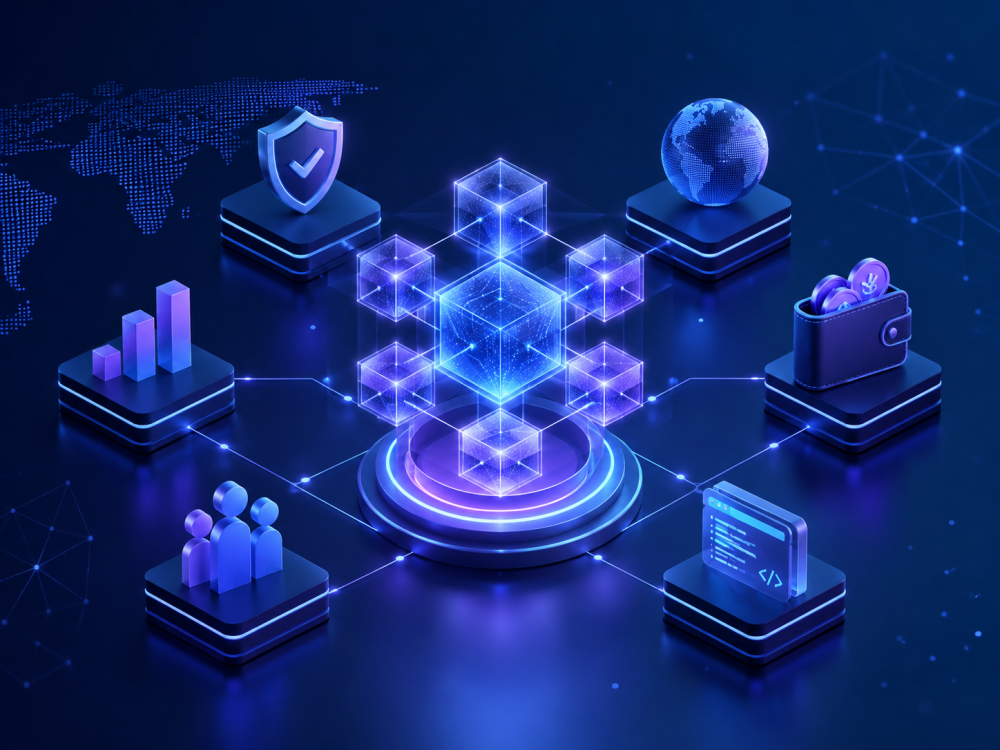
Blockchain app development is basically about building decentralized applications dApps or enterprise-style blockchain solutions that take advantage of distributed ledger technology. In contrast with typical apps that usually lean on centralized databases, blockchain based apps spread the information across lots of nodes, so the records become transparent, safer, and well, not easy to tamper with, or change later.
A lot of these applications also bring in things like smart contracts that run automated workflows, decentralized data storage where files or state are not stuck in one place, plus digital identity management for verifying who is who. And then there’s secure payment processing, and tokenization for digital items or even physical assets too, depending on the use case. The transaction records are also immutable, meaning once they’re written, they tend to stay that way.
And yeah, based on the business objectives, organizations will commonly pick public, private, or consortium blockchain networks, so the solution fits their operational requirements and internal constraints, rather than forcing one model everywhere.
Why Businesses Are Investing in Blockchain Technology
1. Enhanced Security and Data Integrity
Cybersecurity is still, one of the biggest worries for organizations managing sensitive customer and business info. Blockchain uses cryptographic encoding plus consensus mechanisms, so once something is written down it cannot be altered without the network checking it first.
That kinda unchangeable quality really cuts down on fraud , sneaky modifications, and general data tampering, and because of that blockchain becomes very useful in sectors that need sturdy record keeping.
2. Greater Transparency Across Operations
Transparency is turning into a real edge. Customers, partners, and regulators now tend to expect companies to offer information that is accurate, and also verifiable.
With blockchain, there is a shared “source of truth” where every authorized participant can inspect transaction histories in real time. This kind of sightline reduces arguments, strengthens responsibility, and gradually builds trust through the whole business ecosystem.
In supply chains, for instance , blockchain lets stakeholders follow products from production straight to final delivery without depending on scattered paperwork.
3. Reduced Operational Costs
A lot of business processes have intermediaries hanging around for things like verification, approvals, settlements, or record management. With blockchain, a bunch of those manual handoffs get reduced because verification becomes decentralized and smart contracts can run the logic, sort of on their own, not always needing so many people in the middle.
The upsides usually show up as
- Lower administration costs
- Quicker transaction settlements
- Less paperwork, at least compared to the previous setup
- Fewer reconciliation mistakes
- And fewer fraud-related losses
Even if the first setup needs an investment, organizations commonly end up seeing long-term savings, mainly because operations become more efficient.
4. Smart Contract Automation
Smart contracts are self-executing digital agreements, they do predefined actions automatically once the specified conditions are satisfied.
Instead of always depending on manual approvals, companies can let automation handle things like
- Vendor payments
- Insurance claims
- Loan approvals
- Royalty distribution
- Employee incentive programs
- Procurement workflows
When automation is in place it tends to cut down waiting times , reduces human error, and keeps the process more consistent across day to day operations.
5. Improved Supply Chain Visibility
Global supply chains, involve several stakeholders, so actually tracking each product becomes kind of hard. Blockchain then gives manufacturers, suppliers, logistics providers, and retailers a shared, synced ledger to consult when it matters, for the actual movement of goods.
With that system in place businesses can, you know, Verify product authenticity, reduce counterfeit risk, tighten up inventory management a bit, and react sooner to recalls. It can also help satisfy regulatory compliance obligations, which is rarely optional.
Even consumers benefit from this increased visibility about where the product comes from and the sustainability side of things, in a more straight forward way.
6. Stronger Regulatory Compliance
Lots of industries face strict compliance needs around financial reporting, healthcare records, identity verification , and data safety . In practice it can feel like endless paperwork, even so.
Blockchain helps with compliance by building permanent audit trails that regulators can check more or less directly, without going through a lot of laborious manual documentation. It’s like a ledger that does not really forget.
Organizations can get:
- Audits that are easier
- Record keeping that is cleaner
- Traceability that is improved
- Fewer compliance headaches, overall
This is especially useful in tightly regulated sectors such as banking, pharmaceuticals, and government services .
7. New Revenue Opportunities
Blockchain is not just making current business processes a bit better, it is also somehow opening up new kinds of business models altogether. Organizations are looking into things like digital asset marketplaces, tokenized investments, NFT platforms, and decentralized finance (DeFi).
Then there are blockchain based loyalty programs, plus peer to peer marketplaces too. Together these innovations tend to spin up extra revenue streams, and at the same time they boost customer engagement in a more direct way.
Industries Driving Blockchain Adoption
Blockchain is really no longer only for fintech companies, like it used to be. Now a lot of organizations from different industries are getting into blockchain applications; at least that’s what it looks like. Some call it experimenting, others call it a more durable commitment, and in practice it’s becoming pretty widespread.
Financial Services
Banks and financial institutions use blockchain for:
- Cross-border payments
- Fraud prevention
- Digital identity verification
- Trade finance
- Asset tokenization
Healthcare
Healthcare providers leverage blockchain for:
- Secure patient records
- Medical supply tracking
- Clinical trial transparency
- Prescription management
Supply Chain and Logistics
Logistics companies benefit from:
- Shipment tracking
- Inventory visibility
- Automated documentation
- Counterfeit prevention
Real Estate
Blockchain simplifies:
- Property ownership verification
- Smart property contracts
- Mortgage processing
- Digital land records
Retail and E-commerce
Retailers use blockchain to improve:
- Product authenticity verification
- Loyalty rewards
- Supply chain transparency
- Secure payment processing
Why Businesses Are Choosing Professional Blockchain App Development Services
Blockchain development, honestly, needs expertise in decentralized architecture , cryptography, smart contracts, consensus mechanisms, and regulatory compliance. So a lot of organizations end up partnering with seasoned providers that do blockchain application development, instead of trying to build everything internally from scratch, because well it’s not simple.
Professional development teams help businesses:
- Define the right blockchain strategy
- Select suitable blockchain platforms
- Design scalable architecture
- Develop secure smart contracts
- Integrate blockchain with existing systems
- Conduct security audits and testing
- Ensure ongoing maintenance and upgrades
And working alongside experienced blockchain specialists also means development risks drop , while time to market tends to speed up, which is kind of the point.
Factors Affecting Blockchain App Development Cost
One of the most frequent questions companies ask is basically about the blockchain app development cost, like what it will truly take. The real answer depends on a few technical plus business things that are usually different from case to case.
Project Complexity
A simple blockchain app, with limited functionality, generally eats up way less budget than an enterprise-grade platform, where you need advanced features and more moving parts.
Blockchain Network Selection
Picking public, private, hybrid, or consortium blockchain networks impacts what infrastructure you need. It also changes how hard development feels and, later on, how much upkeep costs.
Smart Contract Development
If your application needs several smart contracts, and each one has complicated business logic, then the development timeline grows. Security testing gets more rigorous too, so expenses follow.
User Interface and Experience
Having a feature-rich, and intuitive interface helps adoption, but it also pulls more design and development work into the project. And that’s where costs tend to quietly rise, even when people expect it to stay flat.
Third Party Integrations
Connect things like blockchain applications with payment gateways, ERP systems, CRM platforms, cloud services, or identity verification solutions. And yeah it does raise the overall project complexity, not by a little, but a bit of headache too.
Security Requirements
Since blockchain applications often handle sensitive transactions and valuable digital assets, the stakes are pretty high. That means comprehensive security audits, penetration testing, and compliance measures are essential investments. You almost can’t skip them, even if timelines look fine.
Development Team Expertise
An experienced team—blockchain developers, architects, security specialists— usually costs more, i mean higher rates are typical. But they often deliver better long term value by building robust, scalable solutions, and the whole thing tends to stay more stable later on too.
Best Practices Before Investing in Blockchain
Before launching a blockchain project , businesses should really check if blockchain actually solves their day to day operational hiccups. It sounds obvious but you know , sometimes the fit is more about marketing than practical, yes?
Some of the things to think about include, define clear and measurable business objectives first. Then identify which processes truly benefit from decentralization , not just because it’s “cool” but because it removes a real bottleneck. Also assess the regulatory requirements, since compliance can quietly become the main blocker.
After that, choose an appropriate blockchain platform that matches the workload and the team’s capability. Don’t forget to prioritize scalability and interoperability , so the system can grow and still talk to other systems. Plan for long term maintenance and governance , because someone has to keep it running when the novelty fades.
Finally, build with future expansion in mind , and treat the roadmap as a living document not a one time checkbox. With a strategic approach you can maximize return on investment while minimizing implementation risks, in a way that is less stressful overall.
The Future of Blockchain in Business
Blockchain adoption continues to accelerate as enterprises embrace digital transformation. Emerging trends such as AI-powered smart contracts, decentralized identity solutions, asset tokenization, Web3 applications, and blockchain interoperability are expanding the technology’s potential across industries.
As customer expectations evolve and regulatory frameworks mature, blockchain is expected to become an integral part of enterprise technology stacks rather than a niche innovation.
Organizations that invest early in secure, scalable blockchain solutions will be better positioned to improve operational efficiency, strengthen customer trust, and unlock new business opportunities.
Conclusion
Blockchain has grown way past cryptocurrency now, and honestly it feels like it’s turning into a sort of strategic technology for businesses that want better security , clearer visibility and more automation plus operational efficiency. Like, it’s not just one thing—it’s helping with supply chain streamlining, also supporting smart contracts, and even encouraging new digital business models. So yeah, it’s reshaping the way organizations work in a world that’s getting more and more connected, every year.
When companies team up with seasoned providers for blockchain app development services , they can deal with the technical stuff without getting stuck, and still end up with solutions that scale and are ready for what comes next. But at the same time it’s smart to look at the factors that can influence blockchain app development cost, because this makes it easier to budget properly, and to connect the project with long term business targets.
And as these digital ecosystems continue to change, blockchain seems set to become kind of central, helping organizations innovate with confidence , strengthen trust, and stay competitive in the years ahead, even when things feel fast and unpredictable.