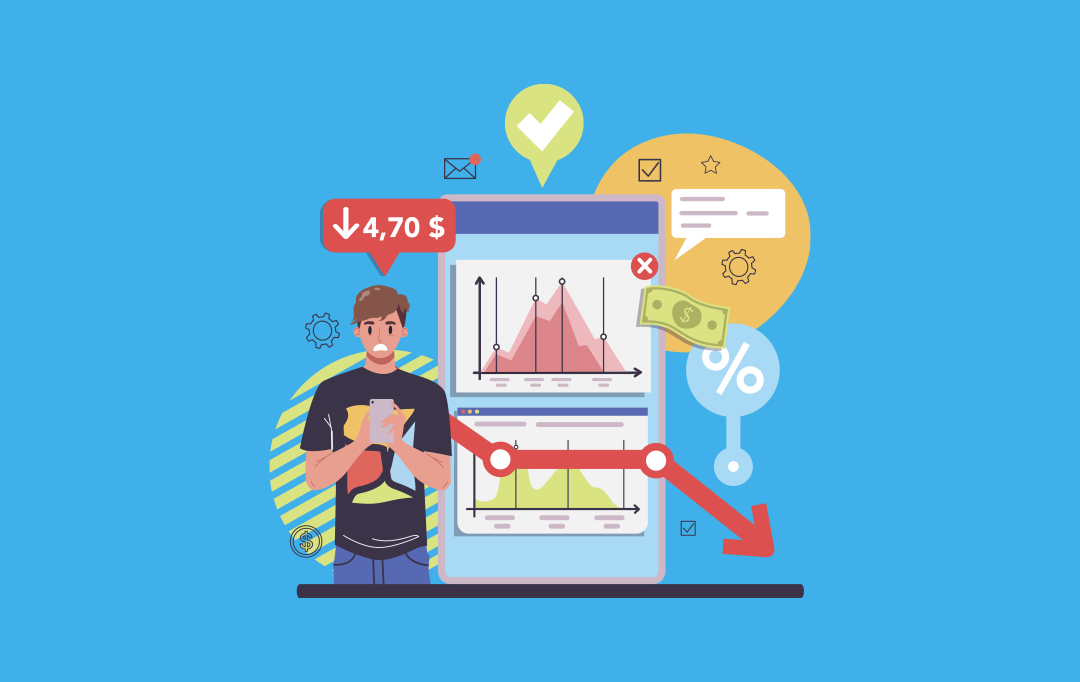
If you look closely, every user scrolling on a service app – even if they are not placing any order – creates attention, and that too can be monetized if prepared properly.
Even if it is a thumb tapping the app icon, the process already carries value before the booking happens; this could be a taxi, food, logistics – anything. Most app owners who have aspiring Gojek clone platform ideas make sure that the money from their investment in the script comes completely from commissions, fees, or booking percentages, which is not wrong.
They just haven’t thought about their newly launched app being the main screen for other businesses to advertise. And that is pretty understandable since the business is new, but it should never be avoided later.
Advertisement banners run in the background and are often taken as a small design change – if not more than this, far from the business revenue sheet. That kind of framing is wrong and sells the app short.
Banners are not decorations.
They are a very important stream for making a lot of money, and the one that runs independently of bookings. A user who never even makes a single booking still has to go through the app and see the banner, which the platform earns regardless of whether the booking follows.
The App-Based Advertisements are Making More Money Than Ever Before
Advertising inside apps is growing insanely fast right now, and if you look at the market, it is pretty clear why app owners need to start taking it seriously.
Globally, businesses are spending hundreds of billions of dollars on digital ads – roughly $836 billion in 2026. But the interesting part is that this money isn’t going to regular mobile websites anymore. It is pouring directly into apps, simply because that is where people actually spend their time – which is pretty understandable.
It is the same story for brands that want to push their products. They are spending massive amounts of money to advertise, but they aren’t wasting it on old desktop websites. They want to put their names exactly where people are already looking to shop, book a taxi, or order food.
After growing roughly 22% from last year, spending on retail media advertising will hit around $130 billion in 2026, the fastest growth rate of any advertising channel tracked.
And guess what? That is exactly the environment your Gojek clone app provides.
This is where you, as the app owner, get to win. As we discussed, every person who opens your app gives you their attention. And right now, the advertising market is literally willing to pay cash for that attention, even if the user ends up closing the app without booking anything.
If an app owner ignores this and just relies on commissions, they are basically leaving their app’s ad spaces sitting there empty and unsold. It really doesn’t matter if your daily booking numbers are great and the commission is flowing in. If you aren’t running ads, you are leaving easy money on the table every single day.
How Does the Ad Banner Actually Work in a Gojek Clone App?
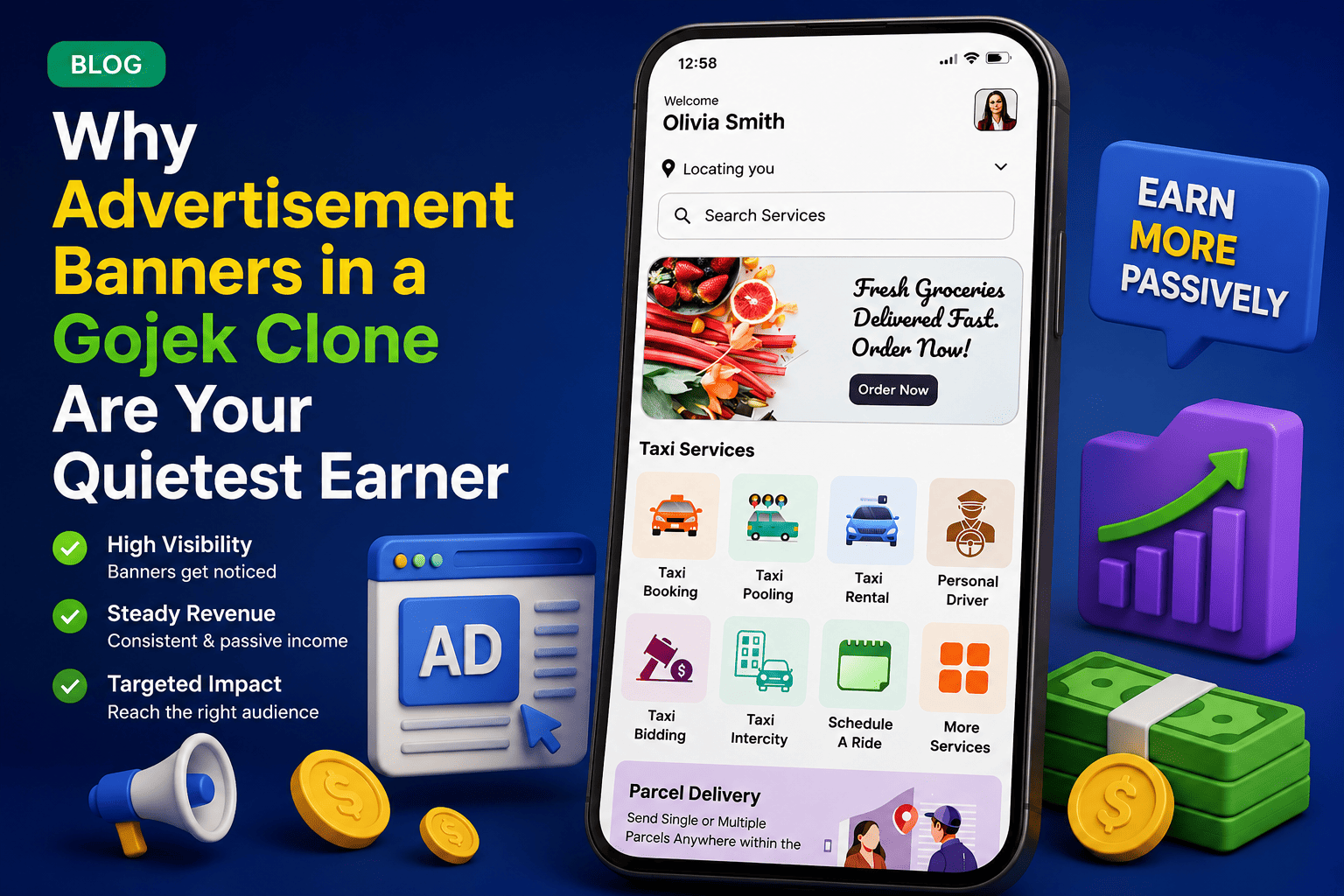
A banner slot isn’t just a nice little image sitting on your home screen. It is an empty billboard. And just like any limited space, once local business owners realize how many eyeballs are on it, they will happily compete to rent it from you.
Think about local merchants for a second. They usually waste money on printed flyers or random social media posts, hoping someone cares. But putting their business on a banner inside your app gives them something those old methods can’t. You are putting them directly in front of people who already have the app open and are in the mood to spend money.
Let’s say a restaurant pays you to put their banner up right around lunchtime, or a local salon buys a spot for the busy weekend rush. A user might open your app just to book a quick taxi ride. They were never going to search for a haircut, but they saw the salon’s banner anyway. You just introduced a customer to a business they weren’t even looking for.
This is how you make money that doesn’t rely on transactions. A business pays you for that banner spot upfront. It really doesn’t matter if they get a hundred bookings from it that week or absolutely zero. You collect your money just to give them visibility.
Like we said before, every person who taps your app icon is giving you their attention. When you sell banners, you turn that attention straight into income, and it has absolutely nothing to do with whether a taxi trip actually finishes or a meal ever gets delivered.
Building Profitability That Doesn’t Depend on Ride or Delivery Volume
Having a few different ways to make money really matters when business gets naturally slow. If your app is strictly relying on booking commissions, you are going to feel the pain every single time taxi rides drop or people stop ordering food for a few days.
But the money you make from advertising banners works completely differently. Local merchants are buying that top spot just to get their shop seen or to push a holiday promo. They are paying you upfront for the space, totally independent of how many actual bookings your app happens to process that day.
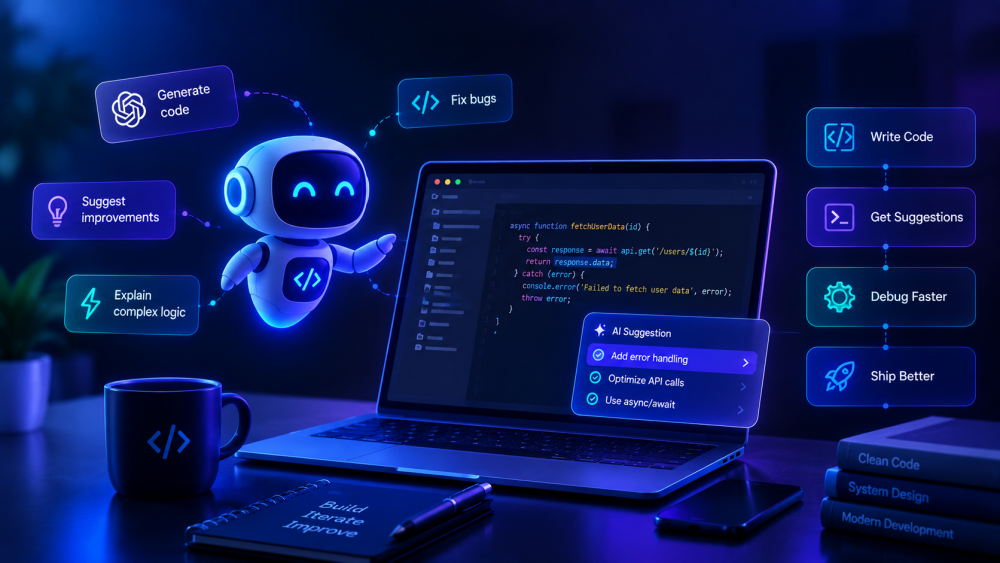
This is actually the biggest advantage of putting your investment into a ready-made Gojek clone script instead of trying to code an app from scratch. If you look closely at your admin panel, the whole system to upload and manage these banners is already sitting right there, ready for you to use from day one.
You don’t have to waste time or money trying to build a custom ad dashboard or figuring out how to serve ads from zero. A solid script already treats this advertising space as a very important stream for making money, not just a small design change they remembered to add at the last minute.
Think about the local business owners for a second. Paying for ads on regular social media is getting insanely expensive for them, and it is pretty understandable why they are frustrated. They would much rather pay you. Why? Because you are putting their name right in front of local people who already have your service app open and are in the mood to spend money, instead of just showing their ad to random people scrolling the internet.
When your app can offer local shops that kind of direct, highly valuable attention, you are the one holding the cards. You get to set the price for your banner spots, and because the value is so real, businesses will happily pay it.
Final Thoughts
Running ads inside the app via banners does not get the top billing place it deserves in a pitch deck when it comes to launching a multi-service business. Still, they often outperform the standard expectations because they ask for nothing short of the user’s attention span of the user. Every single user who opens the app makes attention worthy of reading what is actually on the banner, making it a deadly feature to make money without a single booking made.
FAQs
1. How to manage banners in a Gojek clone app?
Most ready-made Gojek clones come in packages where an ad management module can be used, present in the admin panel. This is pretty easy for an app or platform owner who manages placing the app instead of making the feature from scratch.
2. How does the owner set pricing on the banner replacements for merchants?
The pricing normally depends on the position, duration, and the traffic volume of the banner during the slot and is quite the same as the retail media and other sponsored listings that happen in larger e-commerce platforms.
3. Is this kind of advertisement model only useful for large platforms with more users?
No. Almost every kind of platform at any stage of their business booking volume with modest but consistent local traffic can sell banner space to nearby merchants who value that audience. A ready-made super app platform does wonders because it is local and high-intent.