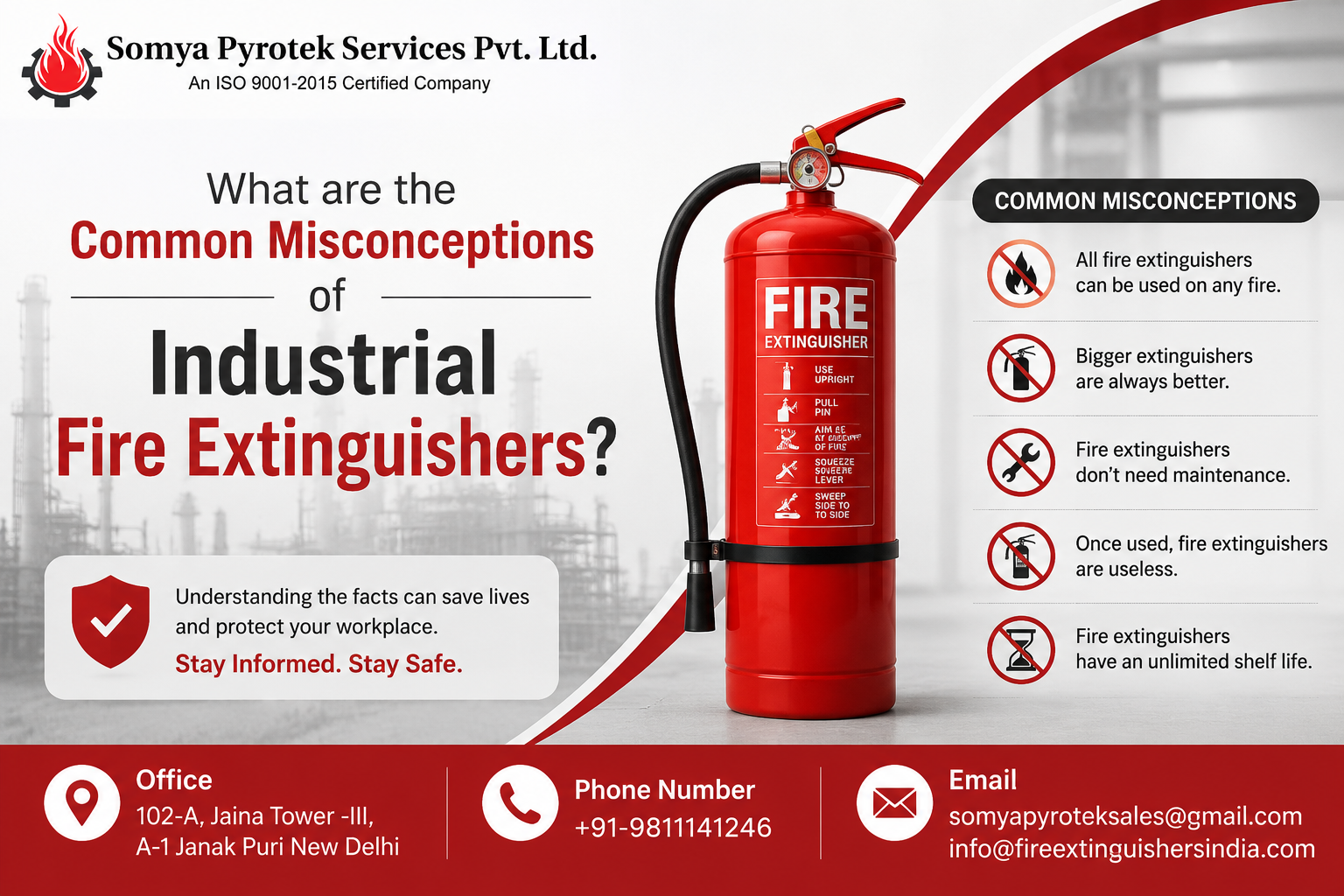
When thinking about fire safety in industrial spaces, one might believe that everything is rather clear and straightforward. Most assume that having industrial fire extinguishers mounted on the wall should be enough. However, things are not as simple. Factories, warehouses, production plants, and other facilities usually have fire extinguishers as one of the most important security equipment items. At the same time, numerous beliefs and myths can make the use of such items dangerous.
Through time, many myths about fire extinguishers developed and became common within the industrial sphere. Many workers consider all extinguishers universal and assume that a unit that was never used will never fail in emergencies. Although the former idea may seem rather harmless, in cases of emergencies it will cause panic among the personnel, leading to chaos and serious consequences.
Furthermore, many companies teach the principles of fire safety to employees through information passed down by colleagues, and therefore incorrect information is spread continuously. Even experienced staff members sometimes use inappropriate and outdated practices in the event of a fire. Therefore, it is important to educate every worker. This is why fire safety experts never fail to stress the importance of fire safety awareness and education. In this comprehensive blog, we will discuss the fundamental myths that you must know about extinguishers offered by manufacturers of fire extinguishers.
Vital Myths to Know About an Industrial Fire Extinguisher
Below are some of the most common myths surrounding industrial fire extinguishers that every workplace should understand.
Myth 1: All Fire Extinguishers Work on Every Type of Fire
This is the most widespread myth that many have about fire extinguishers. In truth, each extinguisher should be used on specific types of fire. Using the extinguisher inappropriately can significantly worsen the situation. For instance, water extinguishers are used to put out the fire in case of ordinary combustible materials such as paper, wood, or cloth. Applying water on fires involving electricity and flammable liquids would spread the flames rapidly and increase the danger.
An industrial setting may contain hazards such as electrical machinery, hazardous chemicals, oils, gases, and metals. That is why different fire extinguishers should be used. Special-class D extinguishers are used for metal fires. On the contrary, ABC dry chemical extinguishers are widely used across many industries due to their ability to tackle a range of hazards. Using the right fire extinguisher is key to workplace fire safety.
Myth 2: An Unused Fire Extinguisher Never Expires
It seems that many believe that the unused fire extinguisher will work forever. Unfortunately, even the units that have never been touched decay gradually. For instance, the pressure can drop, the seals might break, and the chemicals might settle over time. In all these cases, the extinguisher will be unable to operate in the event of a fire. Therefore, the lifespan of a fire extinguisher can vary between five and fifteen years depending on its kind. Some extinguishers, such as CO2 models, last longer. Regardless of the unit’s condition, professional inspections and tests are still necessary to ensure it will work properly during emergencies.
Myth 3: Fire Extinguishers Need Inspection Only After Their Use
It is believed that fire extinguishers only need to be checked after being used. However, regular inspections are necessary regardless of whether the unit has been operated. Industrial settings involve harsh environmental conditions for the equipment. This means the units are exposed to dust, heat, vibration, humidity, and temperature fluctuations. Under these conditions, the pressure levels in the industrial fire extinguishers, nozzles, and other components may gradually decrease. In addition, seals may wear out, rendering the extinguisher non-operational in emergencies. Regular monthly inspections and yearly servicing will guarantee that the units will work correctly.
Myth 4: Small Discharge Makes the Extinguisher Fully Operational
Some people use fire extinguishers in minor emergencies. They believe that the unit will remain operational when used in more complex fire cases. This belief is dangerous because removing the safety pin and squeezing the handle will disrupt the pressure seal in the extinguisher. Even though the amount released may be small, the rest of the extinguishing solution might gradually leak, rendering the unit useless during the next fire. In the event of gas or foam release, it is essential to recharge or replace the fire extinguisher.
Myth 5: Spraying the Flames Is the Optimal Way of Putting Out a Fire
This myth is widely spread because of films and TV programs. However, it is important to remember that the proper method is to spray the base of the fire. It is the place where fuel sources are located. If only the flames are sprayed, the fire will return quickly since the fuel is still burning. When using dry-chemical extinguishers provided by manufacturers of fire extinguishers, side-to-side sweeping is most appropriate. Following this approach helps cut off the fuel supply and stop the spread of fire. A simple technique may greatly differ in emergencies.
Myth 6: Installation of the Fire Extinguishers Suffices
Installing fire extinguishers is necessary to protect a facility. However, in addition to such equipment, smoke detectors, alarm systems, sprinklers, emergency exits, and evacuation plans should be implemented to provide comprehensive protection. Without this equipment, handling severe fires becomes very complicated. Employee knowledge about the actions that should be undertaken during fire emergencies will make a workplace safer.
Myth 7: Any Worker Is Able to Use a Fire Extinguisher without Previous Training
Although using industrial fire extinguishers may seem simple, fear and stress during emergencies can complicate even routine procedures. With a lack of knowledge of fire safety rules, workers may choose the wrong extinguisher, stand too close to the fire, and be unable to properly extinguish the flames. Moreover, in some cases, it is dangerous for employees to extinguish fires themselves.
Basic training allows employees to learn how to act during emergencies and use the equipment safely. Knowledge of simple techniques such as PASS (Pull, Aim, Squeeze, and Sweep) makes a difference in emergencies. Regular fire drills and training are vital for proper handling of fire emergencies.
Things To Consider When a Fire Extinguisher Fails Inspection
The ability to access a fire extinguisher in an emergency is one of the most important benefits of having one installed on your premises. However, if the device fails the inspection test, you are expected to act accordingly. The type of defect will determine whether it should be serviced, charged, or replaced entirely. Below is a list of cases industries must be aware of.
1. Physical Damages, Missing Parts, and Rust
When the fire extinguisher shows rust, dents, torn hoses, missing or broken parts, or other physical damage, it needs to be serviced or replaced, depending on its condition.
2. Expiry Date Reached or Fails Pressure Test
Any fire extinguisher that does not pass the pressure test should be replaced because it might pose serious risks in the event of fires.
3. Partially Used or Low Pressure
If the extinguisher has been partially used but not emptied, it is advisable to recharge it to restore its effectiveness.
4. Clogged Nozzles or Broken Seals
Sometimes dust, dirt, and broken safety seals might prevent industrial fire extinguishers from functioning effectively. Therefore, regular inspection of such devices is important.
5. Wrong Positioning and/or Missing Tags
Proper placement of fire extinguishers is essential since they should always be easy to spot and access in the event of an emergency.
Concluding Here!
In terms of fire safety, there is more than simply installing an extinguisher. Fire safety involves ensuring that industrial fire extinguishers are well-maintained, inspected periodically, and used correctly in emergencies. Belief in misconceptions may lead to faulty decisions, equipment malfunction, and dangerous situations. The proper selection of the extinguisher, inspection of fire equipment, and adequate employee training are crucial to enhancing safety in your working environment. Simple steps, such as conducting inspections and fire safety awareness programs, will help you avoid bigger catastrophes.
Fire risks are much higher in industrial settings because of the presence of machines, chemicals, electrical connections, and heavy-duty operations. Therefore, no one can afford to neglect fire safety in their workplace. Being aware of fire safety issues, practicing proper fire safety methods, and using fire protection devices are all you need to do in such cases. Moreover, if you are searching for reliable manufacturers of fire extinguishers, you can reach out to Fire Extinguishers India. They offer premium fire extinguishers that effectively protect your surroundings.