For decades, wood was the go-to choice. It was cheap, and every warehouse team knew how to use it. But that’s changing fast. More warehouses run automated systems that need consistent pallet sizes. And businesses now do not want to replace broken pallets every few months. That shift is exactly why industrial plastic pallets are becoming the standard choice across UK logistics and manufacturing, not just an occasional upgrade.
What Makes Plastic Pallets Different
Plastic pallets are usually made from polypropylene or high-density polyethylene. Both hold up well against moisture, chemicals, and rough handling, which is exactly what wood struggles with over time.
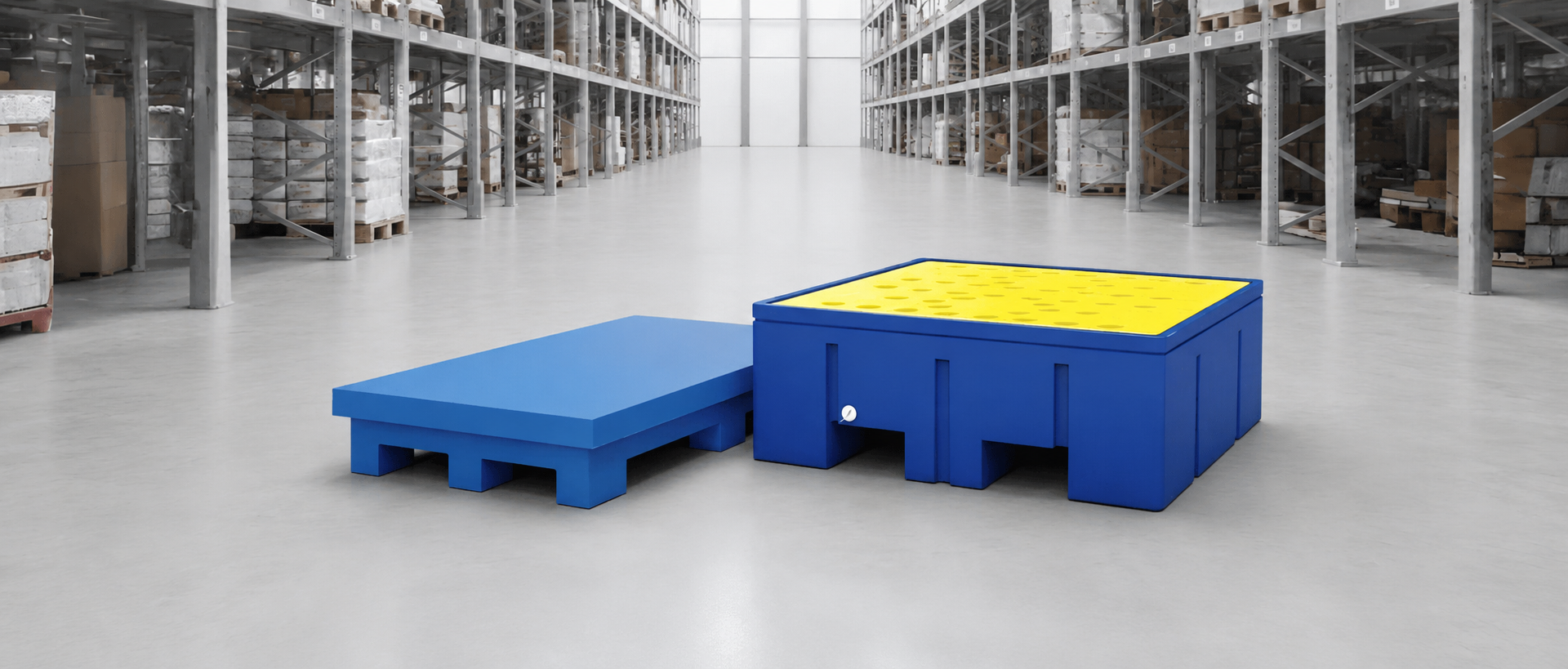
Rotomoulded models are molded as a single piece, meaning they don’t have any joints or separate parts. The idea behind this is to avoid creating a weak point in the structure that will break down after repeated exposure to a busy warehouse environment. Rotomoulded boards are built to withstand that environment, and they outlast wood considerably in such use.
Where They Actually Make a Difference
Not every business needs the same type of pallet. It depends on what you’re moving and how often.
- Warehouse plastic pallets work well for general storage, where consistent sizing makes stacking and racking simpler.
- Plastic pallets for logistics matter most on long routes, multiple handoffs, or export shipments where damage risk adds up fast.
- Heavy-duty plastic pallets are built for bulk loads and repeated forklift use, the kind of daily wear that destroys wooden pallets within a couple of years.
- Plastic shipping pallets handle better during an export trip as they often bypass much of the same wood-treatment regulations involved in the export process.
In food, pharma, or chemical industries, plastic is a clear winner when considering hygiene, as food-safe packaging materials can even be sanitized. Any bacteria found on a wooden crate or pallets will be difficult to totally remove.
The Real Cost Comparison
On the bottom line, wood appears less costly than the actual price tag. However, typically a wooden pallet can wear out in just two or three years-and that’s not considering cracking and splintering. A plastic pallet can likely operate in those same environments for 8-10 years.
Calculate all these replacements, repairs, and the occasional damaged shipment, and plastic always works out cheaper in the long run. It is not the fact of paying more. It is the case of paying one single time and not 3 to 4 times.
What to Check Before You Order
A few aspects matter a lot more than one can expect:
Load capacity: The standing load, moving load, and the rack load are never a single number. Make sure you know all three.
Dimensions fit: UK standard, Euro pallet, or custom dimensions that work perfectly with your racking system and transport setup.
Entry type: Two-way or four-way, depending on your forklift access.
Certifications: Especially important if you’re exporting to the EU, where standards are strict.
Consistency: A good plastic pallet manufacturer should deliver the same quality order after order, not just on the first batch.
Picking a pallet based on price alone is a common mistake. The pallet that looks cheapest upfront can end up being the most expensive one once it starts failing under real situations.
Why Supplier Choice Matters as Much as the Product
Many UK businesses who are on the lookout for a plastic pallet supplier UK will inevitably end up comparing spec for spec, instead of looking for the people providing it. This will likely get them the wrong plastic pallet! Your plastic pallet supplier should understand what you’re hauling, the handling methods used, export criteria, etc. So they can guide you to the most suitable product.
This matters even more for businesses running fleets across multiple sites, where one bad batch of pallets can slow down an entire operation. Consistency and support from the supplier end up mattering just as much as the plastic itself.
The Bigger Picture
Switching from wood to plastic is not a trend to follow. These are the answers to the pain points: smashed boards, splinters, hygiene failures, and the endless replacement costs of a failed, unsupported pallet. When operating in the UK for warehousing, logistics, and manufacturing, plastic pallet UK solutions are the quiet fix, the one that doesn’t need looking after or servicing.
Pallets are probably the most ignored piece of equipment on the warehouse floor. Yet, for those companies that have embraced alternatives, they no longer give them any thought at all, which is really what it’s all about.