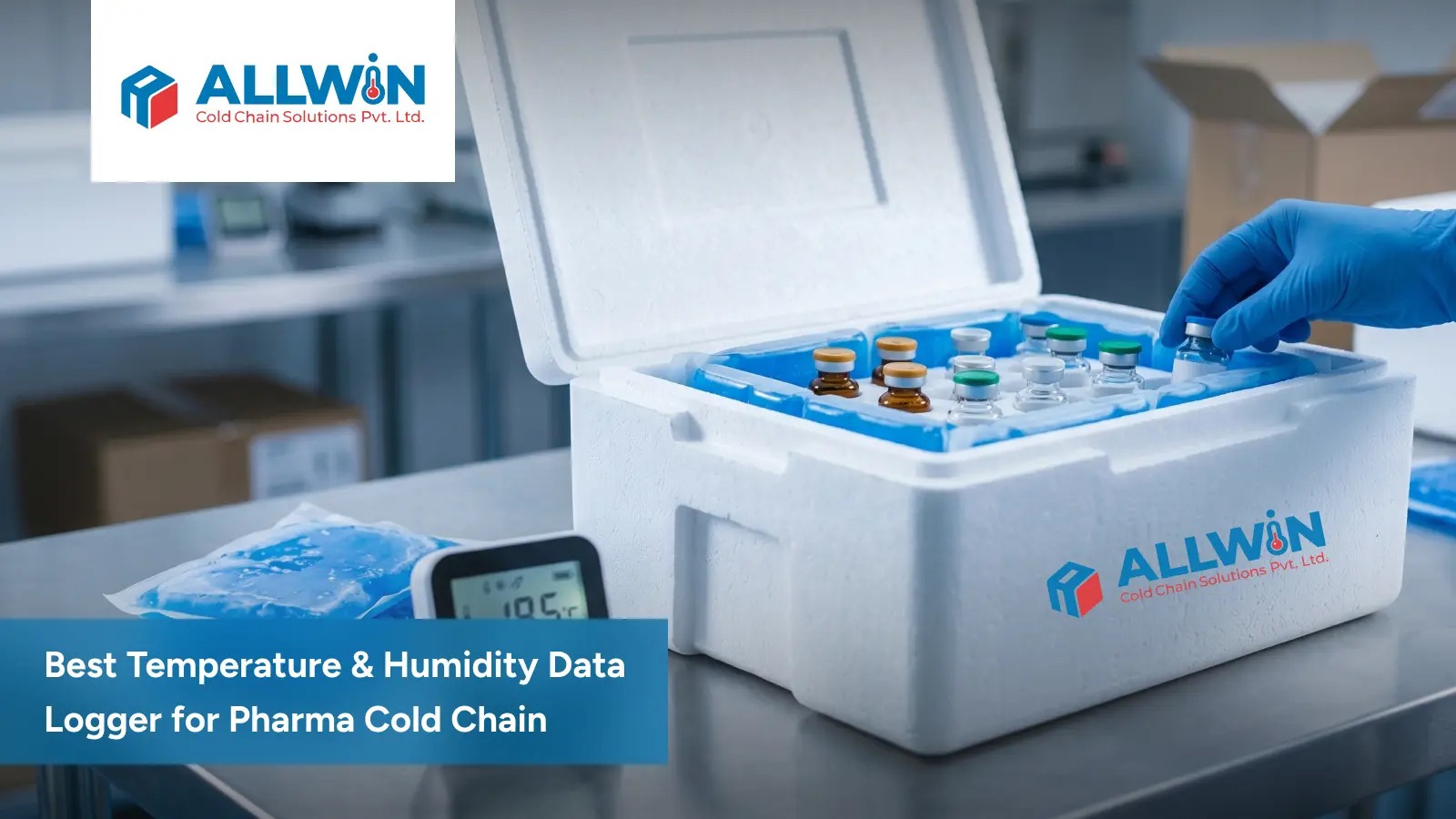
This is where the best temperature humidity data logger becomes useful. This little device, usually ignored when it comes to insulated containers and refrigeration trucks, is the only tool that tells you what happened inside during transit.
The Problems You Can’t See Can Cost the Most
Pharmaceutical products don’t always show visible signs when something goes wrong. Insulin kept in unsafe conditions for a couple of hours appears similar to the insulin that did not. Tablets exposed to too much moisture might not show any damage for weeks. This is why you can’t just rely on how a product looks when it freshly arrives.
A pharma cold chain data logger removes all the guesswork. It records temperature and humidity at regular intervals throughout the time period, so you get a full picture instead of a single check at delivery.
The Role of Humidity in System Performance
While temperature usually takes center stage in any discussion about cold chain safety, there is another important factor – humidity. For certain products, such as moisture-sensitive drugs, even moderate fluctuations in humidity can result in damaged product, including warped packaging, cracked labels, and clustered tablets.
Because these issues are not readily visible to consumers, a failure will usually not be caught until a later point in time, resulting in failed product inspections.
Temperature monitoring alone doesn’t work as well. When you use temperature and humidity data loggers together, or a dual-sensor, it gives a clearer picture of what the shipment went through.
Picking the Right Logger for the Job
Different shipments require different kinds of monitoring. It’s helpful to consider this simplified overview:
Single-use loggers: Best suited for single, one-time shipments such as clinical samples, exports, and many other goods for which a unique shipment document is required.
Reusable loggers: More cost-effective for regular domestic routes, since the same device gets used again and again.
USB loggers: Cheap and reliable, but you only find out what happened once the shipment has already arrived.
Wireless loggers: Send alerts the moment temperature or humidity crosses a safe limit, so you can actually do something before the product is ruined.
Wireless cold chain data loggers with alarms are almost always a cost-effective investment for more sensitive or expensive shipments such as vaccines or biologics. But if the cargo isn’t a major financial risk and can be reliably shipped using less sensitive methods, then a basic, reusable device may suffice.
What Auditors Check For
Rules around monitoring the cold chain have changed over time. Here are a few things that the auditors check:
- Devices calibrated against a certified standard, with valid certificates kept on file
- Digital records that can’t be edited or tampered with after the fact
- Data covering the entire journey, not just the start and end points
- Accuracy that is in an acceptable range, commonly 0.5C for temperature, and 3% RH for humidity
If you have a pharmaceutical data logger that is incapable of generating a clean, exportable report, it will not withstand an auditor asking you for proof. This is where many companies stumble. They buy equipment that records the data but doesn’t report in a format that an auditor will find satisfactory.
Where This Really Counts
This is particularly evident with vaccine distribution. The World Health Organization has estimated that close to half of the vaccines produced in the world are wasted each year due to temperature issues. When a vaccine is only slightly more than a few degrees too warm for just a couple of hours, it will no longer be effective without you ever knowing it.
The same risk occurs with insulin, antibodies, and other biologics on a long journey-particularly if it’s crossing a region with a wide temperature variation. A single shipment can be transported through a cold storage facility, then an unrefrigerated truck, and then into a custom holding area – each point where temperatures can vary.
Final Thoughts
A data logger can tell you exactly what happens. But on its own, it will not prevent the issues in the first place. This is why businesses like Allwin Cold Chain Solutions, based in Gandhinagar, treat this as a broader strategy rather than viewing it in isolation. Combining a reliable pharma temperature logger with suitable insulated packaging and cooling pads means the shipment is safe and checked upon.
Instead of merely demonstrating that a problem has really occurred, it helps to prevent the occurrence.