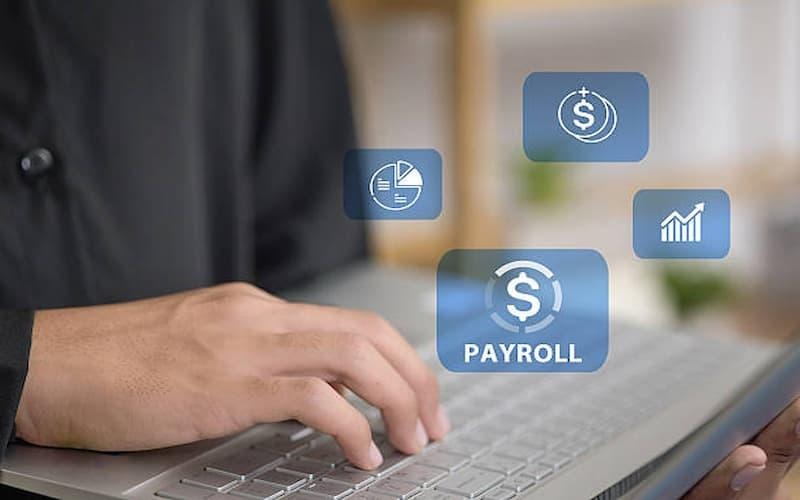
Managing employees across different locations has become a common practice for modern businesses. Nevertheless, managing salaries, tax deductions, attendance records and compliance issues related to a distributed workforce might be hard. An effective payroll and hr management system assists the organizations to simplify their payroll activities, minimize manual labor and administrative mistakes.
Businesses that adopt advanced HR technology can improve accuracy and ensure timely salary payments and maintain compliance with changing regulations. Quickdice solutions can help companies to effectively operate payroll processes and support remote teams and maximize overall productivity of the workforce. The necessity of effective remote employee payroll management is consistently increasing as remote working becomes a long-term business strategy.
Streamline Remote Employee Payroll with Smart HR Software Solutions
Why Payroll Management Is More Challenging for Remote Teams
Remote employee payroll control is more complex as compared to the old-fashioned payroll in the office. Workers can be based in various locations that have diverse taxation systems, labor policies and work attendance policies. Without centralized systems it may be challenging to track work hours, overtime as well as leave balances and reimbursements. Firms should also be able to provide secure data processing and salary payment on time so efficient payroll processing is critical to guarantee compliance, accuracy and satisfaction by employees.
Key Ways HR Software Simplifies Payroll for Remote Employees
1. Centralized Employee Information
HR software is used to store the details of the employees, their contracts, salary and tax related information in a single safe platform. This will remove the disseminated spreadsheets and paperwork and allows HR teams to easily access and update the information when necessary and maintain a uniformity in all processes related to payroll.
2. Automated Salary Calculations
Errors and delays may arise out of manual calculations of payroll. The HR software automatizes salary processing, deductions, bonuses and overtime calculations with predefined rules. This automation enhances accuracy, decreases the workload imposed on administration and also assures that employees are paid the right amount at each payroll period.
3. Accurate Attendance Tracking
Remote work tends to have the need of effective attendance checks. At HR software, the attendance tracking tools are built in and the working hours, shifts and absences are automatically recorded. Validity in attendance data is also useful in enabling organizations to effectively run payroll services with minimal conflicts over working hours and remuneration.
4. Streamlined Remote Payroll Processing
Effective remote employee payroll management becomes easier when payroll tasks are automated and centralized. The Hr software enables real-time information on the schedules, pay frameworks, and attendance details of the employees and thus the payroll departments can quickly generate salaries, remain consistent and accurate in remote workforces.
5. Compliance with Tax Regulations
The various places might possess different tax regulations and working conditions. HR software aids in keeping businesses in line with new tax regulations and statutory deductions by automatically applying the new regulations. This will minimize risks of compliance and minimize the risks of incurring expensive fines or lawsuits.
6. Secure Payroll Data Management
Pay Roll information has sensitive details of the employees and needs to be highly secured. The HR software is encrypted, has access controls, and a secure method of authentication, which protects records. These security controls assist organizations in keeping secret information as well as granting the authorized access to information when necessary.
7. Leave and Benefits Integration
The use of manual systems may be time consuming in handling employee leave and benefits. HR software includes the benefits administration and leave tracking into the payrolls. This will guarantee proper calculation of salaries and automatically deductions, paid leaves and benefits of employees.
8. Employee Self-Service Access
The contemporary HR systems come with self-service portals, through which the workers can access the payslips, tax and personal records. This saves on HR workload, enhances transparency and enables remote workers to access information pertaining to payroll without necessarily having to seek direct service.
9. Real-Time Payroll Reporting
HR software can create payroll reports in real-time, providing details on payroll costs, taxes and employee costs. Such reports assist the management to make wise financial choices, track trends in payroll and have a better control on how the organization spends its money.
10. Integration with Business Systems
Numerous HR solutions are compatible with accounting, finance, and workforce management systems. Such connectivity will minimize redundant data, enhance the accuracy of information and generate a streamlined workflow that will result in better overall payroll efficiency and business processes.
Best Practices for Managing Payroll for Remote Employees
- Ensure proper employee records are maintained.
- Automate any payroll calculations where feasible.
- Develop clear payroll policies, payment schedules
- Regularly review compliance and tax requirements
- Carry out payroll audits to determine inconsistencies
- Train HR staff on payroll software and updates.
Conclusion
Remote work is flexible and provides access to a larger pool of talent, but presents payroll complexities which a business needs to consider when implementing. Attendance tracking, salary computations, tax compliance and secure record management are just but a few examples of functions that organizations require an efficient system to handle their payroll functions.
Using contemporary HR software assists businesses in enhancing precision, lessening management workload, and guaranteeing conformity among dispersed teams. Through best practices and automation, organizations can have a smooth remote employee payroll management system, improve employee satisfaction and contribute to the long term organizational growth.