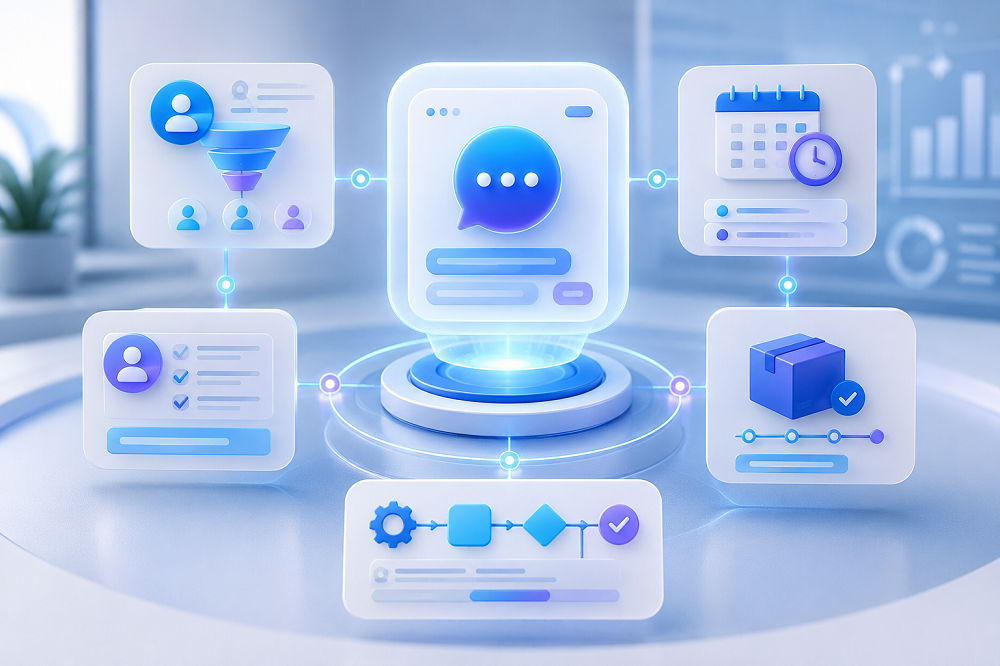
The life cycle of software development is reducing. Engineering teams that once shipped code quarterly now deliver updates weekly, or more than once every day. In this rapid setting, typical quality assurance testing bottlenecks might delay releases. This urgency has hastened the use of AI in software testing to streamline release workflows.
Intelligent automation has been used by the majority of testing teams globally in their testing workflows. This rapid integration has sparked intense speculation across engineering departments: can AI replace human testers?
Well, the short answer to this question is simply “Nooo!!”. However, you’ll frequently see the headlines proclaiming that there will be no need for human validation due to the autonomous agents. But the actuality in the real data is very different.
The true narrative of modern engineering is not about displacement; it is about transformation. The use of AI in software testing shifts the focus of teams on quality to its very core, making the discipline a strategic risk mitigation instead of repetitive checking.
The Capabilities and Technical Limits of AI-Driven Testing
To differentiate technical truths from marketing fluff, teams need to examine which machine learning models are reliable in production pipelines and where they break down.
What AI Excels at in QA Pipelines
Contemporary big language models and machine learning algorithms are quite good at handling structured, data-heavy, repetitive activities.
- Self-Healing Test Automation: Brittle UI locators are the most common cause of pipeline failures in outdated testing frameworks. If a web element ID changes from submit_button_v1 to btn_submit, old scripts will break. The AI-enabled testing platform utilizes sophisticated semantic mapping to identify that the object retains its location and functional value. The script includes self-healing features to dramatically minimize the false positive failure rate.
- Boilerplate Test Case Generation: Intelligent tools scan complex requirement documents and generate thousands of generic CRUD (Create, Read, Update, Delete) test cases, boundary conditions, and inputs in seconds.
- Predictive Analytics: Predictive models employ historical defect data and code repository commits to predict which software modules are most likely to have regression problems. This allows teams to focus on particular test suites and not run a whole multi-hour regression pack on every tiny change.
Shifting From Replacement to Collaboration
The future of software engineering depends on structured human and AI collaboration. Attempting to build an engineering strategy solely on automated scripts results in critical quality gaps. Conversely, relying purely on manual workflows slows down product delivery.
Discover how to transform your deployment pipelines and successfully integrate these workflows by reviewing practical strategies for AI in QA. The optimal approach uses machine learning as an efficient engineering assistant. By deploying AI in software testing to handle high-volume, repetitive tasks, human experts gain the bandwidth to solve high-impact problems.
Testing coverage increases significantly when teams use a combined approach. When automation lowers the time required for routine script maintenance, QA organizations do not reduce their headcount; they reallocate their expertise. They focus on advanced security validation, high-concurrency performance engineering, and system architecture optimization.
Why Manual Testing and Human Oversight Remain Irreplaceable
The idea that automated systems can completely take over manual testing ignores the creative nature of finding software flaws. Finding critical vulnerabilities requires human intuition, curiosity, and systemic exploration.
| Attribute | AI-Driven Automation | Human Testers |
| Execution Basis | Matches patterns and pre-defined constraints. | Applies intuition, domain knowledge, and logic. |
| Testing Methodology | Predictable verification of known parameters. | Exploratory testing and edge-case discovery. |
| User Experience Check | Pixel-matching and strict DOM validation. | High-fidelity usability and emotional empathy. |
| Risk Prioritization | Statistical correlation based on historical data. | Evaluates real-world business impact and risk. |
Experienced software engineers know that the most severe, business-breaking bugs rarely hide within standard, happy-path test scripts. They reside in unexpected combinations of user behavior and edge cases that no historical dataset has recorded.
Exploratory testing is an unstructured, cognitive activity in which a human analyst models the real-world behavior of an end user. Testers continuously adapt their approach based on live system responses. This creative problem-solving process cannot be replicated by algorithmic pattern-matching, which is why expanding the use of AI in software testing still requires strong human guardrails.
Actionable Strategy: Future-Proofing the QA Ecosystem
To reconcile quick release cycles with stable deployments, businesses need to move beyond the adoption of tools to an intelligent testing architecture.
Establish Data Readiness
Machine learning engines need clear, organized inputs. Standardize your organization’s bug tracking, requirement documentation, and historical test repositories to give dependable context for automated tools.
Deploy Self-Healing Mechanisms First
Reduce the priority of maintaining scripts. The inclusion of intelligent locators in existing regression pipelines generates an immediate return on investment by stabilizing delivery pipelines.
Enforce Human-in-the-Loop Validation
Never let automated systems develop and commit code changes without engineering review. Set validation points where senior analysts can examine created test scenarios to eliminate gaps in reasoning.
Leverage Advanced QA Platforms
Develop customized tools to support this hybrid approach. Engineering teams may take advantage of sophisticated automation suites to remove manual operational friction and deploy high-quality code at speed.
Concluding Thoughts
Ultimately, the goal of incorporating AI in software testing is not to build an unmanned testing department. The objective is to establish a robust human and AI collaboration to enhance velocity while not giving up on the dependability of the service.
By focusing on this hybrid model, organizations ensure their quality assurance testing framework remains scalable, dependable, and ready for future deployment challenges.