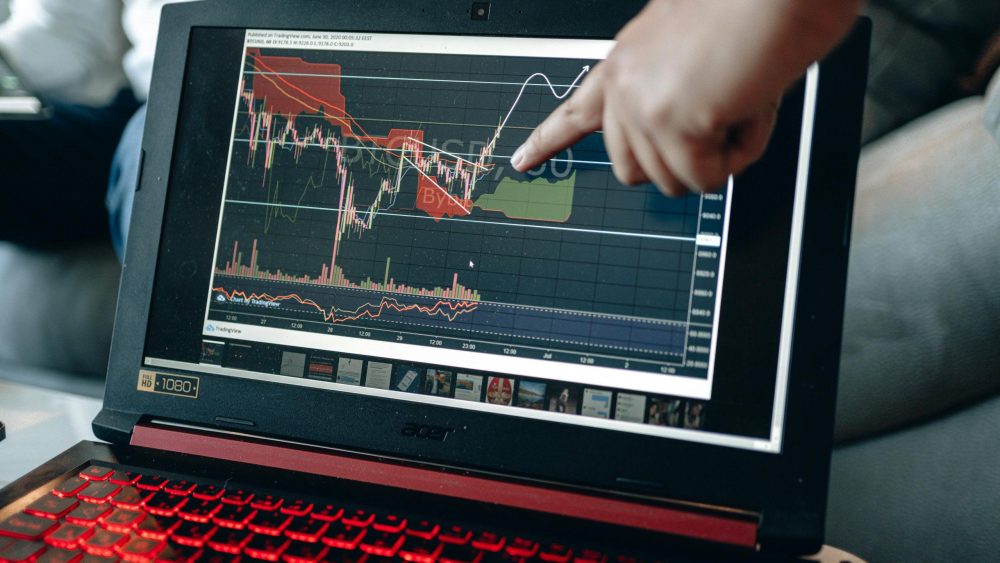
The very reason why market volatility could play a key role in understanding the performance of indices is because it directly impacts on traders’ ability to efficiently and effectively operate in indices trading. Ideally, volatility can be defined as a measure of fluctuation in the value of an asset over time, while in the case of indices, it is a measure of how much the value of a broad market or sector can change within a given period. The relationship of indices to market volatility can be quite intricate, though one can really gain an understanding that will be useful in trading decisions.
Indices usually show more pronounced moves in volatile markets, thus offering opportunities and risks for traders. Such factors generally include the mix of economic data release, corporate earnings, political events, or even global crises. Examples of this can be seen in times of economic uncertainty or geopolitical tensions where indices are usually much more volatile when investor sentiment shifts from optimism to fear.
To some extent, an index trader benefits or suffers from the effects of volatility. High volatility implies there would be more movement in prices and therefore more scope for profitability for those who can ride it. Traders could take advantage of short-term price fluctuations by using a number of techniques, including technical analysis, to forecast how prices might shift and where the entry and exit points are. On the other hand, volatility does expose those to great risk in the form of large, unanticipated movements that can bring about significant losses if they are not controlled.
The reasons why indices are prone to volatility is the nature of contents. Indices are simply a collection of stocks, and stock performance can impact index performance. Its sensitivity to both bad and good news also makes indices more vulnerable to news flow: for instance, when a few prominent companies in an index suffer setbacks, such as poor earnings or changes in leadership, the whole index can be dragged down and the volatility increased. Conversely, good performance by major companies within an index can push up the index.
Of all these indicators used, the most widely applied index is the Volatility Index, or VIX. The VIX is developed to gauge expected volatility in the S&P 500 index in the next 30 days. A higher reading of VIX implies a higher volatility whereas a low reading of VIX indicates a calmer market. By the changes in VIX, traders can determine the performance of the indices and use it to adjust their strategy accordingly.
Knowing how an index responds when the scenario becomes volatile increases traders’ options and decisions.
In periods of high volatility, traders are known to be more risk-averse and may use stop-loss orders to limit possible losses. The lower volatility, then, can lead to longer-term trades and fewer drastic price corrections. Awareness of the market conditions and adjustments of strategy in light of volatility considerations helps a trader in setting himself up for better promising results in indices trading.