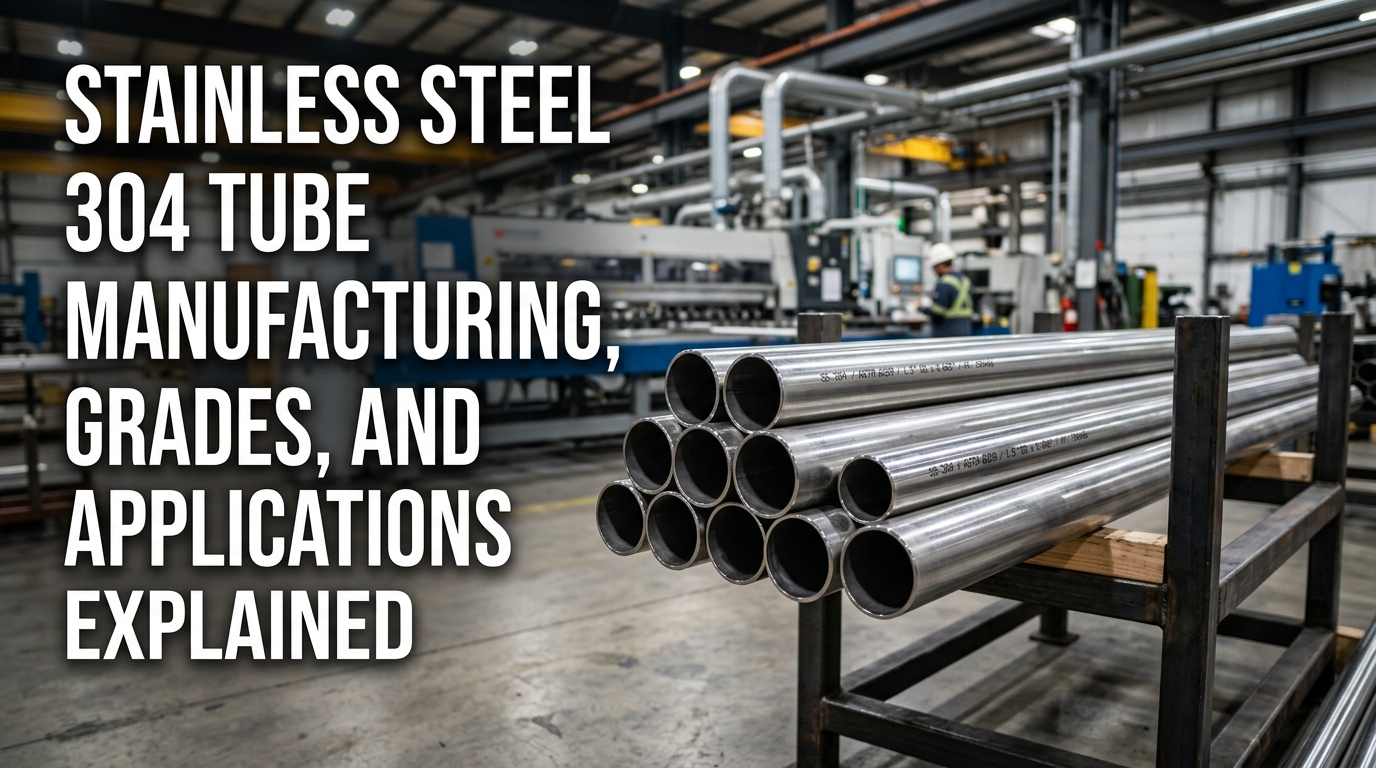
The demand for industrial tubing continues to increase globally. Plant managers regularly specify the stainless steel 304 tube for their facility upgrades. Grade 304 provides reliable performance in food processing and water treatment operations. Knowing the manufacturing methods and specific grade variations helps buyers select the right material for piping systems.
What Makes Stainless Steel 304 Tubes a Popular Choice?
The key characteristics of Grade 304 stainless steel start with its exact chemical composition. The material contains 18 % chromium and 8 % nickel. This specific mix provides natural corrosion resistance against moisture and harsh chemicals. Workers find clear fabrication advantages during installation because the mechanical properties allow for bending and standard welding without cracking. These factors clearly show the advantages over conventional carbon steel tubes. Carbon piping rusts quickly in damp factory environments and requires constant repainting. Grade 304 remains stable and structurally sound without extra surface treatments. This keeps system maintenance costs low over the operational lifespan.
How Stainless Steel 304 Tubes Are Manufactured
Factories start with careful raw material selection before beginning the manufacturing process of stainless steel 304 welded tubes. Flat metal coils undergo cold forming processes to create a cylinder shape. Automated welding operations seal the long seam. The mill then applies heat treatment to remove internal metal stress. The production of the SS 304 seamless tube follows a different path. A solid steel billet is heated and pierced to form a hollow shell. Extrusion equipment sizes the pipe. Both methods finish with strict quality inspections. Workers check the final wall thickness and test the material for any hidden structural defects.
Understanding Different Grades Related to Stainless Steel 304 Tubes
Plant managers must evaluate specific selection criteria based on application requirements. Regular Grade 304 works for standard fluid piping and structural supports. Grade 304L has a modified chemical makeup with lower carbon limits. The impact of carbon content on performance becomes clear during heavy welding. Lower carbon stops carbide precipitation and prevents localized corrosion at the weld seams. Engineers decide when to choose 304 over 304L based on material thickness. The standard grade functions perfectly for regular thin-walled installations. Buyers specify the L version specifically for thick sections that require multiple passes from welding equipment.
SS 304 Seamless Tube vs Stainless Steel 304 Welded Tube
The manufacturing differences dictate where each pipe belongs. A SS 304 seamless tube lacks a weld joint completely. This solid construction handles high internal pressure very well. Refineries prefer seamless pipes for hazardous fluids. The stainless steel 304 welded tube costs less to produce. Production lines can make welded pipes faster and in larger diameters. The strength is slightly lower than a seamless pipe, but entirely sufficient for low pressure water lines and structural supports. Plant engineers evaluate the budget and operating pressure before selecting between the two options.
Common Applications of Stainless Steel 304 Industrial Piping Tubes
Applications in Hygienic Processing Systems
Facilities require clean environments to prevent daily contamination. The smooth surfaces of SS 304 tubes allow for necessary chemical washdowns.
Food processing
Factories use these pipes to move raw ingredients safely. The metal does not react with acidic food products like tomatoes.
Beverage production
Breweries rely on this tubing daily. It prevents bacterial growth inside the factory lines holding fermented liquids and filtered water.
Pharmaceutical manufacturing
Drug makers need strict sanitary conditions. The piping handles purified water and liquid medications without altering the final chemical structures.
Applications in Industrial Fluid Transportation
Heavy industrial plants transport large volumes of liquids. The piping networks must withstand continuous flow and standard environmental mechanical stress.
Water treatment
Municipal plants push treated water through large pipe networks. The material resists degradation from standard purification chemicals like industrial chlorine.
Chemical handling
Factories pump mild chemicals and industrial solvents through these lines. The tubing maintains structural integrity under constant direct chemical exposure.
Architectural projects
Builders install these units as reliable structural supports. The metal remains completely sound and stable in severe outdoor weather conditions.
Important Quality Standards for Stainless Steel 304 Tubes
Manufacturers follow strict ASTM specifications during daily production. These written guidelines dictate the exact chemical limits and dimensional tolerances acceptable for commercial use. Factories must deliver products that meet precise outside diameter and wall thickness measurements. Proper surface finish requirements ensure the piping functions correctly in its final location.
Material Testing and Certification Requirements
Steel mills issue testing certificates with every batch. Inspectors run mechanical tests to verify yield strength and tensile limits. The lab also conducts chemical analysis to confirm chromium and nickel percentages match specifications.
Quality Checks Before Industrial Installation
Workers perform non destructive testing to find hidden defects. Hydrostatic testing forces water into the pipe to verify pressure limits. These final inspections guarantee the material will not leak or fail under operational stress.
Factors to Consider When Selecting Stainless Steel 304 Tubes
Buyers must review several technical details before placing a material order. Evaluating the system requirements ensures the piping will survive the intended daily plant operations.
- You must assess the operating environment temperature before finalizing the material grade.
- Engineers need to calculate the exact internal pressure requirements of the system.
- The level of regular corrosion exposure dictates whether a basic grade works.
- Buyers decide on the specific tube type selection based on project budgets.
- Plant managers should factor in long term maintenance considerations and replacement labor costs.
Conclusion
Paying attention to manufacturing quality prevents premature pipe failures. Proper grade selection ensures the system handles the daily workload. The benefits of the stainless steel 304 tube apply across many different factory setups. This material delivers long term reliability and functional versatility for heavy industrial and clean room applications alike.