In today’s world, when everything is digitally connected, full care needs to be taken for privacy, security, and effective access to all resources over the internet. This is where proxy servers come into great importance. But the question would be what exactly a proxy server is, how it works, and what its benefits are. Here’s a comprehensive guide on all you need to know:.
What is a proxy server?
Well, the proxy server is any other server acting as an intermediary between your device and the Internet. In fact, every request you have to access a particular website or any other online resource travels to the proxy server first. Thereafter, it’s the duty of the proxy to forward this request to its destination server, fetch the requested data, and send it to your device.
In other words, it reroutes your request to other servers while masking your IP address in the process-a cloak of privacy and control as to how you access the internet.
How Do Proxy Servers Work?
Working a proxy server can be summarized as under:
- User Request: The client-you-send a request to access some website or online resource.
- Proxy Interception: The request then has to be intercepted by the proxy server, which should forward it to the target server.
- Data Retrieval: In this stage, the target server will process the request and send it back to the proxy server.
- Delivery to User: The proxy relays the response back to you.
Basically, this is how the proxy server conceals your identity since the target server will communicate with the IP address of the proxy, not yours.
Type of Proxy Servers
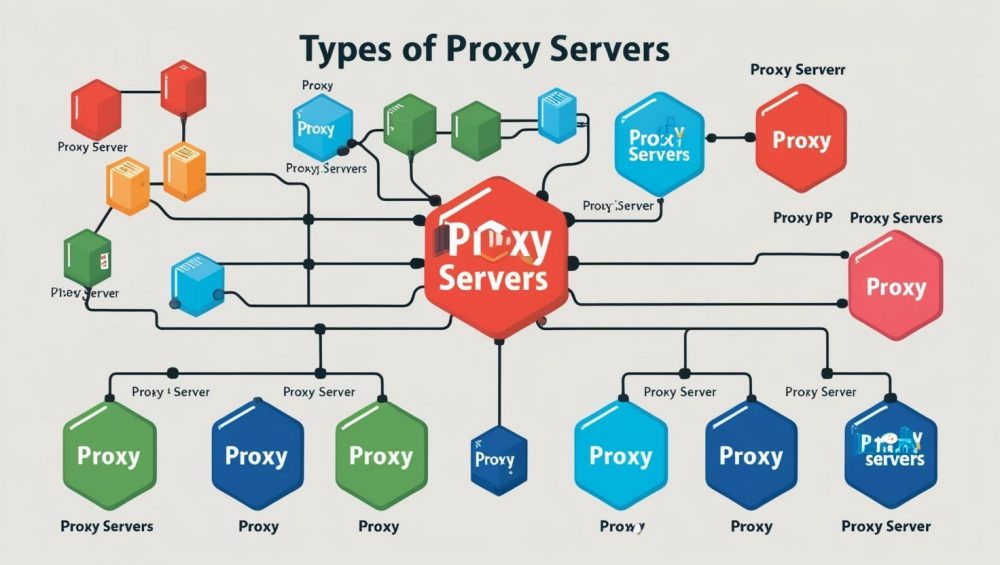
There are lots of proxy servers out there, each designed to handle specific tasks. A few of the most well-known types are listed below. Forward Proxies: They access resources that may be restricted by clients. Very common inside organizations for monitoring and controlling Internet usage. Reverse Proxies: These sit in front of a web server and deal with incoming requests. Improve performance and security by distributing traffic and masking the server details. Transparent Proxies: Transparent proxies operate without knowing the users. Very often deployed at schools or at work to enforce content filtering. Anonymous Proxies:
Mask one’s IP address for privacy.
Good for bypassing geo-restriction or accessing something that has been blocked.
Elite Proxies:
Completelly mask that you are using a proxy.
Provide maximum privacy and anonymity.
Residential Proxies:
Utilize IP addresses assigned to physical locations.
Most of the time used for web scraping or localized testing.
Data Centre Proxies:
Use IP addresses from data centres and not from valid locations.
Solution at reasonable prices for quick performance on automation-based browsing.
Advantages of Using Proxy Servers
Proxy servers have many advantages for individuals and businesses/organizations. Some of the key advantages are as follows.
Advanced Privacy and Anonymity:
It masks your IP address to make tracking and surveillance relatively tougher.
Bypass Geo-Restrictions:
Get access to those contents that are blocked depending upon your location, streaming services, or websites.
Improved Security:
Protect from cyber threats by filtering malicious traffic and access to harmful websites.
Bandwidth Optimization:
Cache frequently accessed content to save bandwidth and speed up browsing.
Content Control:
Allow an organization to log and block inappropriate sites or those not related to work.
Improved Performance:
Load balancing and reduction of latency of traffic, especially when reverse proxy is configured.
Use Cases of Proxy Servers
They serve in different areas in that perspective; proxies can be adapted into several applications, some common being:
- Web Scraping: Companies proxy the data directly from websites; this prevents blockage.
- Content Delivery: In a web caching process and the distribution of load from a website, reverse proxies apply.
- Online Privacy: Many use proxy masking to maintain confidentiality regarding personal information for avoiding data breaching, also, ad-blocking.
- Access Control: Companies implement policies where proxies are configured to deny access to specific content or control usage policies.
- Testing and Development: This could be to test the localized content or to see how a website behaves from another region.
How to Choose a Proxy Server
When choosing a proxy server, consider the following:
- Purpose: Clearly identify what your specific needs are, whether privacy, accessing content, or performance.
- Type: Choose an appropriate proxy server that will fit your goals.
- Reputation: Service availing should be a reputed provider- good reviews and transparent policies.
- Cost: Keep the perfect balance between cost and features that you are buying.
Conclusion
The proxy servers, in this digital century, is something indispensable in regard to privacy, security, and enhancement of efficiency in online dealings. Be it an individual trying to protect his identity or a businessman trying to optimize traffic and content delivery, a little understanding of how proxies work and their types can help you make informed decisions.