The choice of plywood in a house is not a trivial one. It has long-term impacts on the performance, durability and safety of interiors and structural components. The appearance and not the material strength is the concern of most homeowners. This kind of strategy is quite costly to fix. The awareness of the red flags of low-quality Plywood Sheets can be applied to prevent unnecessary damage. Close inspection also ensures that only the finest quality plywood enters your living room.
Bad plywood may be presentable on the surface. However, flaws are hidden and can be observed once installed and used regularly. Early detection of these indicators protects investment and structural stability.
Lumpy Surface and Exposed Core Fissures:
One of the initial indicators of low-grade material is surface inconsistency. Bad finishes are characterised by patches, bubbles or rough finishes. These flaws are signs of bad internal bonding and bad manufacturing.
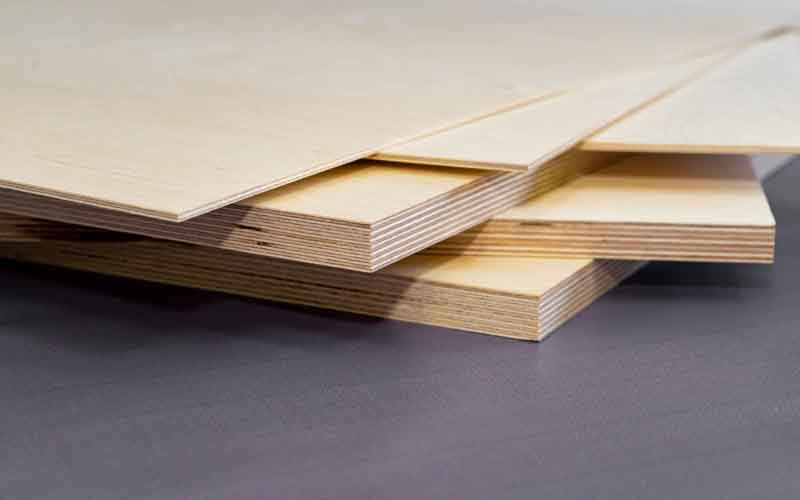
In Plywood Sheets, note the edges. The presence of observable interstitial spaces between the core layers is indicative of improper pressing and adhesive strength. These cracks reduce the structural integrity over time. On the other hand, the best quality plywood is uniformly layered with tightly bonded veneers. Smooth and even finishing is a sign of controlled production methods.
A clean surface is not just aesthetic. It is a sign of internal stability.
Weak Bonding and Delamination:
Delamination refers to the process of separation of the layers of plywood. This usually happens due to low adhesive strength or due to moisture. The sheet is no longer rigid when separation begins.
Low quality Plywood Sheets are prone to peeling at corners or edges. Internal weakness can be demonstrated even by slight pressure. The best quality plywood is stable and does not warp when used normally and exposed to the environment. The sheet is bonded closely to become one solid.
The bonding strength is tested before installation to reduce the possibility of structural failure in future.
Excessive Moisture Absorption:
Plywood is frequently subjected to moisture in kitchens, bathrooms, and exterior installations. Poor-grade material absorbs water quickly, leading to swelling and warping. This distortion affects the alignment of cabinets, panels and partitions.
Poor quality Plywood Sheets may show apparent bending when exposed to a little humidity. Internal damage is indicated by bubbles or swollen edges on the surface. Comparatively, the best quality plywood is treated accordingly to regulate moisture resistance. Controlled absorption is used to attain dimensional stability.
Moisture resistance is essential in interior and semi-exterior applications.
Abnormal Thickness and Structural Weakness:
Thickness evenness ensures load bearing. Poor production leads to disproportionate sheets that compromise strength. A small variation in thickness may be negligible, but it affects the accuracy of fitting.
Bad quality Plywood Sheets are sometimes lighter than their size. Reduced density implies reduced core layers or low-quality veneers. The best quality plywood that works well is one with constant density and equal distribution of weight. This consistency assists in the support of furniture, wall panels and external cladding without sagging.
Thickness accuracy implies that the manufacturing process is concerned with the material.
Knots and Core Defects:
Natural wood contains knots, and excessive defects render plywood weak. Big or slack knots render it weaker and may crack when installed.
Low-quality plywood sheets tend to have holes in the core that can be seen through the surface. These holes reduce screw holding and stability. On the other hand, the best quality plywood entails the use of graded veneers, which minimise structural defects. Reduced internal gaps ensure enhanced fastening and durability.
These internal inconsistencies may be seen by examining edges and cross sections.
Chemical Smell and Bad Treatment:
A strong chemical smell may indicate poor-quality adhesives or poor curing. These substances can affect indoor air quality and be hazardous to health.
Bad Plywood Sheets can also give off odour even after being installed. This means incomplete or poor-quality resins. High-quality plywood is produced with high-standard manufacturing processes that limit harmful emissions. Treatment ensures a safer indoor environment and improved life span.
Material safety must always be coupled with structural strength.
Lack of Certification and Brand Assurance:
Reliable plywood manufacturers comply with quality standards and measures. Absence of certification may be a sign of compromised production practises.
Unbranded Plywood Sheets lack the appropriate testing documentation. The claims of durability cannot be guaranteed without verification. The manufacturers of the highest quality plywood are identified and are open in regard to treatment, grading and performance testing. Certification creates confidence and reduces risk to homeowners.
Brand accountability supports long-term reliability.
The Significance of a Selective Choice:
Poor quality plywood may save money in the short term, but it will be more expensive in the long term. Unnecessary inconvenience is created by maintenance, replacement, and structural changes. These interruptions are prevented through material assessment.
Good performing Plywood Sheets are stable, do not absorb moisture and can hold a steady weight. The choice of the highest quality plywood will ensure that the interiors are safe and aesthetically intact. The performance of material strength is directly related to its use in modular furniture, exterior panels, or partitions.
Quality selection protects design intent and structural integrity.
A Reliable Investment in the Future:
Materials that do not compromise should be given to homeowners. Knowledge of warning signs allows informed decision-making before installation. Each detail matters, be it bonding strength or moisture resistance.Structural consistency and quality of treatment reduce risk in the selection of Plywood Sheets. Investment in the best quality plywood gives assurance for interior and exterior applications. CenturyPly offers performance and durability materials to offer reliable solutions in Exteria, Cubicles, and Louvres systems.