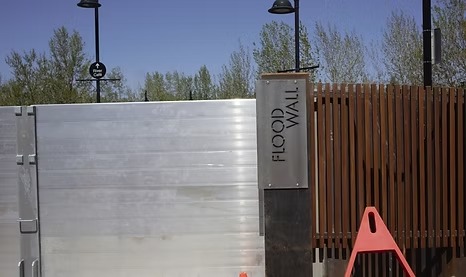
The need for flood defence planning is increasing due to the continuous changes in climate that are responsible for the unpredictable rainfall and higher flood risks in residential and public areas. The decision of what kind of protection system to use is not just about the ability to resist water but also involves considering long-term planning, installation costs, and the convenience of use. Nowadays, many communities and property owners weigh the pros and cons of permanent vs. temporary solutions in order to know which one is better for them. During the process of decision-making, Flood Barrier Systems have become a major topic due to their diverse characteristics, longevity, and the different ways of deploying them.
How are Permanent Barriers a Reliable Option?
Permanent flood barriers are unmovable installations that are often made of steel, reinforced concrete, aluminum panels, or strong flood-resistant walls. Their main benefit is the trustworthiness they provide. Once they are built, they remain there, always providing uninterrupted protection without the need for deployment time during emergencies. These barriers are installed particularly in coastal regions, commercial buildings, industrial facilities, and areas that are prone to floods on a regular basis.
Permanent barriers completely eliminate the need for quick response or manpower during heavy rains. The areas that take a long-term approach, such as the Flood Masterplan for Municipalities and Cities in Canada, mostly depend on permanent installations to lessen their susceptibility to flooding. The goal is to create durable, reliable barriers that fit with the growth of infrastructure, the zoning laws, and the water management plans. Besides the fact that these systems consistently offer safety, they also require a large amount of money and professional engineering to ensure the correct placement of the barriers and their strength against the water surge pressure.
Are Temporary Flood Barriers Economical for Emergency Use?
Temporary flood barriers are made for rapid response or flexible situations. They can be water-filled tubes, deployable walls, mobile panel systems, or sandbag replacements. The most prominent reason for selecting temporary options is that they are economically friendly and easy to transport. They do not occupy space and are inactive when there is no flooding. This is very practical for homeowners, seasonal businesses, and municipal emergency response teams.
For areas that are not under constant threat, these systems represent an intelligent solution. Many models today are lightweight, reusable, and speedy to position, fitting the category of Flood Systems Easy to Deploy. Temporary barriers are also quite versatile, in that they may often be stretched over various sites as conditions require. On the other hand, their success rests upon prompt reaction and correct deployment. In cases when deployment is late or improper, water could find its way through and inflict damage that may have been unexpected.
Which system provides more adaptability for different flood events?
Temporary systems excel in flexibility due to their ability to adapt to changed water levels and varied terrains. They are ideal in places where floods are unpredictable or intermittent. Seasonal towns, properties near rivers, and inland communities benefit from systems that can be assembled only when the storm alert is issued. This makes such systems economical because they reduce unnecessary spending on permanent structures in areas where risk levels are not constant.
Permanent barriers are best attuned for providing consistency, not flexibility. They give protection without breaks, but they remain in a single position and cannot be relocated. Their purpose fits long-term solutions for planning; that is why they are among the items in a Flood Masterplan for Municipalities and Cities in Canada. Flexibility will depend on the need—consistent high-risk areas benefit from being stabilized through fixed structures, while unpredictable zones get protection from mobile defenses embedded within Flood Systems Easy to Deploy strategies.
Which one is more practical for your investment?
Permanent and temporary barrier options are selected based on long-term cost, performance, and maintenance. Permanent systems generally have higher initial costs but can provide a number of decades of protection with relatively low maintenance requirements.
Initially, temporary solutions may look like the best option from a cost perspective, but in the long run, the expenses for storage, changes, and maintenance could be high, especially in the case of using such solutions repeatedly. These systems are sensible in areas that experience occasional flooding rather than those that get flooded regularly. The risk frequency—constant flood exposure is in favor of permanent structures, while erratic weather conditions are in favor of the mobile systems—decides the long-term investment eventually.
Conclusion: Which Flood Barrier System Works Best?
Both permanent and temporary systems have their roles to play, whether by location, flood frequency, or budget. Long-lasting barriers serve as a backbone for long-term infrastructure, facilitate uninterrupted emergency response, and, most importantly, save disaster management resources by providing safety in advance. On the contrary, temporary measures are a source of the much-needed flexibility and low cost, particularly in places where flood risk is low or erratic. Since the probability of flooding has become a major global concern, it is of utmost importance to select an appropriate defense tactic. As you weigh the alternatives, keeping in mind how Flood Barrier Systems are congruent with local planning and emergency responsiveness can contribute to the creation of a more robust circle of protection, which will meet both the short-term and long-term imperatives.