It can be a confusing process to establish a career in music. Industry statistics show that the music education industry in India is expanding at 1820% per annum, and the demand for trained musicians is increasing. This expansion has good prospects but also indicates the necessity of appropriate skills.
There are a number of potential musicians who fail without formal training. Talent is not always sufficient to make it in the modern competitive industry.
This blog will give reasons why instrumentation careers require training. You will know the career paths, skills, cost, and how an instrument course in Noida in T-Series StageWorks can make you successful.
Why are instrumentation careers growing in India?
The music industry in India is growing rapidly. Demand is being fuelled by streaming, live performances, and online platforms.
Key growth factors:
- Over ₹12,000 crore annual industry revenue
- A quick increase in streaming and online consumption.
- Getting more international exposure for Indian artists.
Increasing numbers of artists are now requiring the services of trained instrumentalists who can be engaged to record and perform with the artist. This generates powerful career prospects in genres and platforms.
What is an instrument course in Noida, and what does it teach?
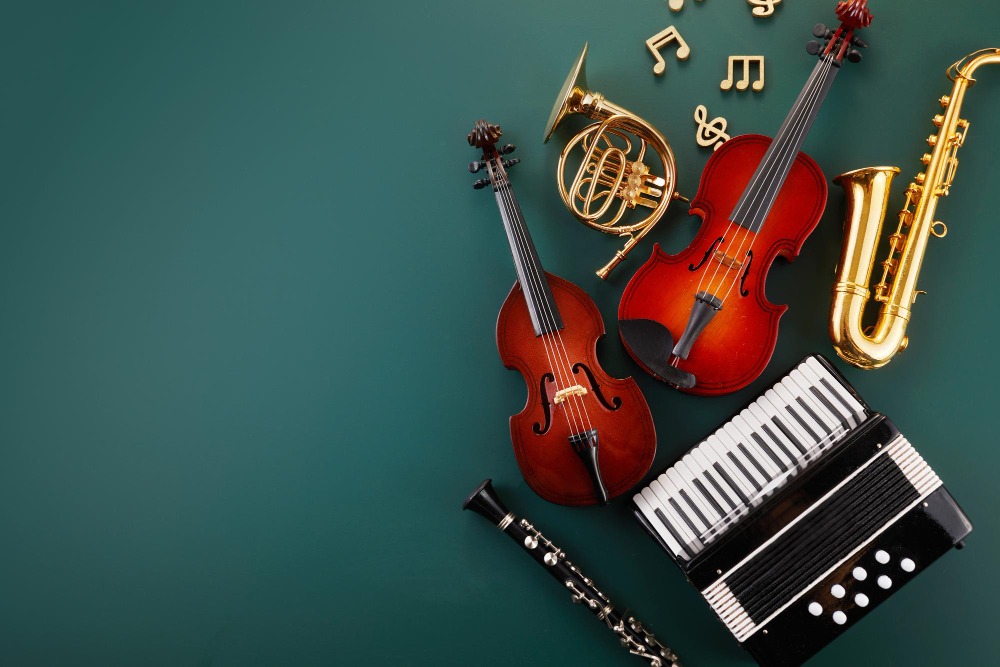
An instrument course is a structured course in music training. It is concerned with theory and practical skills. Below listed are the core learning areas
- Basics and techniques of instruments.
- Rhythm and music theory.
- Performance skills
- Studio exposure and recording.
- Practice of the ensemble and the band.
An example here is a guitar course, which teaches chords, scales and live performance skills. Training at T-Series StageWorks incorporates exposure to a real studio. This equips the students to work in professional settings.
What are the different types of instrumentation courses?
The decision to take the right path is based on your objectives.
| Course Type | Duration | Best For |
| Beginner courses | 2–6 months | New learners |
| Intermediate courses | 6–12 months | Skill development |
| Advanced training | 1–2 years | Professional careers |
| Specialised workshops | Weeks | Specific instruments |
Short courses enable you to begin fast. Professional expertise is developed through advanced programmes.
What skills do you gain from professional music training?
Training develops technical and creative abilities. Key skills include:
- Mastery and control of instruments.
- Accuracy in rhythm and timing.
- Music composition basics
- Stage confidence and performance
- Cooperation with other musicians.
As an illustration, trained musicians can easily fit into studio and live set-ups. Skill gaps may curtail career development without training.
Why choose an instrument course in Noida for your career?
Noida is becoming an artistic centre in NCR. Benefits include:
- Availability of contemporary music schools.
- Close to the entertainment industry of Delhi.
- Affordable training options
- Live performances and partnerships.
Place is a significant factor in networking and opportunities. Noida students enjoy the advantage of training as well as exposure to industry.
What career opportunities exist after instrumentation training?
The instrumentation provides a variety of career opportunities. Popular options include:
- Session musician
- Live performer
- Music producer
- Composer or arranger
- Music teacher
Entry-level pay is between 20,000 and 50,000 per month. Through experience, musicians are able to earn much more in gigs and projects.
Why is T-Series StageWorks the right place to learn instrumentation?
The selection of the appropriate institute determines your career. T-Series StageWorks offers:
- Industry-driven curriculum
- Hands-on instrument training
- Professional studio exposure
- Experienced mentors
- Performance opportunities
Their training is based on real-life skills and career preparedness. Looking to pursue your music career? Talk to experts at T-Series StageWorks today.
How do you build a successful instrumentation career?
- Take a course in professional instruments.
- Train every day and develop a routine.
- Play in small performances and events.
- Create a portfolio or demo recordings
- Network with artists and producers
- Keep abreast with music trends.
As an example, musicians playing on a regular basis have quicker recognition. Consistency and exposure are key to success.
What trends are shaping instrumentation careers today?
The careers in music are changing at a very high rate. Key trends include:
- Expansion of online streaming services.
- Emergence of independent artists.
- Growth in the need for live performances.
- Incorporation of technology in music production.
The streaming market in India is expected to expand tremendously in the years to come. Musicians need to be adjusted to the traditional and digital platforms.
Conclusion
Instrumentation careers present an exciting career in the expanding music industry. But to be successful, it takes more than talent. Structured training develops the competencies to achieve success.
The course is a professional instrument course in Noida, which offers practical learning and exposure to the industry. T-Series StageWorks assists aspiring musicians to make passion their profession. Book your consultation now and make the first step into music.