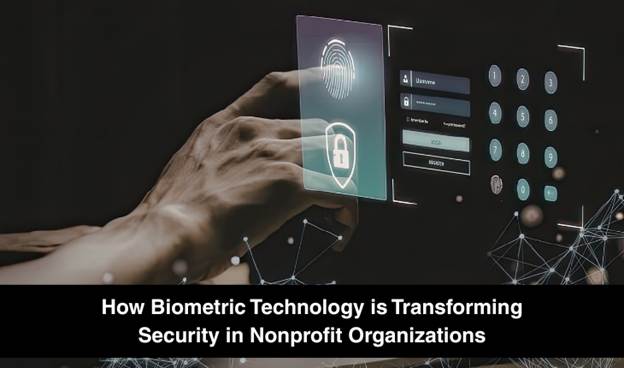
The digital environment that nonprofit agencies are involved with means that they’re becoming responsible for the care of a large number of private records — donor details, beneficiary records, and operational information — and it’s now a focus for those organizations to guarantee this information is kept both secure and accurate. Also, the nonprofit sector continues to need to find efficient ways of operating in a world of limited resources.
Biometric technology is emerging as a reliable solution to address these challenges. Innovations in fingerprint recognition systems, often discussed within the broader scope of the Mercado de Sensores de Huellas Dactilares, are helping organizations enhance both security and operational efficiency.
Understanding Biometric Technology
Fingerprint identification is one of many types of biometric technologies that utilize an individual’s physical features, like their thumb print, to identify them. Due to their cost and ease of use, fingerprint scanners have become one of the most commonly used biometric identification systems.
Biometric security provides more security than normal methods of identifying people, such as passwords and ID cards, because only the person whose thumb print it is can provide a matching fingerprint. Therefore, using biometric identification systems reduces the risk of unauthorized duplication and/or fraud. Many organizations that have a need to keep data private view using biometric technology as a very good option.
Applications in Nonprofit Organizations
There is growing use of biometric solutions by non-profit organizations as they look to enhance efficiency in their operations and increase the transparency of their business activities. The most important of these applications is the verification of identities using fingerprint identification systems. These systems allow organizations to confirm that assistance was provided to intended recipients and that no duplication or fraud occurred in the delivery of assistance.
Biometric systems also have a significant impact in the area of workforce management for non-profit organizations. Non-profits can utilize biometric systems to register and track the attendance of both employees and volunteers, control access to facilities, and provide accurate operational history for their organizations. This greatly reduces the reliance on manual processes and significantly decreases the potential for human error.
In sectors such as healthcare and humanitarian aid, biometric technology supports secure data management. It enables organizations to build reliable databases that protect sensitive information while ensuring accessibility when needed.
Benefits of Biometric Solutions
Using biometric technology has advantages for non-profit organizations:
1. Biometric technology is much more secure than traditional methods of identifying and recording people.
2. I would also expect that many non-profit organizations would find that the use of biometric technology reduces the amount of time that staff spends doing administrative work. By automating the process of verifying a person’s identity, staff members can spend more time on their mission rather than performing administrative tasks.
Another key advantage is improved transparency. Accurate tracking systems help build trust among donors, stakeholders, and beneficiaries, which is essential for long-term sustainability.
Challenges and Considerations
Despite its advantages, implementing biometric technology comes with certain challenges. Cost is one of the primary concerns, especially for small and medium-sized nonprofits with limited budgets.
Privacy should also be a key concern regarding biometric (e.g., facial recognition) systems; therefore, organizations must manage biometric information in accordance to the laws and guidelines relating to the protection of such data. A degree of transparency in how that information will be used is necessary for establishing trust.
There can also be technical barriers to using biometric systems (including physical infrastructure requirements and staff training); but, if planned out appropriately and implemented slowly I’ve found that these barriers can be overcome.
Future Outlook
In general, it seems that biometric technologies will become widely accepted by many nonprofit organizations due to advancements in technology and the rising cost-effectiveness/accessibility (particularly with regards to secure/efficient identity systems). With continuing growth within the industry (particularly with regard to fingerprint sensors), it is expected that there will be further growth with respect to biometric solutions generally across various sectors (including nonprofits), as they adapt to new/expanding digitally transformed environments.
Conclusion
Biometric technology is playing a crucial role in helping nonprofit organizations enhance security, efficiency, and transparency. By adopting fingerprint recognition systems and digital identity solutions, nonprofits can better manage their operations and serve their communities more effectively. While challenges such as cost and privacy must be addressed, the long-term benefits of these technologies make them a valuable investment. As the nonprofit sector continues to evolve, embracing innovation will be key to achieving sustainable impact.