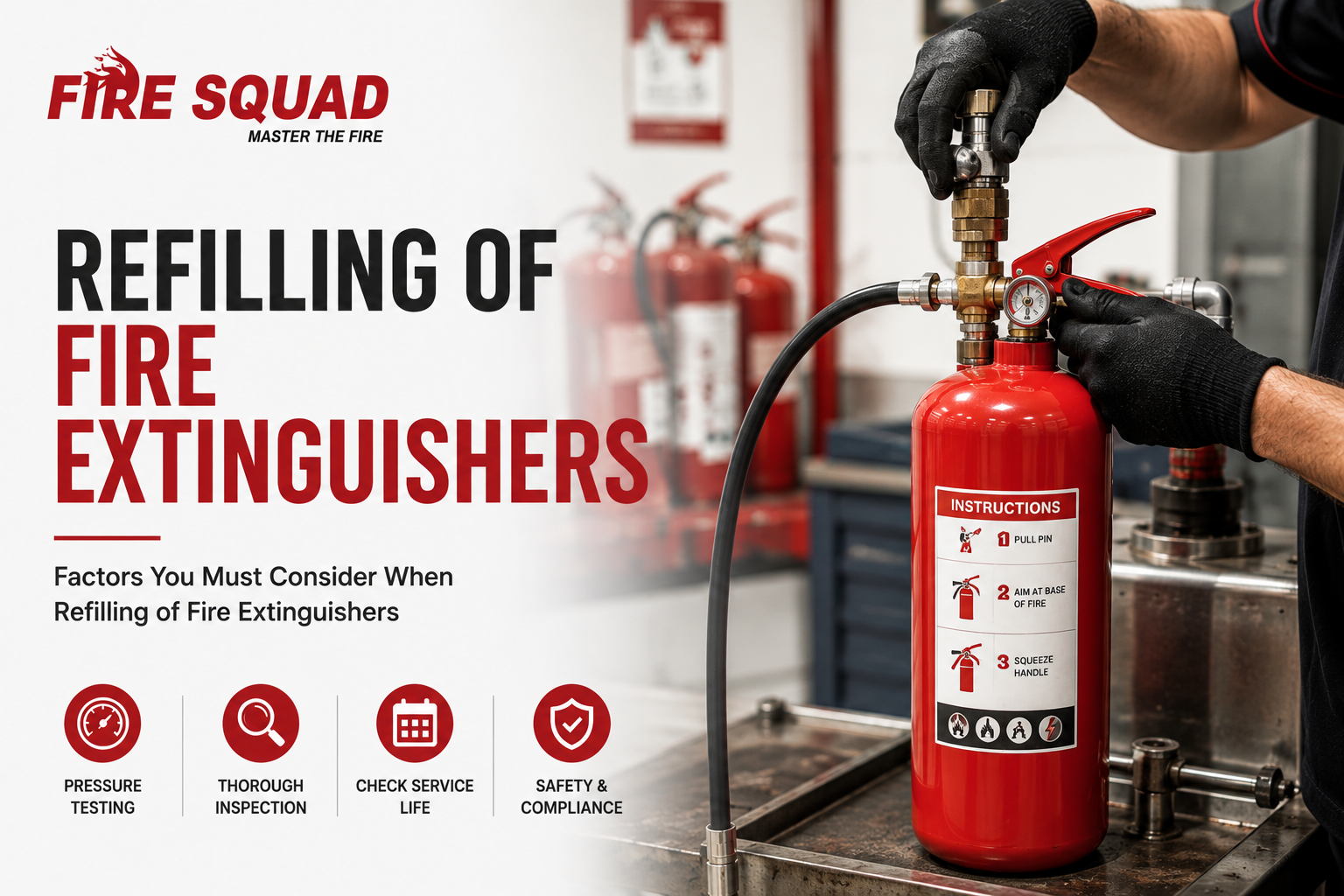
Before refilling of fire extinguishers, you need to do proper testing to ensure their safety and condition. Among others, one test that needs to be done is the pressure test or hydrostatic test. As the name suggests, the process requires filling your extinguisher with water or a non-compressible liquid and pressurizing the cylinder accordingly. Doing this helps detect leaks, cracks, bulges, or any other issues that could cause the cylinder to fail during pressurization. Alongside the pressure test, you must also inspect your fire extinguisher’s cylinder for signs of corrosion or other internal issues. Such issues may compromise the performance of the extinguisher or pose significant dangers.
Every fire extinguisher cylinder has a certain service life. Knowing the lifespan is important because it helps ensure your fire extinguisher works efficiently and reliably throughout its service life. After the cylinder’s lifespan expires, it should not be refilled or reused due to potential pressure issues. Overlooking this important aspect can lead to severe consequences, including leaks, ruptures, explosions, or even fatalities. For this reason, it is necessary to ensure that the cylinder has not yet reached or exceeded its recommended lifespan before refilling of fire extinguishers. Moreover, in this comprehensive blog post, we will discuss some key points to keep in mind when you are going to refill your fire extinguisher to safeguard your property from every corner.
Things To Keep in Mind When Refilling of Fire Extinguishers
Here are some significant factors that you must consider when opting for refilling the fire extinguisher on a timely basis to protect your surroundings.
1. Proper handling and storage
Handling and storage of fire extinguishers are critical to ensure their effectiveness and performance during emergencies. Your fire extinguishers should be kept in an upright position in areas where they are easily accessible and visible. Storing the extinguishers behind furniture or in hidden areas may cause precious time to be wasted during emergencies. Your fire extinguishers should be kept in a cool and dry place where they are away from moisture or extreme temperatures. It is recommended that they be stored within a temperature range of -10 °C to 50 °C, depending on the extinguishing agent they contain. In terms of refilling of fire extinguishers, it is essential to wear appropriate personal protective equipment.
2. Check the expiry dates
Checking expiry or service dates is among the things you must never forget when preparing to refill your fire extinguishers. Service and expiry periods of the extinguishing agent and the extinguisher vary, as discussed above. However, the average periods are about three to five years. As discussed above, you need to note that even if your fire extinguisher has never been used, it can still expire. Some common misconceptions about fire extinguishers include the belief that inspections or servicing are unnecessary because they have never been used before. Thus, it is recommended that you perform regular servicing and inspections of your fire extinguishers.
3. Refill using the correct extinguishing agent
Using the correct extinguishing agent is one of the critical steps you must take when refilling of fire extinguishers. Each class of fire is associated with a specific type of extinguisher that can be effectively used to extinguish it. Dry chemical powder and CO₂ extinguishers are two popular fire extinguisher types designed for different situations. Failure to use the correct extinguishing agent may result in poor extinguisher performance. Using the incorrect extinguishing agent can sometimes lead to the spread of fire or increase the size of a fire outbreak. Apart from reduced effectiveness, there is also a risk of developing various mechanical problems in the fire extinguisher. You need to fill your extinguisher with the right extinguishing agent as suggested by the manufacturer.
4. Weight verification
Ensuring the final weight of the fire extinguisher after refilling is another crucial thing you must never forget. The correct weight indicates that you have refilled the extinguisher with the recommended amount of agent. Underfilling your fire extinguisher may result in insufficient extinguishing agent. This reduces the capability of the extinguisher to deal with a fire successfully. On the other hand, overfilling results in excessive pressure buildup, causing various issues. Weight verification can be achieved by taking measurements and comparing them with the manufacturer’s specified weight. The weight specified is normally found on the fire extinguisher label or body.
5. Testing the function
In addition to refilling of fire extinguishers, it is important to test the function of the fire extinguisher after servicing to ensure it works effectively. Such tests help determine whether your fire extinguisher has any problems that could lead to failure. Some of the common mechanical problems that you can identify using the testing procedure include blocked or leaking seals, faulty valves, clogged nozzles, or abnormal pressure development. Such tests are important for detecting and resolving potential problems in your fire extinguisher. Although full discharge is not recommended for fire extinguisher refilling and servicing, you need to conduct functional tests.
6. Certifications and compliance
Following all the applicable fire safety rules and regulations is essential when refilling of fire extinguishers. Not only will following fire safety regulations protect your organization or property, but also prevent any legal complications associated with non-compliance with fire safety regulations. Refilling fire extinguishers should be performed by trained professionals who are fully knowledgeable about safely handling pressurized cylinders and fire extinguishing agents. The professionals are aware of all fire extinguisher regulations, including BIS requirements and other safety standards. They will ensure that your fire extinguisher is thoroughly inspected, refilled, tested, and certified.
7. Documentation
Record-keeping is an essential aspect of fire extinguisher refilling services. As part of maintenance, it is important to keep all documents containing information on fire extinguisher refilling and inspections. All relevant records, such as the refilling date, inspection reports, service intervals, and tests performed, should be documented in the fire extinguisher service record. Maintaining proper records is helpful when performing audits, fire inspections, and regulatory reviews. Moreover, maintaining the records will make it easier to schedule service intervals and tests when they are due.
It’s Time to Conclude Here!
With the refilling of fire extinguishers checklist discussed in this post, the process will be easier to conduct efficiently. Regular maintenance and timely inspections of your fire extinguishers are essential to ensure they are functional when needed.
Overlooking critical tasks such as servicing or testing fire extinguishers may have adverse effects during a fire. In addition, failing to refill your fire extinguisher on time results in reduced extinguishing performance, increasing the risk of fatalities and extensive damage. Thus, it is highly recommended that you maintain regular servicing and inspection schedules. Spectra Fire is a reputable firm offering fire and safety solutions to organizations across many industries.