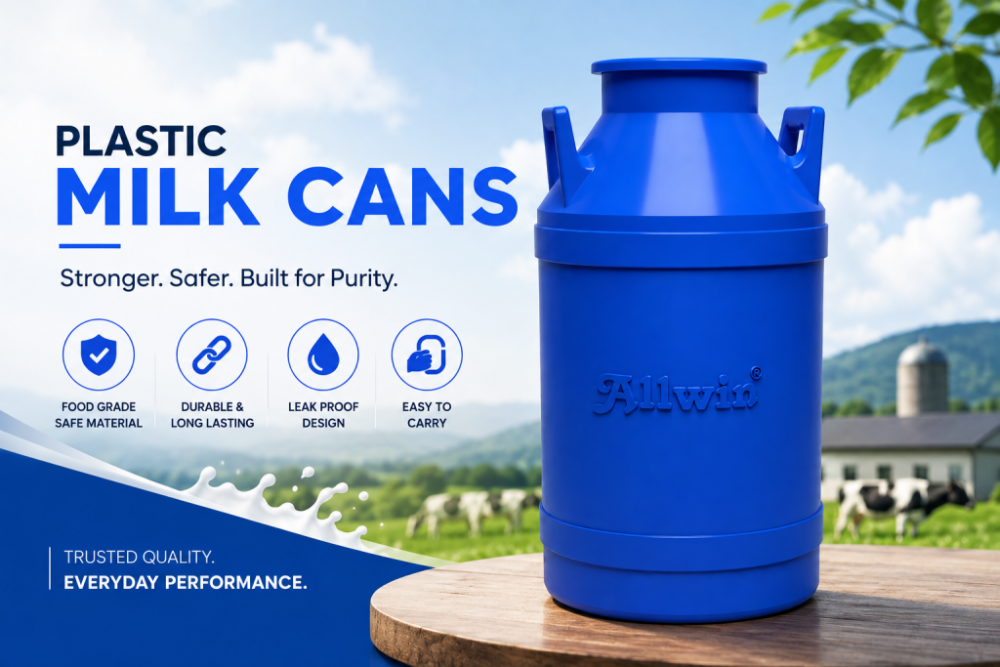
The task of milk collection and transfer might seem so simple to some, yet the selection of the container that will come into contact with the milk throughout the entire journey can largely contribute to hygiene, easier handling, and easier workflow. From dairy farms and milking centers to dairy plants and dairies, the container must resist repeated use and maintain the safety and quality of milk during transport.
This is a good place for a well-manufactured plastic milk can to shine. Compared to traditional metal milk cans for years, good modern plastic milk cans generally weigh less, resist rust, are much easier to clean, and are also easier to handle. All is not equal, however, when it comes to plastic milk cans. Material quality, construction, lid design, capacity, and manufacturing process all matter.
Understanding these aspects can provide a great opportunity for dairies in search of containers that they can count on to not only hold their product but also to hold up through daily use.
What Should You Look for in a Milk Can?
A well-designed milk can assists with daily collection, filling, washing, transporting, and storage, and at the same time safeguards the contents from the ingress of bacteria, foreign matter, and loss through leakage or overflow.
The needs in dairy operations require cans that will withstand frequent movement, washing, loading, unloading, outdoor travelling, and other associated activities. Therefore, a few properties are extremely vital to be considered:
Food-Grade Material
Milk is the fluid that comes in direct contact with the inner surface of the product; hence, the product used plays a major role.
Suitable dairy-grade plastic can also provide the required outer surface. Allwin’s ROTO-molded milk can product information states that they are made from virgin food-grade plastic.
Smooth Internal Surfaces
Smooth interiors wipe clean more readily after each milk collection and minimize places in which milk residue can become lodged. For dairy operations, that means it’s more than just convenient to handle; good cleaning makes it easier to manage.
Strong, Seamless Construction
Milk cans have to be moved frequently and might sustain severe damage. Having a seamless, one-piece construction removes a number of potential points of stress.
Rotational molding is a versatile way of making high-strength plastic containers without joints.
Why Are 40-Liter Milk Cans Commonly Used?
The size required needs to match storage needs and ease of use. A 40-litre milk can is an efficient volume, allowing you to collect quite large amounts of milk easily while being manageable for standard dairy work.
This 40-litre plastic milk can works across a wide range of dairy collection stages, from farms through collection centers to milk processing units. This volume is therefore ideal for organizations with several collection locations as well, facilitating standardization of collection units and easier handling during loading, transport, and washing, as well as record-keeping, etc. Allwin provides a 40-liter ROTO-moulded milk can specially made for use with milk; it comes with heavy-duty carrying handles.
Our milk cans are manufactured with an interior surface that is exceptionally smooth & bright.
The can lid is tight & secure so the contents never spill.
Plastic Milk Cans vs Traditional Metal Containers
The choice between plastic and metal depends on the specific application, but plastic offers several practical advantages for everyday milk collection and transportation.
Lightweight Handling
A 40 Ltr plastic milk can is easier to handle than many traditional metal alternatives. Lower container weight can make lifting, carrying, loading, and unloading less demanding.
Rust Resistance
Plastic does not rust, which is particularly useful in dairy environments where cans are regularly exposed to water and cleaning processes.
Easy Cleaning
Smooth internal surfaces can simplify washing and help operators maintain a consistent cleaning routine.
Impact Resistance
A properly manufactured plastic container can withstand routine handling and transportation without the same concerns associated with dents and corrosion in conventional metal cans.
Practical Outdoor Use
Some plastic milk cans are manufactured using UV-stable materials, allowing them to withstand exposure to sunlight during transportation and outdoor handling.
What Makes a Good Dairy Milk Can for Transportation?
Compared to stationary use, a transporting container has further requirements for the can. The can must be tightly shut when the container is transported from farms to collection points, to plants, and to the market.
A dependable dairy milk can should therefore have:
- A secure lid to minimize spillage
- Strong handles for easier movement
- Durable construction for repeated handling
- Smooth surfaces for easier cleaning
- Appropriate capacity for the operation
- Material suitable for food-contact applications
Leak protection is also very important in these cans. If the lid of this 40-liter can is not tight or is not designed well, it may lead to spilling of the product and further may causes contamination and additional cleaning for transporting purposes of the product.
The 40-liter cans from Allwin are designed with a lockable lid, and they are well intended not to let the product leak when used for transporting milk in them.
Why the Manufacturing Process Matters
While the type of material can be important, how the plastic container is manufactured will dictate its strength, uniformity, and ultimately, how it performs in a dairy setting. As food packaging that may be used multiple times in tough conditions, take into account the quality of manufacture as well as the plastic material you are selecting.
Rotational molding is a type of process that produces very strong and resistant plastic products. A key benefit of rotational molding: manufacturers can produce one-piece items, one without the traditional and necessary joints.
For an industrial milk can of 40 liters, this construction can be particularly useful because the product needs to withstand repeated handling while remaining easy to clean.
When evaluating a supplier, buyers should therefore look beyond the product photograph and ask about:
- Manufacturing technology
- Material grade
- Quality-control practices
- Product construction
- Certifications
- Experience in manufacturing similar products
- Customization capabilities, where required
Choosing an experienced milk can manufacturer can provide greater confidence in product consistency, particularly when cans are being purchased in larger quantities.
Where Are 40-Liter Plastic Milk Cans Used?
The applications of a 40-liter plastic milk can extend across several stages of dairy handling.
Dairy Farms
Milk can be collected and moved from individual farms using containers designed for repeated handling and transportation.
Milk Collection Centres
Collection centres require practical containers that can be cleaned, handled, stacked, and moved efficiently throughout the day.
Dairy Processing Units
Processing facilities can use suitable cans for receiving and handling milk and other food-grade dairy liquids.
Food & Dairy Businesses
Allwin’s milk cans are also suitable for applications involving cream, buttermilk, and other dairy products.
Choosing the Right Milk Can Manufacturer in India
The quality and reliability of the supplier can greatly affect the consistency, availability, and lifetime value of your products. If you are selecting a milk can manufacturer in India then you should not consider the price of the can as the only factor.
You should analyze the following points also:
· Quality of the materials used: verify that a suitable food-grade material has been used for the container.
· Manufacturing expertise; check that experience is available with rotational molding and similar industrial plastic items.
· Construction: ascertain that a seamless and tough product, suitable for repeat handling, has been made.
· Hygiene aspects: review the internal finish, cleanability, and lid design;
· Various capacities: select a maker capable of fulfilling all operational demands;
· Any required customization: check if color, branding, or specialized designs can be made;
· Certifications and quality systems: Allwin Roto Plast is an ISO 9001:2015 certified manufacturer and supplier working in the field of rotational molding for over 26 years.
Why Choose Allwin for 40-Liter Plastic Milk Cans?
Milk container buyers are always looking for consistency after making their purchase just as much as when initially buying a product. Allwin’s ROTO-molded milk cans are made from virgin, food-grade plastic with no seam, excellent finishing, and a strong handle with an efficient lid that is perfect for collection as well as transport. For farms and industries associated with dairies, the40-liter model is available to use for food and beverage purposes.
For buyers comparing a 40-liter milk can manufacturer, the focus should ultimately be on whether the product can support everyday dairy handling reliably, not simply whether it offers the lowest purchase price.
Making the Right Choice for Your Dairy Operation
A milk can is used repeatedly, often under demanding conditions. That makes durability, hygiene, handling, and construction important considerations rather than minor product details.
Whether you need a milk can manufacturer for farm-level collection or a supplier for larger dairy operations, evaluate the complete product, not just its capacity. A well-designed 40 Ltr plastic milk can makes routine handling easier, simplify cleaning, and provides a practical solution for transporting milk from collection points to processing facilities.
For dairy businesses, the right container is a small operational decision with a surprisingly large role in maintaining consistency across the milk-handling process.