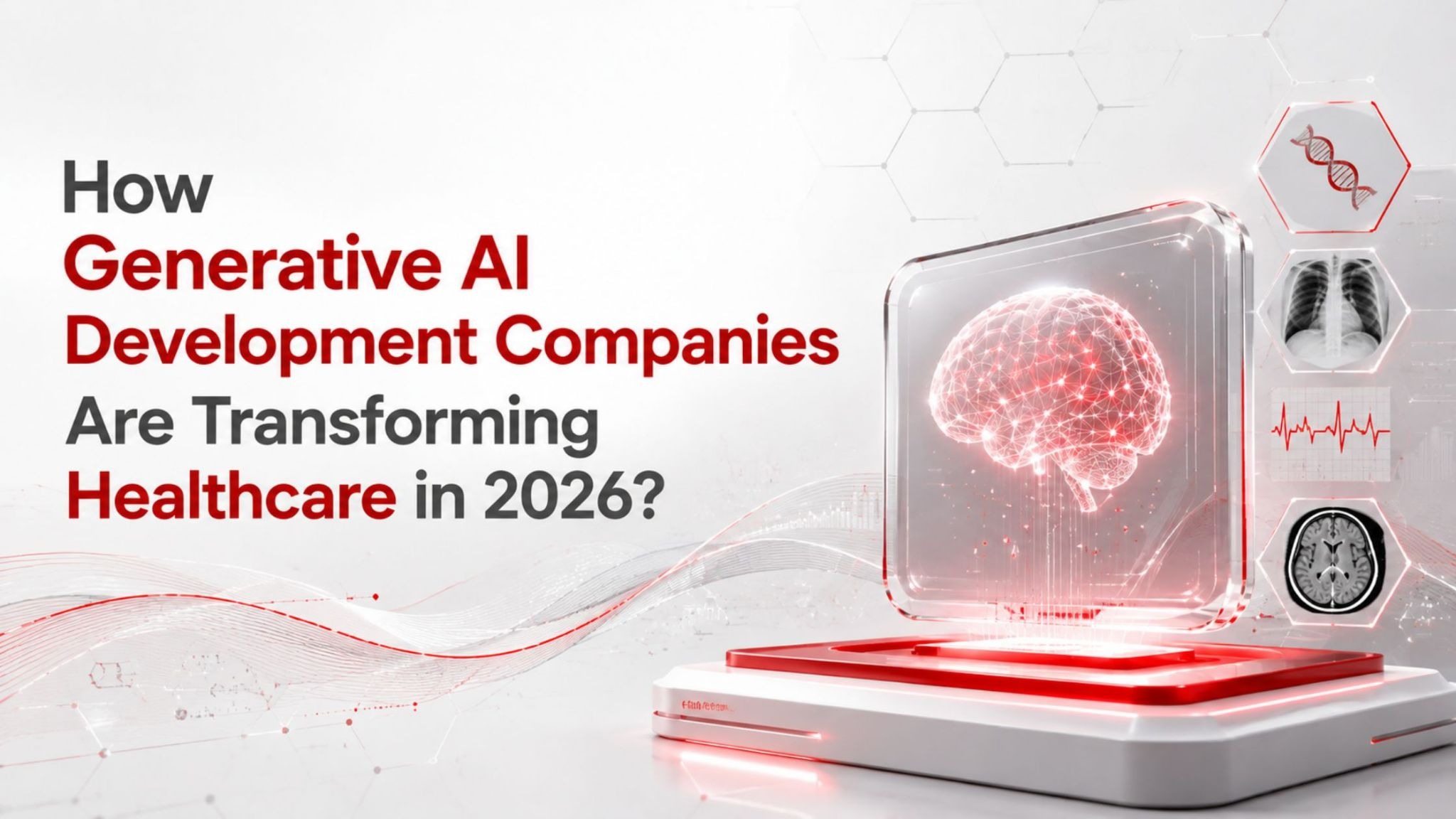
Healthcare has spent decades chasing efficiency without sacrificing quality of care. In 2026, that balance is finally within reach, and the driving force behind it is generative AI. From diagnostics to patient communication, hospitals and health-tech startups are turning to a generative AI development company to build tools that were unimaginable just a few years ago. For business owners and technology leaders eyeing the healthcare space, understanding this shift isn’t optional anymore. It’s the difference between leading the market and playing catch-up.
Why Healthcare Is Embracing Generative AI Now
Three forces have converged to make 2026 a turning point: mature large language models, stricter but clearer regulatory frameworks, and overwhelming clinician demand for tools that reduce administrative burden. Doctors and nurses are burned out by paperwork, not patients. A capable generative AI development company can now build systems that draft clinical notes, summarize patient histories, and flag anomalies in real time, freeing staff to focus on actual care.
The Shift from Experimentation to Production
Earlier AI pilots in healthcare often stalled at the proof-of-concept stage. What’s different now is deployment at scale. Health systems are moving generative models into production environments with proper validation, audit trails, and human-in-the-loop safeguards, making the technology usable in high-stakes clinical settings rather than just research labs.
Key Applications Reshaping Patient Care
1. Clinical Documentation and Ambient Scribing
Ambient AI scribes that listen to doctor-patient conversations and auto-generate structured notes have become mainstream. This alone has cut documentation time by hours per week for many physicians, directly improving both burnout rates and patient face-time.
2. Diagnostic Support and Imaging Analysis
Generative models trained on massive medical imaging datasets now assist radiologists by highlighting potential abnormalities and drafting preliminary reports. These tools don’t replace the radiologist, but they act as a tireless second set of eyes, catching subtle patterns humans might miss during long shifts.
3. Personalized Treatment Planning
By synthesizing a patient’s history, genetic data, and current research, generative AI can suggest tailored treatment pathways. Oncology and chronic disease management are seeing the earliest wins here, with AI-assisted plans helping clinicians weigh options faster.
4. Patient Engagement and Virtual Health Assistants
Conversational AI now handles appointment scheduling, medication reminders, symptom triage, and answering common patient questions around the clock. This reduces call-center load while improving patient satisfaction scores.
5. Research and Development Acceleration
Pharmaceutical companies are using generative models to simulate molecular interactions, shortening early-stage research timelines from years to months in some cases. This is one area where a specialized generative AI development company brings enormous value, since the technical complexity of biomedical data requires deep domain expertise.
Practical Tips for Healthcare Leaders Considering AI Adoption
- Start with a narrow, high-impact use case. Documentation automation or appointment triage are lower-risk entry points than diagnostic decision-making.
- Prioritize compliance from day one. HIPAA, GDPR, and emerging AI-specific regulations should shape your architecture, not be bolted on afterward.
- Insist on explainability. Clinicians and regulators need to understand why a model made a recommendation, not just what it recommended.
- Pilot with real clinical workflows. Test tools alongside actual staff, not in isolated sandbox environments, to surface real usability issues early.
- Choose partners with healthcare-specific experience. Generic AI expertise doesn’t always translate to the nuances of clinical data and patient safety.
Choosing the Right Technology Partner
This is where the choice of development partner becomes critical. Apptunix has built a reputation as a trusted provider of AI development services, helping healthcare organizations and startups design and deploy generative AI solutions that are secure, scalable, and compliant with industry regulations. Their approach combines technical depth with an understanding of real clinical workflows, which matters far more in healthcare than in most other industries.
The Road Ahead
Generative AI in healthcare is no longer a futuristic concept; it’s an operational reality reshaping how care is delivered, documented, and personalized. Organizations that move deliberately, starting with focused use cases and scaling responsibly, are already seeing measurable returns in clinician time saved, patient satisfaction, and diagnostic accuracy. The ones that wait risk falling behind competitors who are already redefining what modern healthcare looks like.
If you’re exploring how a generative AI development company could help your organization build reliable, compliant, and impactful healthcare solutions, it’s worth having a conversation with a team that’s done this before. Reach out to learn more about professional AI development services and how they can support your next healthcare innovation.