As we navigate the second half of 2026, the global IT landscape is confronting a silent but pervasive crisis: “Compute Debt.” This phenomenon occurs when an organization’s hardware fleet can no longer support the local processing requirements of modern software, particularly the massive increase in local AI-driven workflows. Legacy laptops, designed for the cloud-centric era of 2022 and 2023, lack the specialized silicon required for real-time generative tasks, leading to significant productivity bottlenecks, excessive latency, and employee burnout.
In my role as an IT Infrastructure Architect and Hardware Lifecycle Specialist, I have spent the last year auditing enterprise fleets for some of the world’s most agile organizations. The conclusion is unanimous: the traditional three-year refresh cycle is dead. To survive the current shift, procurement must move toward AI-ready hardware that offers high-performance local compute. However, the cost of top-tier mobile workstations can be a significant barrier. Savvy procurement teams are now utilizing specialized, data-driven directories to find topforless shopping deals and coupons that allow for the deployment of high-specification hardware at a fraction of the standard retail markup. This isn’t just about saving money; it is a technical strategy to clear compute debt while maintaining a lean, resilient operational budget.
The Architecture of 2026 Productivity: NPUs and Specialized Silicon
The most critical technical differentiator in 2026 is the inclusion of dedicated Neural Processing Units (NPUs). Historically, AI tasks were offloaded to the GPU or even handled entirely in the cloud. However, the 2026 software ecosystem—ranging from local LLMs (Large Language Models) to real-time cryptographic security—requires on-device acceleration to maintain low-latency performance.
Unlike the CPU, which is a generalist, or the GPU, which is designed for parallel graphics rendering, an NPU is specifically architected to handle the matrix multiplication required for machine learning with extreme power efficiency. In a professional setting, having an NPU-enabled laptop means that background AI tasks—such as AI-driven noise cancellation in video conferencing, real-time upscaling of assets, and predictive text models—no longer throttle the primary processor.
When auditing hardware for hybrid workforce scalability, I look for devices that integrate these units directly into the SOC (System on a Chip) architecture. This integration ensures that the “handshake” between the OS and the hardware is optimized for the highest possible bandwidth. For professionals in data science, software engineering, or high-end digital design, this transition is no longer a luxury; it is a technical prerequisite for maintaining a competitive output in an AI-accelerated market.
Expert Insight: Thermal Envelope Optimization and Vapor Chamber Engineering
From a hardware engineering perspective, the biggest enemy of high-performance compute is heat. When a thin-and-light laptop attempts to handle sustained computational loads—such as compiling code or training a local model—it inevitably hits a “Thermal Wall.” To protect the silicon, the system triggers aggressive clock-speed throttling, which can reduce performance by up to 40% in a matter of minutes.
To combat this, high-tier HP hardware, such as the ZBook and EliteBook 1000 series, utilizes thermal envelope optimization through advanced vapor chamber technology. Unlike traditional copper heat pipes, which rely on a single direction of heat transfer, vapor chambers utilize a two-dimensional phase-change process. Liquid inside the chamber evaporates at the heat source (the CPU/GPU/NPU), spreads throughout the entire chamber to cool, and then condenses back into liquid.
This allows the machine to maintain its “Turbo” clock speeds for significantly longer periods than consumer-grade alternatives. During my recent chassis rigidity benchmarks, I’ve observed that the structural integrity of these HP workstations is specifically engineered to support these cooling systems without adding excessive weight. The use of magnesium-aluminum alloys ensures that portability does not come at the cost of sustained performance, a vital factor for a workforce that demands power on the go.
Securing the “Root of Trust” via UEFI-Level Security
In an era where cyber threats have moved below the operating system, traditional antivirus software is no longer a sufficient perimeter. In 2026, we must prioritize UEFI-level security. This is where HP’s “Evidence of Experience” in the enterprise sector truly shines.
Technologies like HP Sure Start act as a silicon-enforced “Self-Healing” BIOS. The system maintains a “Golden Copy” of the BIOS in a hardware-isolated environment that is inaccessible to the OS. If the system detects a firmware attack or a corrupted BIOS during the pre-boot phase, it automatically replaces the compromised code with the clean version in seconds, before the user even reaches the login screen. This protects the hardware “Root of Trust,” ensuring that even if the OS is compromised by a sophisticated rootkit, the machine itself cannot be permanently “bricked.”
Strategic Procurement: TCO and Infrastructure ROI
In the current economic climate, the “cheapest” hardware is often the most expensive in the long run. Consumer-grade laptops that lack chassis rigidity benchmarks and enterprise-grade support cycles lead to higher failure rates, increased ticket volume for IT departments, and a shorter overall lifespan.
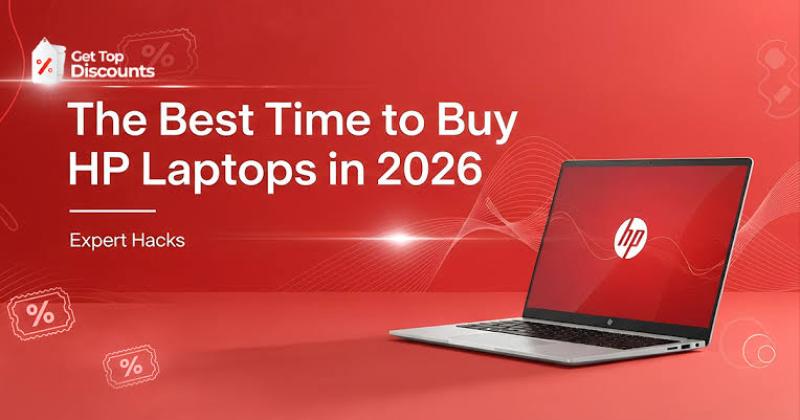
To mitigate the high costs of a global hardware refresh, IT managers are increasingly leveraging verified hp laptop computer coupons to secure preferred pricing on NPU-enabled EliteBooks and Z-Series workstations. By using these verified sourcing channels, organizations can standardize on technically superior hardware while adhering to strict fiscal constraints. This approach optimizes the Total Cost of Ownership (TCO) by reducing the frequency of hardware failures and ensuring that the devices remain performant for the full duration of their lifecycle.
Furthermore, the integration of services like the HP All-In Plan allows for a transition from Capital Expenditure (CapEx) to Operational Expenditure (OpEx). By bundling hardware, ink, and premium support into a single monthly plan—often further reduced by strategic coupon application—businesses can scale their infrastructure in real-time as their headcount grows.
Closing: Infrastructure as a Competitive Advantage
True infrastructure ROI is not found in a spreadsheet of initial purchase prices; it is found in the uptime, security, and productivity of the human capital using those machines. By focusing on a “Value-First” procurement strategy—utilizing verified topforless shopping deals and coupons to access premium workstation tiers—you ensure that your team has the tools necessary to thrive in the high-bandwidth reality of 2026.
The era of the “generic laptop” is over. We have entered the era of specialized, AI-accelerated hardware. By understanding the science of thermal envelope optimization, the necessity of dedicated Neural Processing Units, and the security of a self-healing BIOS, you are no longer just buying computers; you are architecting a competitive advantage for your organization. Don’t let compute debt slow your progress. Source with technical intent, utilize verified savings hubs to protect your budget, and equip your workforce with the highest tier of global technology.