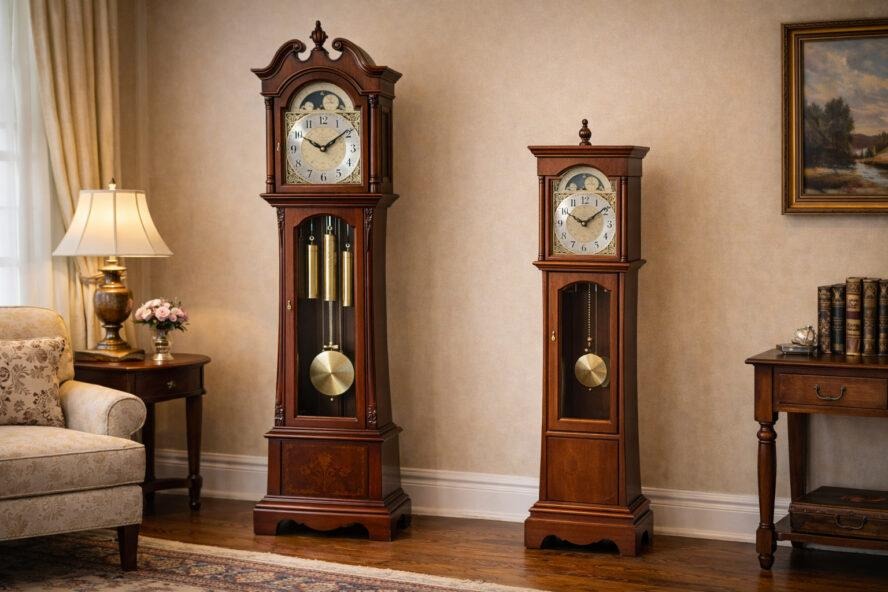
Grandfather clocks are more than elegant timepieces. They are complex mechanical systems that have stood the test of time. With their tall cases, swinging pendulums, and gentle chimes, these clocks blend skilled craftsmanship with precise engineering. Whether you’re a collector or simply browsing for a grandfather clock for sale, understanding how they work can help you appreciate their unique charm.
The Basic Components of a Grandfather Clock
To see how a grandfather clock works, it helps to know its main parts. Each one is important for keeping time accurately.
1. The Pendulum
The pendulum is the heart of the clock’s timekeeping. It swings back and forth at a steady pace, controlling the movement of the clock. The length of the pendulum changes how fast or slow the clock runs. Longer pendulums swing more slowly and set a steady rhythm.
2. The Weights
Most grandfather clocks are powered by weights. These weights hang on chains or cables and slowly move down over time. As they drop, they provide the energy the clock needs to run. Usually, there are three weights: one for timekeeping, one for the chime, and one for striking the hour.
3. The Gear Train
Inside the clock, a set of gears works together to keep time. The gear train transfers energy from the weights to the clock’s hands. Each gear is carefully made to ensure the clock moves accurately.
4. The Escapement Mechanism
The escapement is a key part that works with the pendulum. It releases energy from the gears in small, steady steps. This “tick-tock” motion keeps the clock running at a regular pace.
How the Timekeeping Process Works
A grandfather clock works on a simple but clever principle. As the weights move down, they power the gears. The escapement controls this energy, allowing the gears to move forward in small steps. At the same time, the pendulum swings back and forth to keep everything in sync.
This synchronised movement keeps the clock hands moving at a steady pace and showing the right time. Because of this careful design, grandfather clocks can remain highly accurate when well-maintained.
Understanding the Chime and Strike Mechanism
One of the most charming things about a grandfather clock is its chime. Many clocks play tunes like the Westminster or Whittington chimes at certain times.
The chime system works separately from the timekeeping parts. It has its own gears and weight. At set times, such as every quarter hour, the clock uses hammers to strike rods or bells and play a pleasant melody.
The striking mechanism counts the hour. For example, at 3 o’clock, the clock strikes three times. This feature adds both function and character to the clock.
Why Regular Winding Is Important
Grandfather clocks need regular winding to keep running. Depending on the design, you may need to wind them once a week. Winding the clock returns the weights to their starting position and restores the energy needed to power it.
If you forget to wind the clock, it will eventually stop because the weights reach the bottom. Regular maintenance, like winding and occasional servicing, helps the clock run well for years.
Modern vs Traditional Mechanisms
Traditional grandfather clocks rely completely on mechanical systems, while some modern versions use quartz or battery-powered movements. Still, mechanical clocks are prized for their craftsmanship and authenticity.
When looking for a grandfather clock for sale, many people choose traditional mechanical models for their history and unique feel. The gentle ticking and moving pendulum bring a sense of nostalgia that modern clocks often do not have.
Tips for Maintaining a Grandfather Clock
To keep your clock running smoothly, regular care is important. Here are a few simple tips:
Place the clock on a stable, level surface
- Keep it away from extreme temperatures and humidity
- Clean the exterior regularly to prevent dust buildup
- Schedule professional servicing every few years
Taking good care of your clock keeps it working well and helps it keep its value over time.
Final Thoughts
Grandfather clocks bring together art and engineering. Every part, from the swinging pendulum to the gears, works together to keep time. Learning how these clocks work helps you appreciate their skilful design and history.
Whether you are a clock enthusiast or just considering buying one, knowing how they work can help you make a good choice. A well-maintained grandfather clock is more than just a way to tell time; it is an investment and a special piece to enjoy for years.