If someone had told me a years ago that textiles would play a big role in sustainability conversations, I probably would have thought of organic cotton and recycled fabrics. That is usually where the discussion stays. Technical textiles, like the ones used in construction or healthcare felt like a completely different category, more industrial and less focused on the environment.
It turns out that this idea is not true anymore. Technical textiles are becoming a part of how industries think about both performance and sustainability. It is happening in ways that are not always easy to see at first.
Not Your Everyday Fabric
Technical textiles are made to do jobs. They are used in construction, healthcare, cars, farming and many other areas where how well they work is more important than how they look. These materials are designed to handle stress, resist chemicals, manage heat and last longer than fabrics.
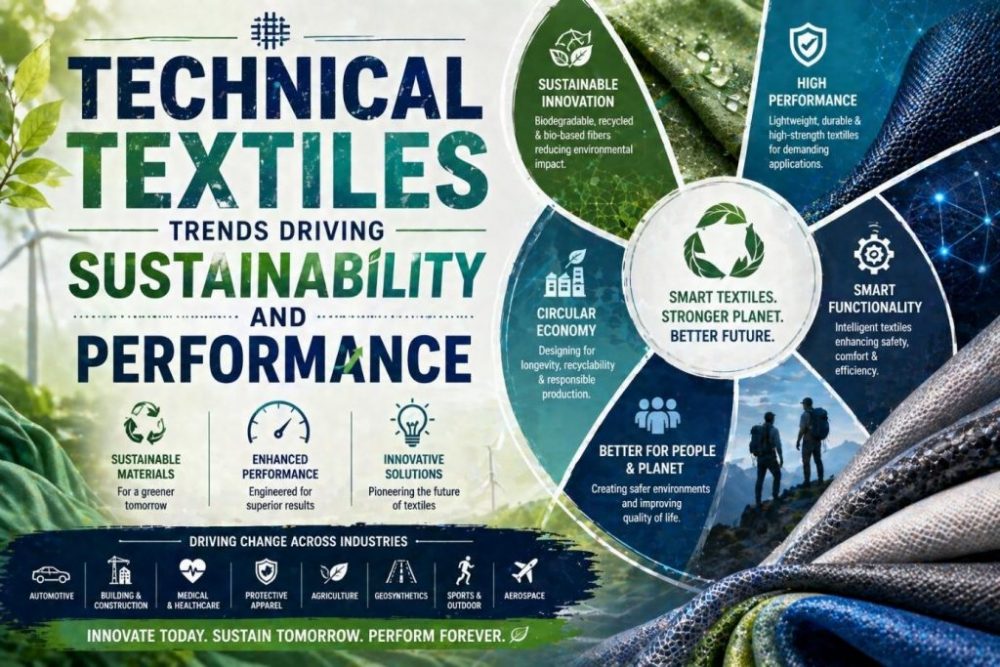
What is changing now is what people expect from these textiles. It is not enough for them to work well; they also need to be good for the environment. That is where things get interesting because it is not easy to balance both.
Durability Is Becoming a Sustainability Feature
One trend that stands out is the focus on making things last longer. At first, it might not seem like a way to help the environment but it actually is. If a material lasts longer, it does not need to be replaced often, which reduces waste and saves resources. It is a simple idea but in industries it can make a big difference.
Technical textiles are being made to handle conditions without falling apart quickly. Whether it is very hot or cold, if they are under a lot of stress these materials are built to last.
It is not flashy. It does not always get attention but making products that last longer is a big step towards sustainable manufacturing.
Shift Toward Smarter Materials
Another trend is the rise of smart materials that can adapt to their environment. For example, textiles that can regulate temperature or manage moisture better are being used in both wearable applications. These features improve efficiency and reduce the need for extra systems or energy.
It is a subtle change but it matters. When materials can do more on their own the overall use of resources can go down.
Recycling Is Finally Getting Attention
Recycling technical textiles has always been a bit complicated. These materials are often made from layers or special polymers which makes them hard to process. But there is progress, companies are starting to design textiles with the end-of-life conversations in mind choosing materials that can be separated or reused easily.
It is still a work in progress to be honest. Not every material can be recycled yet. The fact that it is being thought about during the design phase is a positive change.
And again, it ties back to making industries more sustainable. Thinking about the full lifecycle of a product and not just how well it works.
Energy Efficiency in Production
Sustainability is not just about the final product but also about how it is made. The processes used to make technical textiles are being improved to use energy and fewer resources. New techniques, better machines and improved control are helping reduce the impact.
This is one of those areas where you do not see the change directly but it adds up over time. Using energy means lower emissions and that is something industries cannot ignore anymore.
Lightweight Materials, Big Impact
Weight is another factor that is getting attention. Lighter materials can improve efficiency in areas like cars and transportation. For example, using lightweight technical textiles in vehicles can reduce fuel consumption or improve battery efficiency in electric models. It is a change at the material level but it has a big effect on overall performance and sustainability.
This is where performance and sustainability start to overlap in a practical way. Better materials lead to outcomes across the board.
The Balancing Act
What stands out the most is the balance industries are trying to achieve. Performance is important. Sustainability goals are becoming stricter. It is not always easy. Sometimes improving one thing affects another. A durable material might be harder to recycle and a lighter material might require more complex manufacturing.
That is where innovation comes in. Companies are experimenting, adjusting and finding solutions that work.
A Quiet but Meaningful Shift
Technical textiles do not usually get attention outside of industries. They are not something people talk about casually. But their impact is real.
From reducing waste to improving efficiency these materials are playing a role in shaping sustainable industrial practices. They are doing it quietly without much attention.
Looking Ahead
The future of textiles will likely focus on refining the balance between sustainability and performance. Better materials, smarter designs and efficient production methods will continue to push things forward. Making industries more sustainable will remain a key driver in influencing how materials are developed and used across industries.
It is not a sudden change but it is gradual, sometimes a bit uneven but definitely moving in the right direction. Maybe that is how meaningful change usually happens, not all at once but step by step until it becomes the new normal.