Walk into the operations floor of any bank, and you’ll notice something intriguing. The real work isn’t happening in dashboards or strategy decks. It’s happening in stacks of documents, scanned, photographed, emailed, uploaded, waiting to be read, understood, and entered into systems.
And increasingly, those documents aren’t in just one language.
That’s where OCR translation is quietly stepping in, not as a shiny new layer of AI, but as a practical fix to an ancient problem.
Challenges in existing banking workflows?
Most BFSI workflows are still document-heavy.
KYC forms, income proofs, property papers, bank statements, and compliance reports—these come in all formats and often in regional languages. Even when the rest of the system is digital, the entry point is still analog.
So teams end up doing three things, over and over:
- Reading documents
- Translating them (mentally or manually)
- Entering data into structured systems
It’s slow. It’s repetitive. And it doesn’t scale well.
A Deloitte study on banking operations once pointed out that manual document handling continues to be one of the biggest hidden drains on efficiency. Anyone who has worked in operations already knows that.
How OCR Translation orchestrates the banking workflows?
OCR, on its own, converts images into text. Add translation, and that text becomes usable across systems, regardless of the original language.
But the real shift isn’t technical. It’s operational.
Instead of documents being a bottleneck, they become just another input stream.
No separate steps. No back-and-forth. No dependency on who can read what.
1. Automate KYC process
KYC is supposed to be straightforward. In reality, it rarely is.
A customer uploads:
- An Aadhaar card in Hindi
- A utility bill in Marathi
- A handwritten declaration
Now someone has to verify, interpret, and input all of these details.
With OCR translation, the flow becomes simpler:
- Extract the text
- Translate it into a standard language
- Map it to required fields
That alone cuts down processing time noticeably.
It also removes a quiet dependency that most teams do not plan for language specialists. When volume spikes, that dependency becomes a bottleneck.
2. Smooth loan processing journey
Loan journeys are sensitive to delays. Even small slowdowns can push customers away.
And yet, a large part of loan processing still depends on how quickly documents can be understood.
Think about a small business owner submitting:
- GST documents in a regional language
- Bank statements as scanned PDFs
- Income records in mixed formats
Without automation, the process requires manual review.
With OCR translation:
- Data is extracted
- Language is standardized
- Information flows directly into underwriting systems
Nothing dramatic. Just faster movement.
In semi-urban and rural lending, this approach makes a real difference. Not because it’s advanced, but because it removes friction where it actually exists.
3. Timely reporting and documentation
Reporting cycles tend to reveal where systems break.
Data comes from different branches in different formats, sometimes in different languages. Teams scramble to consolidate, verify, and submit.
OCR translation helps by cleaning up the very first step, data ingestion.
Instead of manually pulling data from scanned reports:
- Systems read and extract it
- Translate where needed
- Feed it into structured formats
The World Economic Forum has highlighted how financial institutions are under increasing pressure to improve data accuracy and transparency. Manual handling makes that harder than it needs to be.
This isn’t about speed alone. It’s about reducing the risk of small errors that become big problems later.
4. Save time on data entry
Data entry is one of those tasks that quietly consumes hours. Forms, claims, applications, someone has to input all of it.
OCR translation shifts the workload from manual effort to automated flow:
- Extract fields from documents
- Translate if required
- Push data directly into systems
It doesn’t eliminate human involvement entirely. But it reduces the volume of repetitive work significantly.
A Harvard Business Review article on automation once noted that repetitive data tasks are often the easiest place to start and the quickest to show results. That holds true here.
Teams spend less time typing. More time reviewing what actually matters.
OCR translation solves the problem of language and compliance at every step
There’s another effect that doesn’t always show up in metrics.
When systems can process documents in multiple languages:
- Customers don’t have to translate or resubmit documents
- Institutions don’t have to limit operations by language capability
- Onboarding becomes smoother, especially outside metro regions
In a country as linguistically diverse as India, that’s not a small shift.
It’s the difference between “we can’t process this” and “this just works.”
Benefits of Language AI in OCR workflows
OCR translation works well, but only when done right. There are a few things that are more important than they seem:
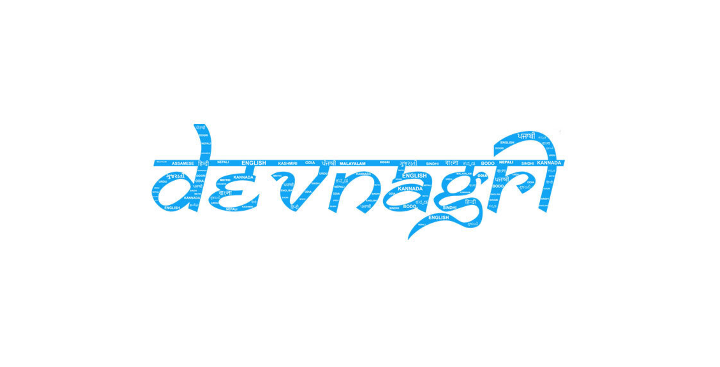
- Correctness across Indic scripts
- Not merely translating words, but also understanding the financial background
- Dealing with bad images and handwritten notes
- Working with systems that are already in place
Generic tools often struggle here. They read text but don’t always understand what that text means in a financial context.
That’s why some organizations are moving toward systems trained specifically for BFSI use cases and Indian languages. Language AI Platform focuses on combining OCR with context-aware translation so outputs are actually usable, not just readable.
How to Implement OCR Translation?
If you’re looking at OCR translation, it helps to keep things simple:
- Start where delays are most visible, KYC or loan processing
- Identify languages that create the most friction
- Test using real documents, not ideal samples
- Build it into workflows, not as a separate layer
- Expect improvement, not perfection, in the first phase
The gains show up quickly when applied in the right place.
Closing Thought
OCR translation doesn’t transform BFSI overnight. What it does is more grounded. It removes small, repeated points of friction, the kind that slow everything down but rarely get attention.And once those are gone, processes don’t just become faster. They become easier to run, easier to scale, and a lot harder to break. Sometimes, progress isn’t about adding more. It’s about removing what was quietly in the way.