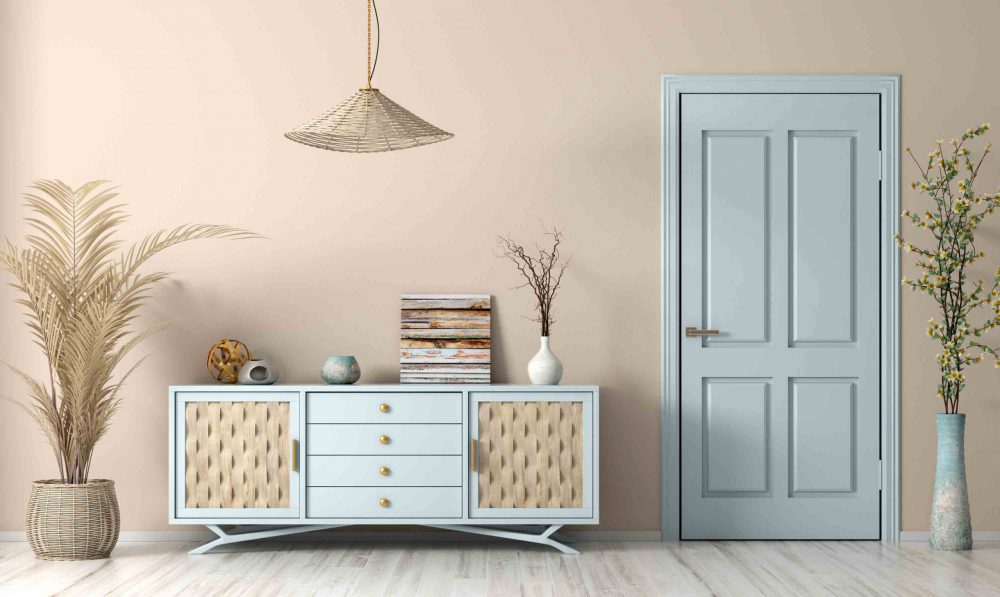
Doors do more than open and close. They define room identity, manage movement and regulate privacy. That is why designers never treat them as afterthoughts. They evaluate each room for traffic, use, and pressure points. Based on that, they select material, surface and core type. Flush Doors are popular because they combine strength with surface simplicity. Decorative doors are used where visual impact is required. The key is to match door behaviour with room behaviour. That is what makes interiors feel balanced and functional every day.
Bedrooms need privacy plus acoustic separation
Bedrooms are meant to provide privacy, rest and isolation from shared zones. That requires strong doors with stable sound resistance. Flush Doors are often selected for bedrooms because they offer uniform surface plus acoustic control. Decorative doors may also be used when the bedroom leads directly to the living space. These doors must stay firm even with daily usage. Bedrooms do not always need heavy hardware. But they do need doors that hold silence and support calm. A good door design supports this naturally without forcing additions.
Living areas require visual openness and easy movement
Living spaces usually connect multiple zones together. That means doors must open easily and handle frequent foot traffic. Flush Doors work well here because they blend with walls and allow open circulation. Decorative doors are sometimes used for main entries or visual partitions. Designers avoid heavy door panels in high-traffic family zones. Instead, they prefer lightweight material that holds its shape under constant movement. Living room doors should welcome people while staying strong against frequent use. That balance only comes from usage-based planning.
Kitchens demand moisture control and surface resistance
The kitchen sees steam, spills, and oil every day. That is why door material must hold strength in heat and humidity. Flush Doors with water-resistant cores are preferred here. Decorative doors are used only on tall pantry units or partitions. Kitchen areas are not done in textured or porous surfaces by the designers. Glossy wipable surfaces are less difficult to wipe. Clearance of doors also is planned according to the layout of the cabinet. That guarantees the daily operations are not impeded. Kitchen performance relies on the core strength and surface logic.
Bathrooms require privacy and long term water resistance
The doors to the bathrooms must be able to obscure view, and endure frequent exposure to water. Waterproof layers on flush doors are best suited in such environments. Ornamental doors do not suit in the direct wet areas.
However, they may be used outside powder rooms or vanity units. Designers often recommend light colours and anti-swelling edges. That protects the frame and keeps the door looking sharp. Doors that fail in bathroom areas often warp or delaminate. That weakens the design and increases maintenance. Safety and structure must always come first in these spaces.
Study rooms and work zones need silence and flow
Study areas require concentration. That means doors must control both visual distraction and sound flow. Flush Doors are ideal for these rooms due to their plain finish and silent core. Decorative doors may be used when the study opens into a public hallway. These doors should feel neutral and not overpower the furniture scheme. Designers also check door width to support ergonomic furniture placement. Study room doors play a background role. But if planned right, they hold the space together with comfort and clarity.
Here are five performance habits designers follow while choosing doors
• Select Flush Doors in high-use areas that require a low profile of strength.
• Decorative doors should only be used when the design visibility is included in the brief.
• Furniture layout to be matched with door swing clearance to prevent obstruction.
• Choose waterproof doors in the kitchen and the bathroom without hesitation.
• Design acoustically in bedrooms and studies with tested core types.
Final word
Each room is treated as a different beast. Others require solitude and others require transparency. A good designer knows this and will choose doors that act in this way. Flush Doors are silent actors in the majority of areas. Ornamental doors emphasize certain areas in which one wants to focus on. The content, the face and the inside are not selected because of fashion, but because of functionality. This balance makes the design useful as well as long-lasting. To get credible door solutions that match the strength to the structure, CenturyPly provides a large variety of performance based doors to suit your interiors.