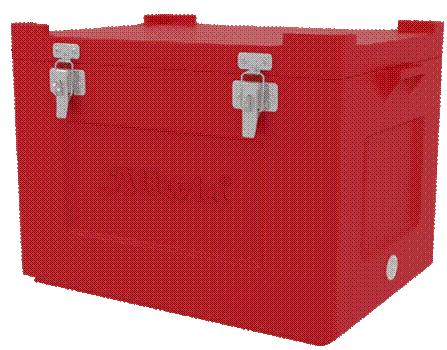
Many people automatically think that refrigerators are the way to keep things at a low temperature (cold), but do not realise there are many other methods involved in the temperature retention process that are equally important. Although the refrigerator or cold storage unit is one part of the entire process, a large portion of heat loss will occur throughout the transition periods when the product moves from place to place, or as it is handled or stored for short or long periods of time. At this stage, something as simple as using an ice box becomes much more significant in terms of maintaining an appropriate temperature during the transportation process.
This is true whether you’re transporting food, seafood, or pharmaceuticals. Maintaining a consistent temperature cannot be overstated, because even a minor difference can have a significant impact on the quality, safety, or eventually the shelf life of the product.
More Than Just a Basic Container
At first glance, an ice box appears to be another ordinary container. However, as we realise how much it is being utilized across different industries, we can see that it has a much larger role than simply holding ice.
In fact, the primary function of an ice box is to keep the temperature inside it stable for as long as possible while the outside temperature is changing. The use of proper insulation helps to minimise the amount of heat returned to the ambient conditions; therefore, creating a more stable internal environment for extended periods.
Being able to do this is especially important when there is no continuous refrigeration source available, such as during the last mile of delivery or during the handling of items in an outdoor environment. The ability of the ice box to keep an item in good condition while being transported from the manufacturer to the end user will have a huge impact on the quality of that item.
Where Ice Boxes Actually Make a Difference
One interesting thing is that ice boxes are rarely the “main system” — but they are often the most relied upon during critical moments.
During Transportation
Products often move through multiple stages before reaching their destination. Even if refrigerated vehicles are used, there are always transition points. Ice boxes help bridge those gaps.
At the Source
In industries like fishing, the first few hours after catch are crucial. Proper storage immediately after handling can make a big difference in freshness.
Last-Mile Delivery
This is where most temperature inconsistencies happen. Short distances, delays, and external conditions all come into play — and insulated containers help maintain stability.
What Actually Makes a Good Ice Box?
Not all ice boxes perform the same, and this is where many people underestimate their importance.
A few factors that really matter:
Insulation Quality
The type and thickness of insulation directly affect how long the box can retain cold temperatures. Poor insulation means faster ice melt and higher temperature variation.
Build Strength
In real-world use, these boxes go through rough handling. A sturdy build ensures they last longer and maintain performance over time.
Design and Structure
Small design elements — like lid sealing, drainage, and shape — can impact efficiency more than expected.
Size and Usability
Different use cases require different capacities. What works for personal use won’t necessarily work for industrial applications.
If you explore options like insulated ice box solutions offered by Allwin Roto Plast, you’ll notice how these factors are built into the design — not just for durability, but for consistent performance across use cases.
Why Quality Often Gets Overlooked
One common mistake is treating ice boxes as a low-priority purchase. Since they seem simple, decisions are often based on cost rather than performance.
But over time, this can lead to:
- faster product spoilage
- higher operational losses
- inconsistent temperature control
In contrast, a well-built ice box maintains temperature more effectively and lasts longer, making it a better investment in the long run.
Everyday Use vs Industrial Use
Another interesting point is how widely ice boxes are used.
For individuals, they’re useful for travel, outdoor activities, or temporary storage. But in industries, the expectations are very different.
Businesses need:
- longer cooling duration
- higher durability
- consistent performance across multiple cycles
This difference is important because it highlights why not all ice boxes are designed for the same purpose.
Long-Term Impact on Operations
When used consistently, a reliable ice box can improve more than just storage. It can indirectly impact overall operations.
For example:
- better temperature control leads to improved product quality
- reduced spoilage means lower losses
- consistent performance improves operational efficiency
Over time, these small improvements add up, especially for businesses dealing with large volumes.
Conclusion
While Ice Boxes seem only a small part of an overall system, they are actually one of the most important components in this overall system. Ice Boxes usually don’t get much attention, but they play a major role in helping maintain temperature control when temperature control is most important.
As industry becomes more reliant on efficient Cold Chain systems, the importance of properly selecting a storage solution will become clearer and clearer; often it is the simplest tools that provide the most impact or benefit — for example, a properly-designed Ice Box.