The expansion of retail chains is a buzzing event, yet a seating lot of challenges in its operations and branding that are not given due seriousness. One of the least and most important things regarding this is workwear management. With the rise of retail business within the cities and regions or even countries, it is becoming more challenging to maintain uniformity in the appearance of the employees. Herein lies Workwear Challenges start to emerge- particularly when other store formats, number of workers and local rules are involved. An effectively designed uniform policy goes beyond clothing; it directly reflects the brand identity delivered by a professional uniform company in Dubai, while shaping employee morale and customer perception.
In the face of increased expansion, retailers need to compromise cost effectiveness, supply and visual consistency with local needs. Most of the major expanding retail chains are faced with the problem of discrepancies in the sizes, in timely fashion, in quality, and dissimilar branding in various outlets. These Workwear Challenges may run down brand awareness and make the operations inefficient without handling it at an early stage. The availability of the appropriate experts, investments in scalable systems, and familiarity with consistent lifecycle management are the necessary steps to sustainable growth.
The Importance of Uniforms in Retail Expansion
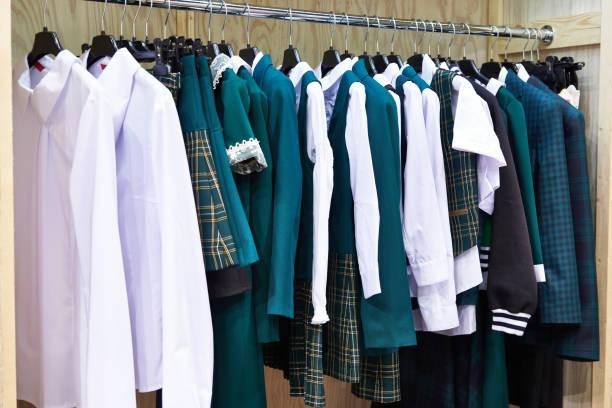
Workwear are important in supporting the brand image and developing customer loyalty. The most visible brand ambassadors in a retail setting are the employees. Where the workwear are not consistent or designed in a poor way, customers can find the brand as incoherent or unreliable. In the expansion, consistency is necessary in all the outlets so that the customers can experience the same brand experience irrespective of their location.
In addition to branding, workwear are also a factor in the confidence and professionalism of the employees. Unified work workwear also contribute to the feeling of belonging and role definition, particularly in situations where the new workforce is absorbed in enormous amounts, and they need to understand their roles and the magnitude of the expansion.
Key Workwear Challenges Faced During Retail Chain Expansion
1. Scaling Workwear Production across Locations
Scaling workwear production without quality is one of the greatest Workwear Challenges of retail expansion. What will be effective in a limited number of stores might not be effective when the demand grows exponentially. Uncrystalline fabrics, color discrepancies, and uneven stitching may be easily experienced when production is hurried or broken.
It is not always easy when retailers have to deal with several vendors, and this results in differences in standards and schedules. The first step to winning this battle is to select a reputable workwear manufacturing company which is capable of producing large quantities of clothes at a consistent level.
2. Maintaining Brand Consistency Across Regions
Due to the spread of retail chains to new markets, it is harder to preserve visual consistency. Branding rules might be interpreted differently in different regions that will lead to small yet significant differences in workwear. In the long run, such discrepancies undermine brand identity.
Proper branding of corporate work wear will make sure that the branding of the logo, color scheme, and design elements will be consistent in all the outlets. Documentation, centralized approvals and controlled production processes are useful in safeguarding the brand integrity in the expansion.
3. Managing Diverse Workforce Requirements
Retail growth presents a multicultural workforce, who have dissimilar roles, physiques, climate needs and cultural anticipations. A generalized strategy is seldom scalable. This adds more Workwear Challenge, especially when workwear have to be introduced to fit the change of season or functionality.
Retailers should create the flexible workwear collections allowing different fits, fabrics, and choices and maintaining the unified look. Lack of such needs may result in poor employee satisfaction and work output.
4. Inventory and Distribution Complexity
The management of inventory that is made workwear with the increase in the number of stores increases in complexity. Excessive stocking causes unwarranted expenditure, insufficient inventory causes late on boarding, and intermittent availability. A collective system is needed to track sizes, replacements, wear-and-tear in various locations.
Focused inventory scheduling and supply stage allow reducing wastes and guarantee punctual availabilities. This is one of the most enduring Workwear Challenges in the process of expansion by many retailers who fail to appreciate this operational aspect.
5. Cost Control Without Quality Compromise
Growth requires cost effectiveness, yet compromising of workwear may go back to haunt. Poor materials also have a short shelf life and hence they are subject to constant replacement and increase in long term costs. The wrongly designed workwear can also impact the comfort of the employees, in particular, in cases of the long working retail hours.
Collaborating with a renowned workwear manufacturing firm will enable the retailers to find the optimal balance between cost, comfort, and durability. Quality investment in the initial stages decreases replacement cycles and enhances a growth that is sustainable.
The Role of Strategic Workwear Planning
The retail chains that strategize early on the workwear strategy stand in better places to expand successfully. This involves making predictions based on future requirements, the design templates, and choosing partners with whom they can work with in the long run. Such brands as Futuremind uniforms are oriented to scalable solutions that develop with the expansion of retail chains.
Other considerations of strategic planning are a foreseen store opening, employee attrition, and seasonal fluctuation. Retailers do not experience interruptions and do not disrupt the flow of business when expansion planning becomes part of the expansion strategy and not a supplement.
Technology and Process Standardization
The Digital tools are significant in solving Workwear Challenges. Standardized size charts, centralized system of ordering and digital approvals are used to facilitate consistent management between sites. These systems minimize the errors of manuals and offer an improved insight into inventory and the use trends.
Standardization of procedures makes sure that all new stores are opened on the same standard roll out schedule, minimizing delays and inconsistency. Such control is also required to ensure that the brand image is professional on the scale.
Sustainability and Compliance Considerations
The sustainability and compliance with labor is also an issue that requires consideration in modern retail expansion. Workwear should be of high safety standards, labor, and environmental standards throughout the regions. The lack of attention to these factors may cause compliance risks and reputation.
They are also finding more partners that focus on ethical sourcing, responsible manufacturing, and durable materials in retailers. Workwear programmes which are sustainable do not only minimise the environmental effects but also reinforce brand credibility in the competitive markets.
Conclusion:
The process of expansion of a retail chain is not simple and standard management may contribute to the process much more than many companies think at first. Workwear affect internal processes as well as the image since they affect supply consistency, brand alignment, and comfort of the employees. Workwear Challenges can be tackled early enough that the retailers can expand without losing on professionalism and efficiency. The systematic method of standard planning will turn work clothes into a strategic equipment instead of a work load.
Retailers can be able to sustain uniformity, quality and scalability by investing in the strong corporate workwear branding, working hand-in-hand with a competent workwear manufacturing company, and with specialists like Futuremind uniforms. As the level of competition grows and people gain more and more expectations, a successfully implemented workwear approach becomes an effective mechanism in contributing to the long-term growth and brand name of the retailer.