If you’re planning one of those deeper, slower Bhutan luxury holiday experiences, food is going to be a bigger part of the journey than you expect. Not in a flashy, Instagrammable way. Bhutanese cuisine is simple. Honest. Sometimes repetitive. But when you understand it, it becomes one of the most grounding parts of traveling here.
This isn’t a tasting-menu destination. It’s a chili-and-cheese, red-rice-and-butter-tea country. And that’s exactly why it works.
After multiple trips across Thimphu, Punakha, and the Paro Valley, eating in farmhouses, small town restaurants, and a few refined hotel kitchens, here’s what you should actually try — and what you should be prepared for.
1. Ema Datshi (Chili and Cheese)
Let’s start with the national dish.
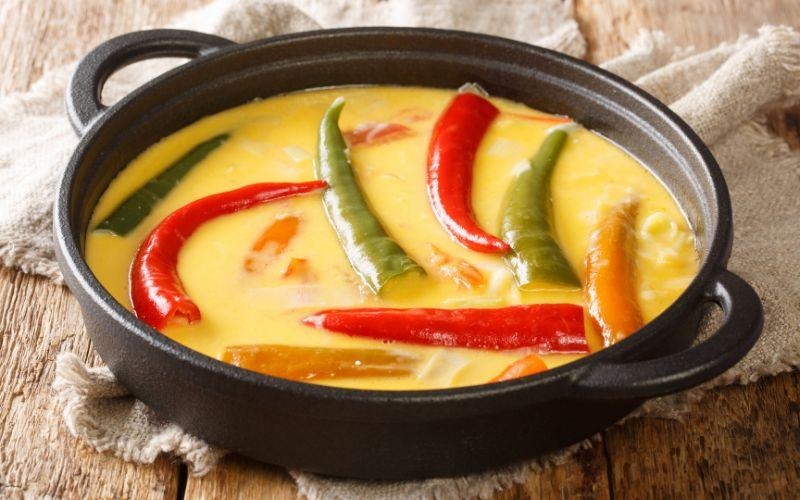
Ema datshi is made from green or red chilies simmered in a thick, slightly tangy cheese sauce. It’s eaten with red rice. Always.
The first time I had it in Thimphu, I made the mistake most travelers make: I assumed the chilies were there for flavor, not heat. They are the main vegetable. This dish is spicy. Not “pleasantly warm.” Properly hot.
But here’s the thing — the heat becomes addictive. After a few days, you start craving it.
Most people miss this: ema datshi isn’t meant to be eaten alone. It’s part of a larger meal with rice and mild side dishes that balance it out. If you order it by itself, you’ll feel overwhelmed.
If you struggle with spice, ask for less chili. Hotels will adjust it. Farmhouses might smile politely and serve it the traditional way.
2. Red Rice
Bhutanese red rice deserves its own mention.
It’s slightly nutty, soft but not sticky, and grown in the higher valleys like Punakha. It anchors almost every meal. Compared to white rice, it feels more substantial — you stay full longer.
In rural homestays, you’ll notice it’s served in generous bowls. Bhutanese hospitality means you won’t leave hungry.
A small tip: don’t treat it as a side. It’s the base of everything. Scoop curries onto it. Mix it in. That’s how locals eat.
3. Phaksha Paa (Pork with Chilies)
If you eat pork, order phaksha paa at least once.
It’s sliced pork belly cooked with dried red chilies and sometimes radish or spinach. Smoky. Fatty. Comforting. Usually spicy again.
I once had it in a small Punakha restaurant overlooking rice fields. Nothing fancy — plastic chairs, no menu in English. It was better than the polished version I tried later in a high-end lodge.
This is where trips often go wrong: people assume luxury hotels will offer the most “authentic” food. Sometimes they do. Often the most memorable meals are in modest places where recipes haven’t been softened for foreign tastes.
4. Jasha Maroo (Spicy Chicken Stew)
Jasha maroo is a lighter option — diced chicken cooked with ginger, garlic, tomatoes, and chilies.
It’s less heavy than pork dishes and usually a safe choice if you want something familiar but still Bhutanese.
I recommend this for your first night in Paro, especially if you’ve had a long travel day. It’s warming without being overwhelming.
But again, watch the spice level. Always ask how hot it is.
5. Datshi Variations (Cheese-Based Dishes)
Once you understand ema datshi, you’ll notice “datshi” appears everywhere.
- Kewa datshi – potatoes and cheese
- Shamu datshi – mushrooms and cheese
- Kharu datshi – bitter gourd and cheese
These variations are worth exploring. Mushroom datshi in particular can be excellent during the right season.
Cheese in Bhutan isn’t mild like mozzarella. It’s earthy and slightly sharp. Combined with chilies, it defines the national flavor profile.
If you’re doing farmhouse dining as part of a curated Bhutan luxury holiday experience, you’ll likely be served several datshi-style dishes at once. They may look similar, but the vegetables change the taste significantly.
6. Momos
You probably already know momos — dumplings found across the Himalayas.
Bhutanese momos are usually filled with pork, beef, or vegetables. Steamed or fried. Served with a spicy dipping sauce.
They’re common in Thimphu cafés and casual restaurants. Perfect for lunch.
One thing I appreciate in Bhutan: momos aren’t overly greasy. They’re simple and clean-tasting. Great with butter tea (if you’re feeling brave).
7. Suja (Butter Tea)
Let’s talk about butter tea.
Suja is made from tea leaves, yak butter, and salt. It’s not sweet. It’s not refreshing. The first sip can be shocking.
But context matters. In high-altitude areas, it makes sense. It’s warming and filling.
I’ve had it during a cold morning in the Paro Valley before a hike. It felt right. I’ve also had it in a hotel lobby after lunch. It felt strange.
Try it at least once. Even if you don’t love it, it’s part of the experience.
8. Zow Shungo (Leftover Rice Dish)
This is one of those dishes most travelers never hear about.
Zow shungo is made from leftover red rice mixed with vegetables. It’s practical. No waste. Very Bhutanese in spirit.
You’re more likely to find it in rural settings than on formal menus. If you see it offered, try it. It shows how Bhutanese cooking is rooted in simplicity and sustainability rather than presentation.
9. Ara (Traditional Alcohol)
Ara is a local distilled drink made from rice or maize. It can be served warm.
It’s strong. Don’t underestimate it.
In village homes, it’s sometimes offered as a gesture of welcome. Refusing politely is acceptable, but trying a small sip can lead to warm conversations and stories you wouldn’t otherwise hear.
Moderation is key. This isn’t cocktail culture.
What You Should Know Before Eating in Bhutan
A few practical observations:
Spice is real. Always clarify your tolerance level.
Menus can feel repetitive. That’s normal. Bhutanese cuisine isn’t huge in variety.
Vegetarians are fine here. Many dishes are plant-based by default.
Breakfasts are usually Western-style in hotels. Don’t expect full Bhutanese spreads every morning unless you request it.
Hydration matters. Spice plus altitude can catch you off guard.
Most importantly, approach the food with curiosity rather than comparison. If you measure everything against Thai, Indian, or Chinese cuisine, you’ll miss the point.
Bhutanese food reflects the landscape — mountainous, practical, warming, direct.
Final Thoughts
Traditional Bhutanese food isn’t about refinement. It’s about identity.
You’ll eat a lot of chilies. You’ll eat a lot of red rice. And by day four or five, you might realize you’ve stopped looking for international alternatives.
That’s when you know you’ve settled in.
Try ema datshi properly. Don’t avoid the butter tea. Look beyond hotel menus when possible. And accept that simplicity is part of the experience.
If you let it, Bhutanese food becomes less about flavors and more about understanding the rhythm of life here — steady, grounded, and quietly confident.
And that’s exactly why it’s worth trying.
FAQs About Traditional Bhutanese Food
1. Is Bhutanese food always very spicy?
Yes, most traditional dishes are spicy. However, restaurants catering to travelers can reduce the heat if you ask.
2. Are there good vegetarian options in Bhutan?
Absolutely. Many dishes are naturally vegetarian, especially datshi variations made with potatoes, mushrooms, or other vegetables.
3. Is Bhutanese food safe for sensitive stomachs?
Generally yes, especially in reputable hotels and restaurants. Stick to freshly cooked food and avoid overdoing spicy dishes on your first day.
4. Can I find international food in Bhutan?
In Thimphu and Paro, yes. But outside major towns, options are limited. It’s best to embrace local cuisine.
5. What’s the best way to experience authentic Bhutanese food?
Farmhouse meals and small local restaurants often provide the most genuine flavors. Don’t rely only on luxury hotel dining.
6. Do I need to drink butter tea?
You don’t need to, but trying it once gives context to the culture and climate. Even a small sip is enough to understand it.
7. Is alcohol common in Bhutan?
Yes, especially ara and beer. Just be mindful of altitude and strength — drinks can hit harder than expected.