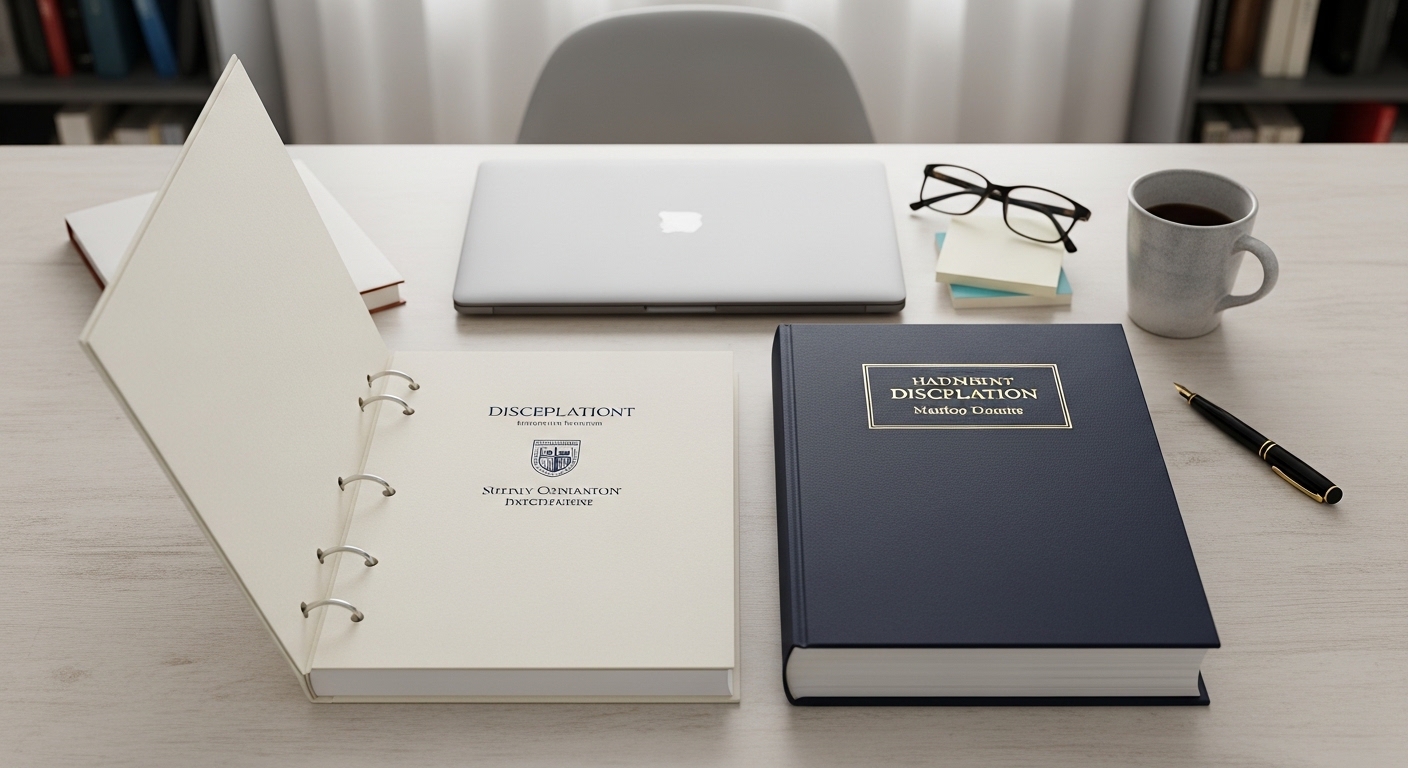
Imagine you are a student in your final year of school. After countless night-pullers, thousands of hours of research, and an unimaginable amount of caffeine, you are finally able to complete your dissertation with citations. Now you think the hard part is over, but sadly, it’s not because the next and important step awaits you. It’s a binding of a dissertation.
However, it’s often the hard part because many students don’t understand which type of binding is suitable for their dissertation. Even those who use a dissertation writing service to complete their work still need to handle this part themselves.
That is why this article discusses hard binding vs soft binding dissertations. The comprehensive differences discussed here will help you discover the best option. You will also learn what type of dissertation is perfect for your requirements.
Key Takeaways
- Hard binding protects the pages by preventing wear, bending, and accidental damage.
- Hard binding is heavier and less flexible, reducing portability, while soft binding is lightweight and easier to handle.
- Soft binding, which offers minimal protection, whereas hard binding prevents pages from loosening and misaligning.
- Universities prefer hard-binding dissertations for final submissions because soft binding is generally used for drafts or temporary use.
- You can use a hard-binding dissertation for long-term use without compromising quality. Whereas a soft-bound dissertation offers short-term advantages.
Hard Binding Dissertation vs Soft Binding Dissertation
Before getting into differences, you need to know what a hard binding dissertation is and what a soft binding dissertation is:
- Hard Binding Dissertation: As the name suggests, it encloses the dissertation in strong, rigid covers that protect the pages and extend its lifespan.
- Soft Binding Dissertation: This type of binding uses lightweight, flexible covers and is the most budget-friendly option.
7 Key Differences Between Soft Binding and Hard Binding Dissertations
Whether its hard binding dissertation or a soft-binding dissertation, each offers variations and unique advantages. Moreover, it depends on your submission, e.g. if you are submitting a bachelor’s dissertation, it should look more elegant.
According to Zipdo, around 80% of students80% students think that dissertations are the most stressful part of a degree. So, it’s important to pay attention to every aspect to avoid or avoiding stress. On the other hand, a master’s-level dissertation should have a more professional appearance.
The 7 key differences between soft and hard binding dissertations are given here:
- Durability and Longevity
The durability and longevity of soft and hard binding in a dissertation indicate how well the dissertation withstands physical pressure. If the dissertation is durable, it will protect pages from damage and extend their lifespan. The differences between soft and hard binding dissertations are given here:
- Durability and Strength
A hard-binding dissertation has a thick casing and an optimal leather cover, and is known for exceptional strength and durability. This ensures that dissertation books can withstand bends or even accidental knocks.
Soft binding dissertation has flexible covers made with light plastic or thick paper. This provides basic support, which often compromises the durability and longevity. In addition, it’s more prone to damage.
- Page Protection
The hard binding dissertation has a notable feature of providing ultimate protection to pages. Through this, you can protect pages from tears and misalignment. It also helps keep the page intact, preventing information loss.
On the other hand, the soft-bound dissertation comprises lightweight plastic covers that can be bent easily. Additionally, it cannot protect internal pages for a long period.
- Longevity of Binding
Hard binding dissertations have a promising lifespan and can last for years. The dissertation can ensure the optimal structure for many years, even with wear and tear. This also helps with increased shelf life and makes storage easy.
With time, a soft-bound dissertation loses its longevity and begins to show signs of wear and tear. This makes it appear less professional and affects the overall presentation.
- Usability
According to the Unissa Thesis Manual, many universities require multiple copies of hard binding dissertations. The hard binding dissertation is more usable due to the casing and leather cover. The sturdy spine helps the book open and close without any page loss. The professional appearance also enhances usability, making it reliable for submission.
Compared with soft-bound dissertations, which are less suitable for frequent use, the pages can loosen easily. This can cause frustration in both the examiner and the students.
- Weight and Flexibility
This shows how light and heavy a dissertation is and how well a student can carry it. These factors not only impact the reading but also affect the submission.
- Weight of Dissertation
Hard-bound dissertations are typically heavy because of their thick and sturdy covers. This can sometimes affect the handling, especially if the document is long. On the other hand, the added weight often gives the document a premium, professional feel.
Soft-bound dissertations are lightweight and easy to carry. The thinner material makes them easy to handle, but the light weight often gives the impression that the student has not completed the ideal required length of dissertation.
- Flexibility Of Dissertation
The hard binding of the dissertation offers limited flexibility, and a sturdy spine compromises the bending and folding while studying. However, this stiffness is rather good for the long-term structural integrity of the document.
When it comes to soft binding a dissertation, it offers greater flexibility. The foldable nature and lightweight design let you scroll through pages without limitations. However, frequent bending and folding can lead to early wear and tear.
- Storage Considerations
You can use hard binding dissertation to ensure a longer shelf life. This makes them ideal for long-term storage without any problems like page loss.
In comparison, a soft-bound dissertation has a shorter lifespan due to higher wear and tear, making it suitable for short-term use.
- Professional Appeal
If the dissertation is well-written and has a professional appeal, it can be published and add to one’s career. The weight and firmness of hard binding dissertations contribute to a professional appearance.
However, the lighter weight and flexible structure of soft-bound dissertations may make them appear less formal or professional. Consequently, it’s suitable for drafts or short-term submissions
- Professional Appearance
Professional appearance refers to how polished, formal, and presentable a dissertation looks to examiners, institutions, and readers. A dissertation’s appearance reflects not only the quality of the research but also the care and effort taken in presenting it.
- Cover Material and Finishing
Hard-binding dissertations feature sturdy covers made of thick cardboard and leather. These materials give the dissertation a sleek and formal appearance. It enhances the overall presentation.
Soft-bound dissertations have flexible covers made from paper or plastic. While functional, these materials lack the premium feel and finish and appear less polished. Minor bends or creases can quickly reduce the professional look.
- Look and Impression
Hard binding dissertations convey quality and permanence. The combination of weight, rigid covers, neat page alignment, and professional printing contributes to an authoritative appearance.
However, Soft binding does not allow for rigid, well-defined covers. This affects the overall aesthetic and makes the dissertation appear less formal.
- Page Alignment and Neatness
In hard binding dissertation, pages are tightly secured through sewing or quality glue, resulting in even alignment and minimal warping. This precise construction gives the dissertation a neat, symmetrical appearance.
Pages in soft-bound dissertations are glued and are sufficient for short-term use. The lack of rigidity can result in uneven edges or reduce the neatness and overall presentation of the dissertation.
- Usability and Handling
Hard binding dissertations are less flexible but remain user-friendly for professional handling. They maintain a premium look even with repeated use. This combination makes hard binding ideal for formal submissions and long-term academic records.
Softbound dissertations are lighter and more flexible, but frequent use may cause the cover to bend or the pages to loosen. This can negatively impact the professional impression.
- Academic Value and Acceptance
Academic value and acceptance refer to how a dissertation is recognised and accepted within academic institutions. This includes how universities, evaluators, and libraries perceive its credibility, professional quality, suitability and mistake-free dissertation. Acceptance also depends on whether the binding method meets institutional standards or guidelines.
- Institutional Preference
Many universities and colleges have formal requirements of hard binding dissertation. Submitting a hard-bound dissertation signals adherence to these guidelines and increases the likelihood of acceptance without complications.
Soft-bound dissertations are rarely preferred for final submissions in formal academic settings. They are highly suitable for proposals and drafts.
- Credibility of Dissertation
Hard binding dissertations are more credible and authoritative. The sturdy binding, polished appearance and professional cover make it worthy of academic attention. This positively influences evaluators, giving it higher academic weight.
Soft-bound dissertations often appear less credible because of the flexible covers and lighter structure. This can give the impression of an incomplete submission.
- Archival Recognition
Institutions prefer hard binding dissertations for long-term archival storage because of structural integrity. The hard-bound dissertations can be preserved in the library without the risk of damage. This recognition adds to the academic value of the work and increases the chances of archival recognition.
The reduced durability and flexibility of soft-bound dissertations are a lagging point for their long-term archival storage. Libraries do not favour soft-bound dissertations and may exclude them from permanent collections.
- Recognition Beyond Campus
Hard binding dissertations are considered formal academic achievements beyond the campus. Alumni and publishers view them as scholarly contributions that can enhance the dissertation’s overall academic recognition.
Soft-bound dissertations are less likely to receive recognition beyond the campus. They are mostly used in draft copies and presentations. This reduces recognition from external reviewers or scholars.
- Customisation and Aesthetic Options
Customisation and aesthetic options let you personalise the look and design of a dissertation. This includes choices in cover material, colour, text layout, and other features. This enhances the professional appearance and helps you stand out.
- Cover Material and Texture
Hard-binding dissertations offer multiple cover materials to choose from. This includes a leather cover and high-quality laminated boards. These materials allow customised selection of textures to meet the formal tone of work while adding a premium aesthetic.
Soft-bound dissertations use flexible materials such as
- thick paper
- cardstock
- thin plastic
These materials are somewhat functional but offer limited options for texture or premium finishes. This can affect the overall visual impact of the dissertation.
- Embossing and Printing
Hard-bound dissertations have multiple options, including gold-stamped or embossed text for the dissertation title, author name, and university. These multiple available printing options make the dissertation visually impactful.
Soft-bound dissertations cannot embed embossed or gold-stamped text. Printing options are also limited, reducing the aesthetic appeal of hard-bound dissertations.
- Page Layout and Presentation
Hard binding a dissertation provides flexibility for page layouts, including colour charts and double-sided printing, without compromising the structural integrity. The pages remain flat. maintaining a neat, professional look that enhances readability.
Soft binding comprises basic page layouts but struggles with thicker paper due to several limitations. Pages can be damaged because of repeated use. This can also lead to curling or bending, reducing the dissertation’s neatness and visual appeal.
Conclusion
Choosing the right binding for your dissertation directly impacts durability, professional appearance, academic recognition, and long-term preservation. Across all the key differences discussed, hard binding consistently proves to be the superior choice.
This is because the exceptional strength ensures that your pages remain intact. Its rigidity gives it a premium feel, defining your professionalism to evaluators. Hard binding allows elegant customisation that enhances the overall aesthetic appeal. It makes your dissertation stand out and increases the chances of recognition.
Along with dissertation binding, writing good content is also important. According to Gitnux, around 30% of doctoral students hire professional editors to write their dissertations. So, those who find the process confusing or time-consuming, dissertation writing services in the UK can help in shaping clear arguments and presenting your research.
Thus, opting for hard binding over soft binding ensures long-term preservation and helps meet academic standards without restrictions.
Frequently Asked Questions about Hard Binding Dissertation vs Soft Binding Dissertation
- What is the difference between hard binding and soft binding dissertations?
Hard-bound dissertations feature rigid, durable covers made of leather and sturdy boards, providing long-term protection and a professional appearance. Soft binding dissertations, on the other hand, use flexible covers like thick paper or plastic, which are lightweight. It’s a cost-effective approach but less durable and less formal.
- Which type of binding is preferred by universities?
Most universities and institutions prefer hard-bound dissertations for final submissions. It’s especially considerable for master’s or PhD-level work. This is because hard binding ensures durability and professional presentation. However, Soft binding is generally used for drafts, proposals, or temporary submissions.