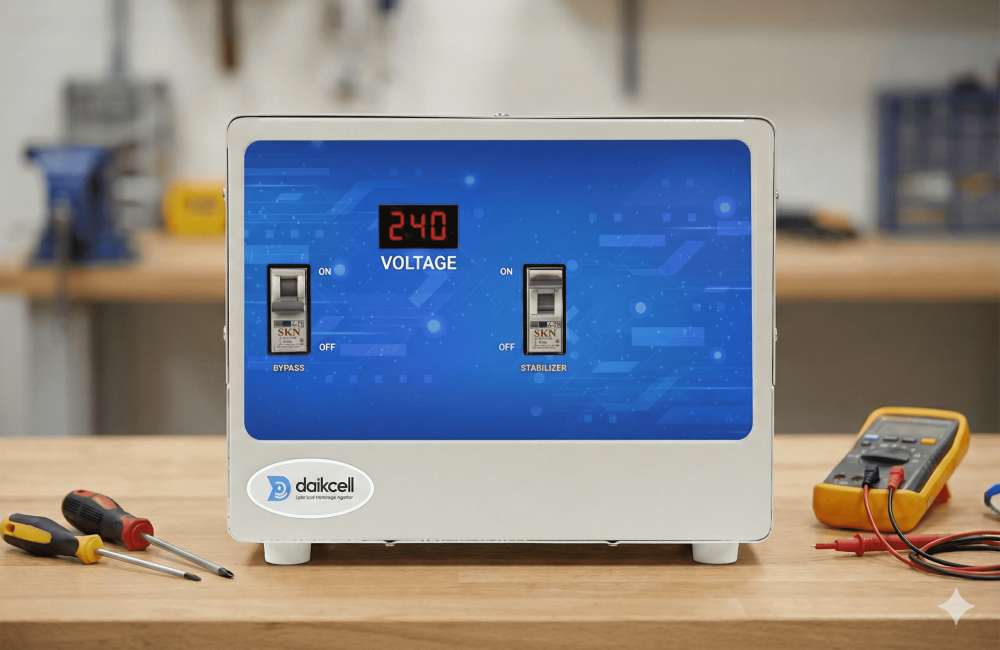
Most people don’t think about protection appliances from erratic electrical service…until it is too late. Most don’t realize that expensive electronics are damaged during abrupt loss of power, and can eventually deteriorate and break down completely. This is precisely why finding the proper protection for your devices is important. Also, for many, choosing the right model is made more difficult due to a lack of understanding about some of the key factors of these devices like how they function, what capacity is needed, and other parameters.
Why You Shouldn’t Ignore Fluctuating Current Levels
While electricity provided to homes is supposed to be stable, this is not the case. There are lots of factors that lead to unstable power flow, such as overloaded transformers, old wiring, harsh weather, and feeble distribution. Namely, power flow that is not stable leads to several things: lights dimming, fan speeds being irregular, overheating of computer parts, and appliances having their power flow cut off and permanently not being usable anymore.
A stabilizer works as a guard that smoothens the current himself before letting it reach your appliance.
How These Devices Work
Basic Functioning
The system constantly checks incoming power, steadily modifies output to maintain equilibrium, and disconnects power without notice for safety reason.
Internal Mechanism Includes:
- Relays or servo motors
- Sensors
- Microcontrollers
- Control boards
- Protective circuits
This ensures your appliance gets smooth and safe power.
Signs Your Home Needs Voltage Protection
1. Frequent flickering of lights
If you observe the light bulbs flickering in the house, particularly when large appliances turn on, it is an evident warning sign of instability.
2. Sudden shutdown of devices
Sudden TV restarts and off fridges signal irregularities in power supply.
3. Old neighborhood wiring
Older constructions go through indefinable flow more often.
4. Expensive modern appliances
New electronic devices have fragile digital components that run on power stability.
Types of Stabilizers for Home Use
Relay-Based Models
Financially affordable and efficient for basic household equipment including television sets and small freezers.
Servo-Controlled Models
Ideal for major devices needing accurate voltage correction—mostly AC and large refrigerators.
Digital Models
You can quickly correct mistakes and have several layers of protection.
Inverter-Compatible Units
Crafted especially for inverter ACs, balancing fluctuating loads effortlessly.
How to Choose the Perfect Stabilizer for Your Home
Step 1: Know Your Area’s Voltage Pattern
Communicate with nearby residents. Notice lights that behave erratically. Certain zones have very low voltage, whereas others exhibit very high spikes.
Step 2: Calculate Required Capacity
Look at the VA/watt rating on the appliance. Keep an extra 20-30%
This will be higher. It will be a motor-based appliance, such as an AC, as these have higher startup loads. So keep that in mind.
Step 3: Check the Input Range
One of the biggest mistakes homeowners make is getting a stabilizer with the incorrect input range. If your area is prone to dropping to 150V, get a stabilizer that functions safely at that lower range.
Step 4: Look for Essential Features
- Time Delay Function – offers compressor protection
- Thermal Overload Protection – avoids overheating
- High/Low Cut-Off – guarantees protection during temperature extremes
- Digital Display – indicates in/out in real-time
- Copper Winding – provides more longevity
Step 5: Choose Appliance-Specific Units
- LED TVs & Set-top Boxes: Select smaller capacity devices
- Refrigerators: Must possess time-delay functionality and low-voltage handling
- Air Conditioners: Select models specific for AC
- Washing Machines/Microwaves: Choose models meant for motorized appliances
- Entire House: Use a mainline stabilizer for complete house protection
Price Guide
Costs vary depending on:
- Capacity (VA rating)
- Features
- Technology
- Brand reputation
- Build quality
Basic units for TVs are the cheapest while AC and refrigerator units are more expensive. Servo-controlled models and mainline stabilizer units are in the upper class.
Common Mistakes People Make When Choosing a Stabilizer
1. Choosing by Price Alone
Cheaper models often lack essential safety features.
2. Ignoring the Input Range
This is the number-one reason stabilizers fail.
3. Buying Under-Capacity Models
If the load exceeds limit, the stabilizer fails instead of protecting.
4. Not Considering Appliance Type
An AC model won’t work properly for a television.
5. Choosing No-Name Brands
Quality matters—especially for protection devices.
Top Reliable Stabilizer Brands
- Daikcell
- Servomate
- Microtek
- Everest
- Bluebird
- Monitor
Best Usage Practices
- Keep units away from moisture
- Ensure adequate ventilation
- Avoid daisy chaining multiple devices to a single unit
- Check cables on a regular basis
- Do not exceed the limit
Does Every Home Need a Stabilizer?
The built-in safety circuits of new appliances are not equipped to manage fluctuating. Homes in Older or less stable regions have mitigating protection.
Signs Your Stabilizer Needs Replacement
- Overheating
- Excessive clicking
- Strange burning smell
- Appliance still flickering
- Too old (7–10 years)
Conclusion
Once you understand what to look for, it is much simpler to select the best voltage stabilizer. Assess the power conditions in your locality, and understand the right load capacity, input range, and requisite protection features. Don’t buy a stabilizer based solely on the Price of stabilizers. A good choice can save your expensive appliances for years and reduce the risks of repairs significantly.