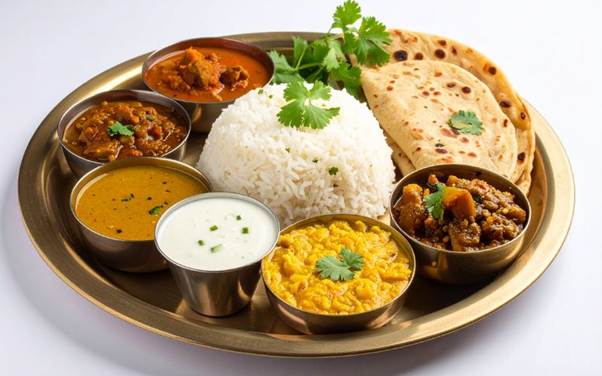
Food in Nepal isn’t something you chase. It meets you where you are—on a trekking trail, in a roadside café, at a family table, or in a small city restaurant that closes early because everyone has gone home to eat.
Most travelers don’t come to Nepal for food. They come for mountains, temples, and movement. Meals become fuel. That’s fair. But if you slow down just enough to notice what’s on your plate, Nepali food starts telling you a lot about how daily life actually works here.
This guide is based on eating across cities and small towns, before and after long days on the road or trail. It’s not about everything you could eat—it’s about what you will eat, what’s worth ordering again, and where expectations usually trip people up. Whether you’re traveling independently or moving between regions on Nepal adventure travel packages, this is the food that shapes the experience.
Dal Bhat Is Not a Stereotype (It’s a System)
Dal bhat is everywhere for a reason.
Rice. Lentil soup. Seasonal vegetables. Pickles. Sometimes meat. Sometimes yogurt. Refills often included.
It’s filling, balanced, and designed to keep you going for hours. Trekkers swear by it. Locals eat it daily.
Most people make one mistake here: they judge dal bhat after one bland plate in a tourist area and assume that’s it. Try it again somewhere simpler. Different kitchens season it differently. Some versions are quietly excellent.
Eat dal bhat for lunch. That’s when it works best.
Momos Deserve the Hype (But Choose Carefully)
Moments after landing in Kathmandu, you’ll hear about momos. Steamed dumplings filled with meat or vegetables, served with spicy dipping sauce.
They’re popular for a reason. When done well, they’re comforting, juicy, and addictive.
But momos vary wildly. Freshly made is non-negotiable. If they taste dry or doughy, move on and try again elsewhere.
A small warning: momos are easy to overeat. Order a sensible portion, then reassess.
Thukpa and Noodle Soups: Quietly Essential
Thukpa—a Tibetan-style noodle soup—is one of Nepal’s most underrated meals.
Brothy, warming, and adaptable. Often eaten in colder regions or evenings. It’s especially good after a long day of walking or travel.
This is one of those dishes travelers often skip because it seems “simple.” Don’t. It does exactly what it’s supposed to do.
Newari Food: Strong Flavors, No Apologies
If you’re in Kathmandu Valley and want something more intense, try Newari food.
Buffalo meat, fermented flavors, bold spices. Dishes are often served as small plates meant to be shared.
This isn’t beginner-friendly food. And that’s okay.
Start with one or two items, not the full spread. Some flavors surprise people. Some challenge them. That’s part of the point.
Meat Dishes: Seasonal and Straightforward
Chicken, goat, and buffalo are the most common meats. Prepared in curries, grilled, or fried.
Don’t expect elaborate plating or complex sauces. These dishes are about warmth and spice, not finesse.
In rural areas, meat availability depends on the day. If it’s on the menu, it’s fresh. If it’s not, don’t ask why.
This is where trips often go wrong—expecting consistency instead of availability.
Pickles (Achar) Are the Secret Weapon
Every meal comes with achar. Tomato-based. Chili-heavy. Fermented. Tangy.
They wake everything up.
A small spoon changes the entire plate. A big spoon might ruin it. Go slow.
Most people ignore achar or treat it as garnish. That’s a mistake. This is where flavor lives.
Breakfast Is Modest, Then Repeated
Breakfast in Nepal is usually simple. Tea. Eggs. Bread. Sometimes leftover dal bhat.
If you’re trekking or moving early, breakfast matters more than you think. Eat something warm.
You’ll probably eat similar breakfasts many days in a row. That’s normal. It works.
Tea Is Constant, Coffee Is Optional
Milk tea (chiya) is everywhere. Sweet. Warming. Part of the day.
Coffee exists, especially in cities, but it’s not the focus. Don’t build your routine around cafés unless you’re in Kathmandu or Pokhara.
Accept the tea. It’s part of the rhythm.
Hygiene and Eating Smart
Eat where food moves quickly. Busy places are safer.
Hot food is better than cold. Freshly cooked matters more than fancy surroundings.
Use bottled or filtered water. Brush your teeth with bottled water if you’re unsure.
This isn’t about fear. It’s about common sense.
Timing and Patience
Meals take time. Service can be slow. Not because people don’t care—but because urgency isn’t the priority.
Lunch is often the main meal. Dinner is earlier and lighter.
If you’re on Nepal adventure travel packages, meals may be scheduled around logistics. When you have free evenings, eating locally adds texture to the trip.
Final Thoughts
Nepali food isn’t about choice overload or culinary performance. It’s about sustenance, repetition, and comfort.
Eat what locals eat. Repeat dishes. Notice small differences. That’s how appreciation builds.
Whether you’re trekking, city-hopping, or following an itinerary shaped by Nepal adventure travel packages, food here quietly supports everything else you came to do.
Let it be simple. Let it be enough.
FAQs
1. Is Nepali food very spicy?
It can be, but most dishes are moderate. You can ask for less spice.
2. Are vegetarian options common?
Yes. Many traditional meals are naturally vegetarian.
3. Is street food safe to eat?
It can be, if freshly cooked and busy. Use judgment.
4. Can I eat the same food every day?
Absolutely. Dal bhat is designed for that.
5. Is tap water safe to drink?
No. Use bottled or filtered water.
6. What’s the biggest food mistake travelers make?
Judging Nepali food after one meal or expecting variety instead of balance.
7. Do I need to tip in restaurants?
Not required, but rounding up or leaving a small tip is appreciated.