Food trends come and go.
Some disappear within months. Others quietly become part of everyday eating habits around the world. The interesting thing is that not every food trend is about weight loss anymore. More people are paying attention to energy, digestion, long-term health, and how food makes them feel throughout the day.
That shift is worth noticing.
A few years ago, many popular diets focused on restriction. Today, many global food trends focus on adding more nutrition rather than removing entire food groups. That approach feels more realistic for most people.
Not every trend deserves attention, of course. Some are driven by social media more than science. Still, a few global eating habits have genuine value and could help people build healthier routines without making life complicated.
Why Global Food Trends Matter
Different countries often approach food differently.
Some cultures naturally include more vegetables. Others prioritise fermented foods. Some focus on portion control without counting every calorie.
Looking at these habits can be useful.
It helps people move beyond extreme diets and focus on practical nutrition strategies that fit real life.
Many nutrition experts spend more time discussing sustainable eating patterns than temporary food rules because consistency usually produces better results.
Plant-Forward Eating Is Growing Worldwide
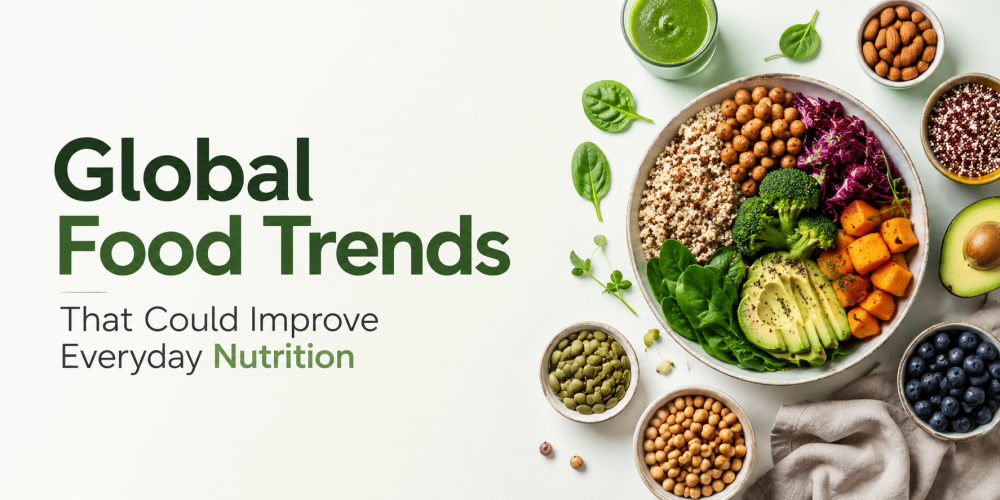
One of the biggest shifts happening globally is the move toward plant-forward meals.
This does not mean becoming vegetarian or vegan.
It simply means eating more plant foods more often.
Examples include:
- Vegetables
- Fruits
- Lentils
- Beans
- Whole grains
- Nuts
- Seeds
Countries with diets rich in plant foods often show better long-term health outcomes.
A simple example could be replacing one heavily processed snack with fruit and nuts.
Small changes often matter more than dramatic ones.
Fermented Foods Are Getting More Attention
Fermented foods have been part of traditional diets for centuries.
Now they are becoming popular again.
Foods such as:
- Yogurt
- Kefir
- Kimchi
- Sauerkraut
- Kombucha
- Traditional pickled foods
are being discussed more because of their potential connection with gut health.
The gut plays an important role in digestion, nutrient absorption, and overall wellbeing.
Many people notice improvements in digestion when fermented foods become a regular part of their meals.
The key word is regular.
Eating yogurt once every few weeks probably will not make much difference.
Protein Is Becoming a Bigger Priority
For years, protein was mostly associated with athletes and gym enthusiasts.
That idea has changed.
People are beginning to understand that protein supports much more than muscle growth.
It helps with:
- Satiety
- Recovery
- Energy levels
- Healthy aging
- Muscle preservation
Protein-rich foods include:
- Eggs
- Fish
- Chicken
- Lentils
- Paneer
- Greek yogurt
- Tofu
Many people struggling with constant hunger discover that increasing protein intake makes meals feel more satisfying.
That can naturally reduce unnecessary snacking.
Mindful Eating Is Replacing Strict Dieting
This trend may not involve a specific food, but it deserves attention.
People are starting to question strict food rules.
Instead of obsessing over every calorie, many are paying attention to:
- Hunger levels
- Fullness cues
- Eating speed
- Portion awareness
This approach encourages people to reconnect with natural eating signals.
It sounds simple.
For someone who has spent years dieting, it can take practice.
Still, it often creates a healthier relationship with food over time.
Traditional Foods Are Making a Comeback
Many communities are rediscovering traditional foods that were pushed aside by processed convenience products.
Examples include:
- Millets
- Local grains
- Traditional lentil dishes
- Homemade fermented foods
- Seasonal produce
Traditional foods often provide more nutrition than heavily processed alternatives.
They also tend to fit local eating habits better.
That makes them easier to maintain.
Reducing Ultra-Processed Foods
This is one trend supported by a growing amount of research.
Ultra-processed foods are becoming a larger part of modern diets.
Examples include:
- Packaged snacks
- Sugary drinks
- Instant meals
- Processed desserts
These foods are convenient.
No one can deny that.
The problem is that many provide calories without offering much nutritional value.
More people are now focusing on eating whole foods more often.
That does not require perfection.
It simply means making better choices more frequently.
Hydration Is Finally Getting the Attention It Deserves
Hydration sounds basic.
Because it is.
Still, many people underestimate how much water affects daily well-being.
Poor hydration may contribute to:
- Fatigue
- Headaches
- Reduced concentration
- Low energy
Simple hydration habits include:
- Carrying a water bottle
- Drinking water between meals
- Including coconut water occasionally
- Reducing sugary beverages
Sometimes the simplest habits create noticeable improvements.
Personalised Nutrition Is Growing
Not everyone responds to food the same way.
Age, activity levels, medical conditions, sleep quality, and lifestyle all influence nutritional needs.
This is why personalised nutrition continues to gain attention.
A meal plan that works well for one person may not work equally well for someone else.
Many people seek guidance from a Nutritionist in Pune when they want eating strategies that fit their individual goals and health needs rather than following generic internet advice.
Personalised approaches often feel more realistic because they consider real-life routines.
Seasonal Eating Is Becoming Popular Again
Many traditional cultures naturally followed seasonal eating patterns.
Now this idea is returning.
Seasonal foods often offer:
- Better freshness
- Better taste
- Greater variety
- Potential cost savings
Eating seasonally also encourages dietary diversity.
That diversity helps support overall nutrition.
Common Mistakes People Make When Following Food Trends
Food trends can be useful.
They can also create confusion.
Some common mistakes include:
Following Every Trend
Trying multiple trends at once usually creates frustration.
Expecting Quick Results
Nutrition works slowly.
Most meaningful health changes happen over months rather than days.
Ignoring Personal Needs
Not every trend fits every person.
Choosing Restriction Over Balance
Balanced eating remains important regardless of which trend becomes popular.
Practical Ways to Apply These Trends
You do not need a complete lifestyle overhaul.
Start with simple changes:
- Add one extra serving of vegetables daily
- Include protein with each meal
- Eat fermented foods regularly
- Drink more water
- Reduce processed snacks gradually
- Try local seasonal produce
- Practice slower eating
Small habits often create bigger results than short bursts of extreme effort.
What Usually Lasts Long-Term
Food trends will continue changing.
That is normal.
The habits that tend to survive are the ones people can maintain without feeling deprived.
Balanced meals.
Regular hydration.
Adequate protein.
More plant foods.
Fewer processed products.
Those habits continue showing up in nutrition discussions across different countries because they work.
Not perfectly.
But consistently.
And consistency usually matters more.
FAQs
1. What is the most useful global food trend right now?
Plant-forward eating remains one of the most practical and sustainable trends for improving nutrition.
2. Are fermented foods good for everyday health?
Many fermented foods may help support digestive health when consumed regularly.
3. Why is protein becoming more important in nutrition discussions?
Protein supports fullness, muscle health, recovery, and healthy aging.
4. Should everyone follow personalized nutrition plans?
Not necessarily, but personalized guidance can help address individual health needs and goals.
5. Is mindful eating better than strict dieting?
Many people find mindful eating easier to maintain because it focuses on awareness rather than restriction.