Food in Prague doesn’t chase trends. It doesn’t try to be light. And it doesn’t apologize for being filling. Czech food is built for long winters, long conversations, and long evenings in pubs. If you expect delicate plates or quick lunches, this is where trips often go wrong.
I’ve eaten my way through Prague across multiple visits—sometimes carefully, sometimes impulsively, often hungry. The meals that stick weren’t fancy. They were warm, honest, and timed right. This guide is about what you’ll actually encounter on the table, what’s worth ordering more than once, and what travelers often misunderstand.
Whether you’re exploring on foot, stopping between sights, or fitting meals around Prague river cruise tour packages, knowing what to eat—and when—makes a big difference.
Start With the Reality Check: This Is Hearty Food
Czech food is meat-forward. Saucy. Dense. Dumpling-heavy.
That’s not a criticism. It’s context.
Meals here are designed to anchor your day. Lunch is often the main event. Dinner is social but still substantial. If you try to eat lightly all the time, you’ll either be hungry or disappointed.
Once you accept that, everything improves.
Svíčková: The Benchmark Dish
If there’s one dish you should eat properly in Prague, it’s svíčková.
Marinated beef in a creamy vegetable sauce, served with bread dumplings, cranberry, and whipped cream. It sounds odd. It works.
A good svíčková is balanced—slightly sweet, slightly tangy, rich without being heavy. A bad one is bland and thick like cafeteria gravy.
This is where most people miss out: they order it once at a tourist restaurant near Old Town Square and assume that’s what it’s supposed to taste like. Try it again somewhere quieter. The difference is real.
Goulash Is Not What You Think It Is
Czech goulash is not Hungarian goulash.
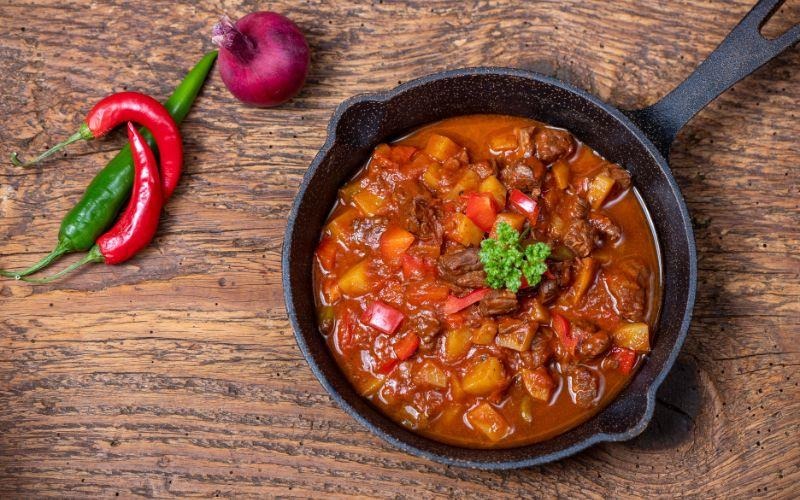
Here, it’s thicker. More stew than soup. Often darker, richer, and served with dumplings instead of noodles or potatoes.
It’s pub food. Designed to go with beer. And it does that job extremely well.
Order it when you’re cold, tired, or indecisive. It rarely disappoints.
Dumplings Are the Unsung Heroes
Bread dumplings (knedlíky) show up everywhere. They’re not exciting on their own. That’s not the point.
They soak up sauce. They balance richness. They make heavy dishes manageable.
There are potato dumplings too, often served with roast meat or sauerkraut. And sweet dumplings filled with fruit, eaten as a main course, not dessert.
Most travelers treat dumplings as filler. Locals know they’re essential.
Roast Meats and Sauerkraut: Simple, Done Right
Roast pork with sauerkraut and dumplings is a Czech classic for a reason. The flavors are straightforward. Salt, fat, acid. No distractions.
Duck is also common, especially in traditional restaurants. Crispy skin. Red cabbage. Dumplings again.
This is food that rewards patience. Slow cooking matters. If it tastes rushed, it probably was.
Soup Is Not an Afterthought
Soup in Prague deserves respect.
Garlic soup (česnečka) is the standout—strong, salty, often with croutons and cheese. Perfect after a long walk or a late night.
Beef broth appears often too, clear and deeply flavored.
If you see locals starting a meal with soup, follow their lead. Especially in winter.
Pub Food Is Real Food
Czech pubs aren’t just for drinking. They’re for eating properly.
Menus are short. Portions are generous. Service is efficient but not chatty.
This is where you’ll find some of the most consistent food in the city. Goulash, sausages, roast meats. No frills.
A small warning: if the menu has photos, English explanations for every dish, and someone trying to lure you in, keep walking.
Beer Is Part of the Meal
Beer in Prague isn’t an accessory. It’s a companion.
Pilsner-style lagers dominate, and they’re excellent. Light, crisp, and dangerously easy to drink.
Beer is often cheaper than water and usually fresher. Order a small (malé) or half-liter (půllitr) depending on your pace.
You don’t need to be a beer expert. Just drink what locals are drinking in that place.
Coffee and Desserts: Keep Expectations Modest
Coffee culture exists, but it’s not the city’s strength. You can find good coffee, but you may have to look for it.
Desserts are comforting rather than flashy. Apple strudel, honey cake, pastries filled with poppy seeds or fruit.
Trdelník—the chimney cake you see everywhere—is mostly a tourist snack. Fine once. Don’t build your dessert plans around it.
Timing Matters More Than Planning
Lunch menus (often called “denní menu”) offer great value and are where locals eat their main meal. They usually run until early afternoon.
Dinner is later but still earlier than southern Europe. Kitchens close earlier than you might expect.
This is where trips often go wrong: wandering hungry at 9 p.m., finding limited options, and settling for mediocre food. Eat earlier or plan ahead.
Final Thoughts
Prague rewards travelers who eat with intention, not urgency.
Seek out quieter neighborhoods. Eat at lunch. Order local dishes more than once. Accept that food here is meant to be filling, not light.
Whether you’re fitting meals around sightseeing or slowing things down between Prague river cruise tour packages, Czech food works best when you let it do what it’s meant to do—ground you, warm you, and give you a reason to sit longer than planned.
That’s when it starts to make sense.
FAQs
1. Is Czech food very heavy?
Yes, compared to many cuisines. Balance it with walking and lighter breakfasts.
2. Are vegetarian options available in Prague?
More than before, especially in modern restaurants, but traditional Czech food is meat-focused.
3. Is it expensive to eat out?
Traditional meals are reasonably priced, especially at lunch. Tourist areas cost more.
4. Do I need reservations?
For popular restaurants, yes. Pubs and local spots usually don’t require them.
5. Is tipping expected?
Yes. Around 10% is standard. Hand it directly to the server when paying.
6. Can I drink tap water?
Yes. Tap water is safe to drink.
7. What’s the biggest food mistake travelers make?
Eating only near major attractions and assuming Czech food is all the same.