Introduction
If you work with fluid transfer systems—whether in manufacturing, agriculture, petroleum, or food processing—you already know one thing: every connection matters. A poorly chosen fitting can slow down production, compromise safety, or cost you thousands in downtime. And that’s exactly why choosing the right camlock couplings is such a big deal.
The good news? Once you understand the key factors that actually impact performance, selecting the right camlock coupling becomes a whole lot easier. I’ve spent years around hoses, pumps, transfer lines, and the headache that comes when a wrong-sized or wrong-material connector makes a mess. So in this guide, I’ll break everything down in simple, real-world terms—no technical jargon overload—so you can make the best decision for your specific system.
What Are Camlock Couplings—and Why Are They So Popular?
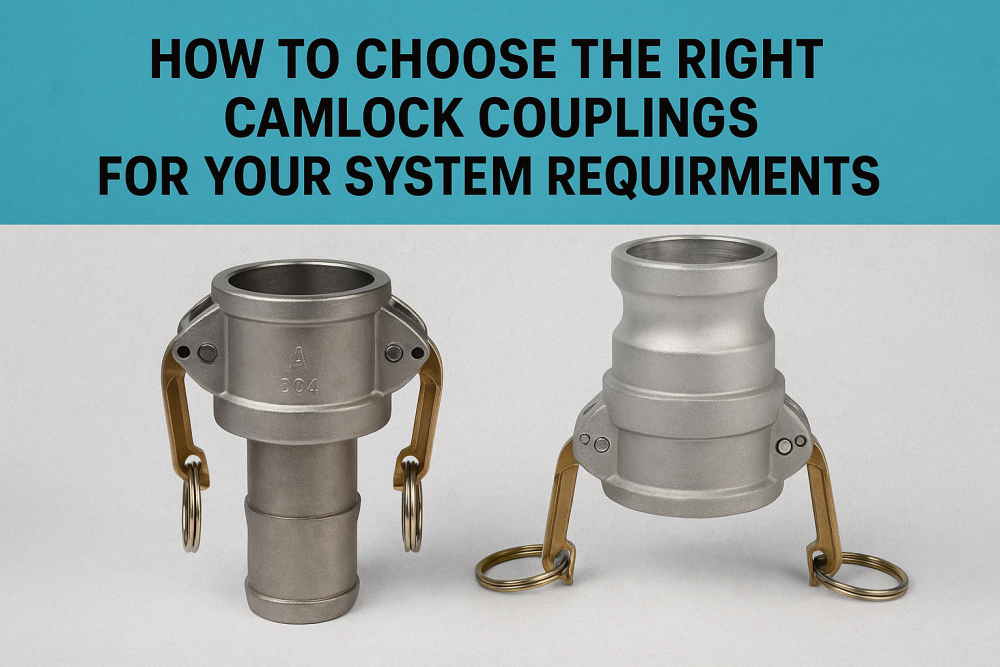
Camlock couplings (also known as cam and groove couplings) are quick-connect fittings that allow you to rapidly join and disconnect hoses and pipes without tools. Just insert the male adapter into the female coupler, close the cam arms, and you’re locked in.
They’re widely used because they’re:
- Fast and easy to operate
- Extremely reliable
- Cost-effective
- Compatible with a wide range of materials
- Ideal for high-volume fluid transfer
If your team frequently switches hoses, cleans lines, or handles different types of materials, camlock couplings save time, reduce leaks, and minimize safety risks.
How to Choose the Right Camlock Couplings for Your System Requirements
Choosing the right camlock coupling comes down to a few key factors. Think of it like matching the right tool to the job—once you know what your system demands, picking the right coupling becomes straightforward.
1. Identify Your Media: What Are You Transferring?
Before anything else, ask yourself:
What’s flowing through the line?
Because the material inside your system determines the material outside your fittings.
| Material Being Transferred | Best Camlock Material |
| Water, air, mild chemicals | Aluminum or Polypropylene |
| Fuel, oil, petroleum | Stainless Steel or Brass |
| Corrosive chemicals | Stainless Steel or Polypropylene |
| Food & beverage products | Stainless Steel (304/316) |
2. Choose the Right Material for Durability and Safety
Each camlock material behaves differently, so choosing the right one keeps your system safe and running smoothly.
Aluminum Camlock Couplings
- Lightweight, affordable
- Great for water, air, and low-risk fluids
- Not ideal for corrosive chemicals
Stainless Steel Camlock Couplings
- Highest durability and corrosion resistance
- Perfect for high-temperature media, chemicals, and food applications
- Best for heavy-duty industrial use
Brass Camlock Couplings
- Excellent for fuels, petroleum, and oil
- Not recommended for acidic fluids
Polypropylene Camlock Couplings
- Corrosion-resistant and lightweight
- Ideal for fertilizers and agricultural chemicals
- Lower pressure rating compared to metal options
If you want longevity and peace of mind, stainless steel often delivers the best long-term value—even if the upfront cost is slightly higher.
3. Determine the Right Size (Especially If You Need 2” Camlock Fittings)
Size mismatches are a common mistake and one of the biggest causes of leaks or pressure loss.
Camlocks come in standard sizes ranging from ½ inch to 8 inches, but 2 camlock fittings are by far the most commonly used across industrial and agricultural systems.
Why 2-inch camlocks are so popular:
- They balance high flow rate with manageable hose weight
- Ideal for transferring water, fuel, and chemicals
- Fit most mid-size pumps and hoses
4. Understand Camlock Types (A–F, DC & DP)
Selecting the right “type” is just as important as choosing the right size.
Here’s a quick, easy-to-remember breakdown:
Male Adapters
- Type A: Male Adapter × Female NPT
- Type E: Male Adapter × Hose Shank
- Type F: Male Adapter × Male NPT
Female Couplers
- Type B: Female Coupler × Male NPT
- Type C: Female Coupler × Hose Shank
- Type D: Female Coupler × Female NPT
Dust Caps & Plugs
- Type DC: Dust Cap
- Type DP: Dust Plug
5. Consider Pressure & Temperature Ratings
Two critical performance factors often overlooked:
Pressure Rating
- Polypropylene couplings: lower PSI
- Aluminum: mid-range PSI
- Stainless steel: highest PSI
If your system operates under high pressure (like petroleum or hydraulic transfer), stainless steel is the safest choice.
Temperature Rating
- Polypropylene is not ideal for high heat
- Stainless steel handles extreme temperatures reliably
6. Check Compatibility with Your Current System
Before purchasing, double-check:
- Thread type: NPT vs BSP
- Hose ID and OD
- Existing coupler/adapter pairings
- Seal material (like Buna, EPDM, Viton)
7. Prioritize Safety and Reliability
A wrong camlock coupling is more than an inconvenience—it’s a hazard. Leaks, pressure drops, contamination, and equipment damage can all stem from incompatible fittings.
A reliable camlock system should:
- Lock securely
- Maintain pressure under load
- Seal tightly without needing extra tools
- Withstand the environment it operates in
Common Mistakes to Avoid When Selecting Camlock Couplings
- Mixing metals (e.g., stainless + aluminum → galvanic corrosion)
- Guessing hose size instead of measuring
- Buying low-grade imported camlocks with poor machining
- Ignoring seal material compatibility
- Using aluminum with corrosive chemicals
- Choosing polypropylene when high pressure is involved
Final Checklist: The Right Camlock Coupling Should Match…
✔ Your media (water, oil, chemicals, food)
✔ Your pressure and temperature requirements
✔ Your hose or pipe size
✔ Your connection type (NPT, BSP, hose shank)
✔ Your industry standards
✔ Your long-term durability needs
Conclusion
Choosing the right camlock couplings doesn’t have to feel overwhelming. When you break it down by application, material, size, and system requirements, the best-fitting option becomes clear—and that’s exactly how you ensure long-term efficiency and safety.
If you’re looking for high-quality, dependable camlock fittings—from 2” camlock fittings to stainless steel industrial-grade couplings—Proflow Dynamics offers one of the most trusted selections in the industry.