Brazil is too big to eat casually. You don’t just “try Brazilian food” and move on. What people eat in the south barely overlaps with what shows up on plates in the north, and assuming otherwise is where trips often go wrong.
I’ve watched travelers spend a week in Brazil, eat feijoada twice, post a photo of pão de queijo, and leave thinking they’ve figured it out. They haven’t. Brazilian food makes sense only when you move through regions slowly and eat what locals eat on normal days—not celebration days, not hotel buffets.
This guide is practical. Region by region. No grand theory. Just what to look for, what to skip, and what most people miss—whether you’re traveling independently or tagging food experiences onto broader Rio de Janeiro and São Paulo tour packages without turning the trip into a checklist.
Southeast: Rio de Janeiro & São Paulo
Let’s start where most people land.
In Rio de Janeiro, food is informal and social. You eat standing up. You snack between plans. You don’t overthink it.
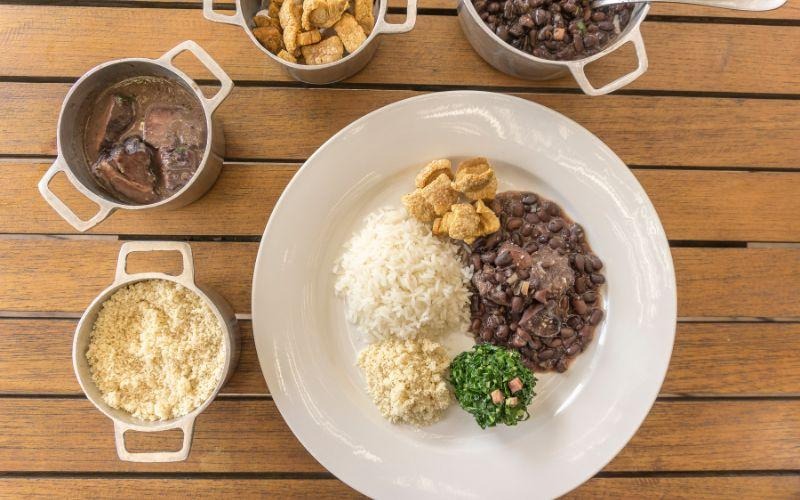
Feijoada is the headline dish here—black beans cooked with pork cuts, served with rice, farofa, orange slices, and greens. But don’t order it every day. Locals usually eat feijoada on Wednesdays or Saturdays. Ordering it on a random Tuesday night isn’t wrong, just slightly off-rhythm.
What you should eat more often:
- PF (Prato Feito) lunches. Rice, beans, protein, salad. Cheap, filling, reliable.
- Pastel from street stalls. Crispy, greasy, perfect. Cheese or ground beef are safest bets.
- Açaí, but not the sweet smoothie version foreigners expect. In Rio, it’s often eaten with granola or even savory toppings. Try it plain once.
In São Paulo, food gets more serious. Immigrant influence matters. You’ll eat Japanese, Italian, Lebanese—but Brazilian-style.
Don’t miss:
- Virado à Paulista: beans, pork, banana, egg, kale. Looks messy. Works perfectly.
- Mortadella sandwiches at traditional markets. Ridiculously large. Split one.
- Pizza, oddly enough. São Paulo pizza culture is real and unapologetic.
Most people miss the simple bakeries here. Stop in mid-morning. Order whatever locals are pointing at.
Northeast: Bahia, Pernambuco, Ceará
This is where Brazilian food starts tasting different.
In Bahia, palm oil (dendê), coconut milk, and seafood dominate. The flavors are deeper, heavier, and not always subtle.
Start with:
- Moqueca Baiana: fish stew with dendê and coconut milk. Rich. Filling. Eat it at lunch, not dinner.
- Acarajé: deep-fried black-eyed pea fritter stuffed with shrimp paste. Street food. Spicy. Non-negotiable.
Small warning: acarajé comes with heat by default. Say “sem pimenta” if you’re unsure. You can always add more.
In Recife and surrounding areas, seafood and stews continue, but dishes feel lighter.
- Caldeirada (fish stew)
- Carne de sol with cassava
In Ceará, grilled meats and sun-dried beef show up more often. Portions are generous. Order fewer dishes than you think you need.
This region is where trips often go wrong for sensitive stomachs. Oils are heavier. Spice sneaks up on you. Eat slowly at first.
North: Amazon Region
This is the most misunderstood food region in Brazil.
In cities like Manaus, menus look unfamiliar. Ingredients don’t repeat. Fish species change daily.
Key things to try:
- Tambaqui or pirarucu, usually grilled or roasted. Meaty, not fishy.
- Tacacá: a hot soup made from manioc broth, shrimp, and herbs. Strange at first sip. Then addictive.
- Açaí, again—but here it’s savory. Eaten with fish and farinha. Sweet versions feel wrong once you try it this way.
Most travelers avoid markets here. They shouldn’t. Go during the day. Smell everything. You don’t have to eat much—just observe. This food tells you where you are.
South: Paraná, Santa Catarina, Rio Grande do Sul
The south feels closer to Uruguay and Argentina than the rest of Brazil, and the food reflects that.
In Rio Grande do Sul, beef is the star.
- Churrasco is not just barbecue. It’s a ritual. Simple seasoning. Good cuts.
- Arroz carreteiro: rice cooked with beef. Rustic and filling.
Don’t overload at churrascarias. Pace yourself. Skip the salad bar. Focus on a few cuts.
In Santa Catarina, seafood returns—especially shrimp. Look for local sequence meals where dishes arrive one after another. Say stop when you’ve had enough. They won’t assume.
Central-West: Goiás & Mato Grosso
This region surprises people.
In Goiás, comfort food rules.
- Empadão goiano: a massive savory pie filled with chicken, sausage, cheese, sometimes even guava. One slice is a meal.
- Pequi rice: aromatic, yellow, and divisive. The fruit has a pit with sharp spines—don’t bite down. This is where tourists mess up. Eat carefully.
Food here feels rural and filling. You won’t find many “light options.” Adjust expectations.
Desserts & Snacks Everywhere
Some things cross regional lines.
- Pão de queijo: best in Minas Gerais, but good almost everywhere.
- Brigadeiro: chocolate fudge balls. Eat one. Not six.
- Fresh fruit juices: Brazil does this better than almost anywhere. Order flavors you don’t recognize.
Desserts are often very sweet. Brazilians know this. They don’t apologize for it.
Coffee, Lunch, and Timing
Lunch is the main meal. Between noon and 2 p.m., restaurants fill up fast. Eat then. Dinner is later and lighter.
Coffee is strong and small. Usually sweetened. Don’t expect long café culture outside big cities. Coffee is functional here.
Final Thoughts
Brazilian food rewards attention. Regional attention. Time-of-day attention. Context.
If your trip includes big cities through Rio de Janeiro and São Paulo tour packages, use them as gateways—not endpoints. Eat beyond the obvious. Ask what’s cooked today. Order what looks boring on the menu. That’s usually where the good stuff is.
Don’t try to eat everything. Let the country feed you one region at a time. You’ll leave understanding Brazil better—and fuller than expected.
FAQs
1. Is Brazilian food very spicy?
Generally no, except in parts of the Northeast. Heat is optional most of the time.
2. Is it easy to eat vegetarian in Brazil?
Possible, but not effortless. Rice, beans, salads help. Regional dishes are often meat-based.
3. Is street food safe?
Usually yes, especially where locals line up. Avoid empty stalls and food sitting too long.
4. How expensive is eating out?
Local lunches are affordable. Tourist areas and churrascarias cost more but are manageable.
5. Do I need Portuguese to order food?
Basic phrases help. Menus aren’t always translated. Pointing works surprisingly well.
6. What’s the biggest food mistake travelers make?
Eating the same dish everywhere instead of adjusting to the region.
7. Should I tip in Brazil?
Service is often included. Extra tipping isn’t expected but appreciated for good service.