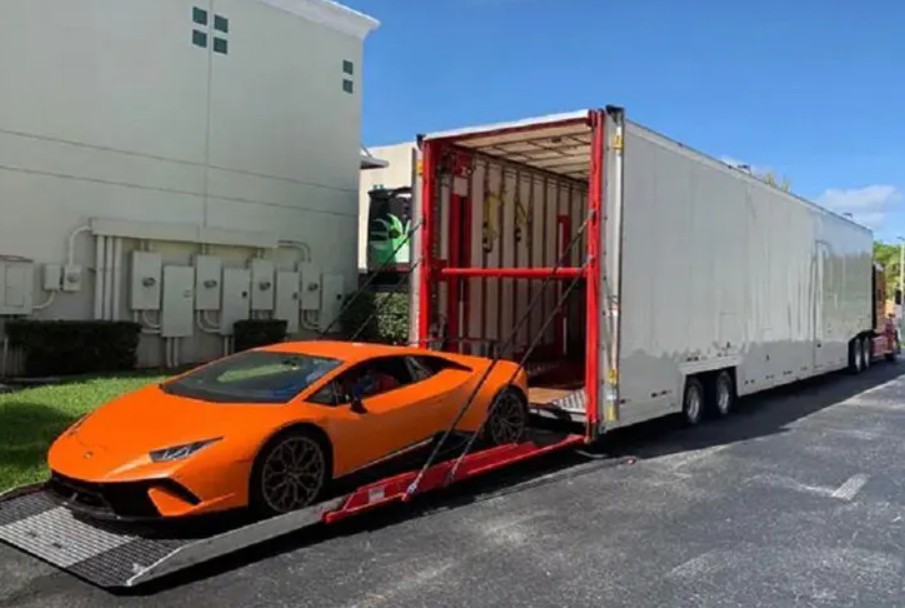
In 2025, with advanced tracking and digital inspections, the process of shipping a car is faster than ever—but only if your vehicle is “formatted” correctly for pickup.
Preparing Your Vehicle
Before the driver arrives, you must ensure your vehicle is in a “transfer-ready” state.
- Exterior Wash (Mandatory): A clean car isn’t for aesthetics; it’s for visibility. Dirt and road grime hide scratches and dents. If the driver cannot see the paint, they cannot accurately log the condition, which leaves you vulnerable in a damage claim.
- The 1/4 Tank Rule: Carriers face strict weight limits. Shipping a car with a full tank of gas adds unnecessary weight and risk. Keep your fuel at roughly 25%—enough for the driver to load/unload, but light enough for the trailer.
- Remove Personal Items: Most carriers are legally prohibited from transporting household goods inside a car. Remove your toll tags, GPS units, and loose change.
- Disable Alarms: If your car’s alarm triggers while the truck is hitting a bump at 70 mph, the driver may have to pull over to disconnect your battery. Save them the trouble—and save your battery—by disabling it.
Pickup Day
When the truck pulls up, the following “system messages” are essentially what is happening between you and the driver.
The Arrival: The driver will typically call you 2–4 hours before arrival to confirm the meeting point. If you live on a narrow street or in a gated community, you may need to meet at a nearby large parking lot to allow the 80-foot trailer to maneuver.
The Inspection: This is the most important 20 minutes of the process. You and the driver will walk around the car.
- The driver will mark any pre-existing “bugs” (chips, scratches, dents) on the Bill of Lading (BOL).
- Pro Tip: Take your own high-resolution photos of all four sides, the roof, and the odometer at this exact moment.
The Bill of Lading (BOL) Signing: Once the inspection is documented, you sign the BOL. This is your “source code” for the shipment. By signing, you are agreeing that the recorded condition is accurate.
Note: Do not let the driver rush this. If they missed a scratch, make sure it is noted before you sign the digital or paper tablet.
The Loading: The driver will now drive your car onto the ramps. If you chose Enclosed Transport, they will likely use a hydraulic lift-gate to keep the car level.
The Handover: You hand over the keys (and a spare if you have one). The driver secures the vehicle using high-strength “over-the-tire” straps. The script for pickup is now complete.
Documentation Checklist for 2025
Ensure you have these “headers” ready for the driver to scan or verify:
| Document/Item | Status | Why You Need It |
| Photo ID | Required | Verification of the authorized sender. |
| Vehicle Keys | Required | Includes fobs and any keys for locking trunks/boxes. |
| Bill of Lading | Crucial | This is your receipt and your insurance baseline. |
| Insurance Card | Recommended | While not always required, having it handy is best practice. |
Common “Mistakes” to Avoid
- Inoperable Vehicle : If your car doesn’t start and you didn’t book a “winch service,” the driver may not be able to load it. Always confirm the “run/drive” status during booking.
- Low Clearance : If your car has been lowered or has an aftermarket body kit, inform the broker early. Standard trailers might scrape the undercarriage.
- Contact Mismatch: If the person meeting the driver isn’t you, ensure the driver has their name and phone number programmed into the manifest.
Final Verification
Once the truck pulls away, the “data transfer” (transit) has begun. Most modern carriers in 2025 provide a GPS tracking link so you can watch the vehicle’s progress in real-time.