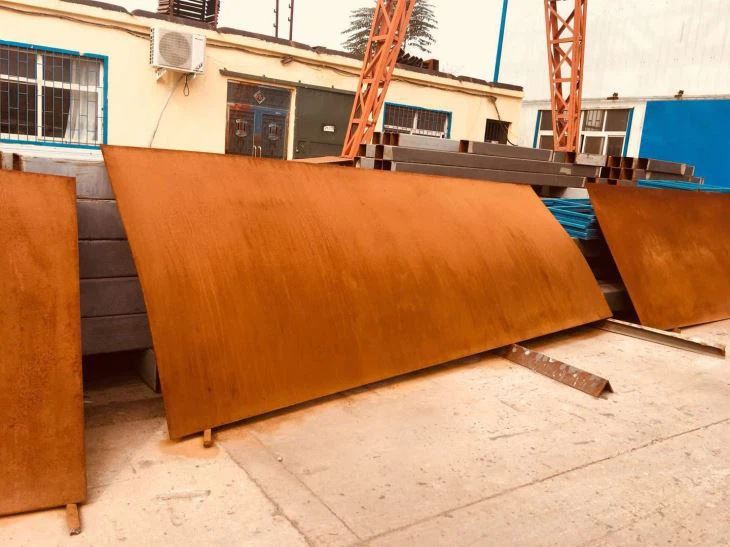
Architects and designers are increasingly turning to weathered steel as a deliberate material choice rather than a structural afterthought. Across building facades, urban installations, and landscape architecture, corten steel has earned a firm place in contemporary design language over the past two decades. Part of what drives this shift is the material’s ability to age with intention, developing a surface character that painted or coated metals cannot replicate. Corten A Steel Plates are at the centre of this movement, offering that distinctive oxidised patina that defines industrial naturalism as a design aesthetic. These decorative weathering steel plates combine raw visual appeal with genuine engineering performance, making them one of the more compelling options for architects working on exterior projects.
What Are Corten A Steel Plates?
Weathering steel is a family of steel alloys that are formulated to develop a stable, tightly adhering rust layer when exposed to the cycling of rain, humidity, and air. This grade of Corten A is one of the most traditional. It contains copper, chromium, nickel and phosphorus in concentrations above those of conventional structural steel, and it is these alloying additions that drive its corrosion resistance. Contact of moisture and oxygen with the surface leads to the formation of a compact oxide. Unlike the loose flaky rust that attacks ordinary carbon steel, this layer forms a physical barrier that slows down further oxidation to near-negligible rates after about 18 to 36 months of initial exposure. Corten A reaches a stable equilibrium where the alloying elements redistribute within the oxide, sealing micro-pores and blocking the ionic pathways that drive deeper corrosion.
Unique Features of Corten A Steel Plates
Corten A is recognizable from all other construction metals by its weathered surface finish. Each panel is unique in tone and texture and so large installations take on an organic rather than manufactured quality of natural variation. Corten A has an established record of atmospheric corrosion resistance in ASTM A242 and ASTM A588, where corrosion rates are 4 to 8 times lower than plain carbon steel in moderate atmospheres over a 20-year exposure period. Predictions of service life for sufficiently detailed Corten A installations regularly last over 80 years without protective coatings. The absence of paint, galvanising or sealant systems directly reduces maintenance requirements, removing a high recurring cost from the project lifecycle.
Top Reasons Architects Prefer Corten A Steel Plates
Attractive Rustic Aesthetic
Very few materials have a warm, earthy finish from purely natural processes. The Corten A palette, with its amber to deep brown tones, is perfectly suited for contemporary architecture, contrasting industrial geometry with an organic surface texture. This is one of the reasons why designers of cultural buildings and residential facades in urban renewal projects specify corten steel sheets.
Excellent Weather Resistance
If there is mechanical damage the protective oxide layer reforms so the material handles real world outdoor conditions with no intervention. Reliable installations are found in humid coastal areas, at high altitudes and in continental climates with large temperature variations. The steel is dimensionally stable and will not delaminate on the surface when exposed to wind driven rain, freeze-thaw cycling, and UV.
Low Maintenance Costs
A standard painted steel facade requires repainting every 7 to 15 years, depending on the climate. Corten A requires none. Over a 40-year building lifespan, this reduces maintenance expenditure substantially, particularly on large-area cladding or bridge projects where scaffolding and access costs alone run high.
High Strength and Durability
Corten A has a minimum yield strength of 345 MPa which puts it in the same band of structural performance as common structural grades. Architects designing heavy facade systems, pedestrian bridges, retaining walls and canopy structures may specify Corten A without down-sizing sections. Offers structural performance and corrosion resistance with no need for a separate protection system.
Eco-Friendly and Sustainable Material
The recycling rate for steel is greater than 85% in most markets and Corten A plates are 100% recyclable at the end of life. No paint, zinc coatings or chemical treatments so no coating waste streams during construction or demolition. Extending the service life beyond 80 years reduces the frequency of material replacement and the associated embodied carbon.
Versatile Design Applications
Corten A is versatile for many fabrication forms. Architects specify it for building facades, rainscreen cladding panels, pedestrian and vehicle bridges, free standing sculptures, garden retaining walls and planters, landscape architecture features and exterior furniture. The sheets range in thickness from 1.5 mm to more than 50 mm, from light-weight screen panels to load-bearing structural members.
Common Applications of Architectural Corten Steel
- Building facades: Corten cladding panels provide a uniform exterior skin that ages uniformly, giving large buildings a unified and changing personality.
- Garden structures: Retaining walls, raised planter beds, and garden edging in Corten A integrate naturally with planted landscapes as the patina deepens.
- Exterior wall panels: Flat and profiled panels suit both new construction and retrofit projects where a distinctive surface finish is a design requirement.
- Roofing systems: Standing-seam Corten A roofing performs in temperate and continental climates, eliminating the maintenance schedule of coated metal roofing.
- Public art installations: Sculptors favour Corten A because the material changes visually with the seasons and grows more characterful with age.
- Urban landscaping projects: Street furniture, water features, bollards, pathway edging. Corten A blend of industrial precision and the natural palette of outdoor environments.
Benefits of Using Corten Steel Sheets in Outdoor Projects
Outdoor construction creates conditions that remove finish from most coated metals in less than a decade. Corten steel sheets resist this deterioration on a material level and not just a surface protection. In climates where the weather alternates between dry and wet, the oxide layer becomes denser with each wet-dry cycle. This makes it more protective in the first few years. UV radiation, which degrades polymer coatings and causes chalking in painted surfaces, has no measurable effect on the oxide layer of Corten A. A freshly cut panel begins as grey, transitions to orange and amber, and finally turns deep brown as it fully passivates, giving outdoor projects a dynamic quality that static finishes lack.
Important Considerations Before Using Corten A Steel Plates
Proper detailing will prevent the most common problems with weathering steel. The first passivation period sees the steel shed rust-coloured run-off, which stains adjacent concrete, stone and masonry. Drainage geometry should be such that this run-off is directed away from surfaces where staining is not acceptable. Water that pools on flat surfaces can slow the dry cycle and can cause localized pitting rather than a uniform oxide formation. Welding Corten A requires low-hydrogen processes and compatible weathering steel filler metals to maintain corrosion resistance at the joints. The normal consumables for mild steel leave weld zones that rust at different rates, causing visible striping on the finished surface. Corten A is also best suited to industrial and semi-rural atmospheres. Environments with chloride deposition rates in excess of approximately 0.1 mg/cm2/day, such as marine splash zones, require an assessment of the exposure on site before specification.
Conclusion
Corten A steel plates combine structural performance, corrosion resistance and a surface character that no factory applied finish can match. The material combines durability, sustainability and visual distinctiveness in a single specification for architects designing buildings, bridges and public spaces that are built to last for generations. Architectural corten steel weathers in a predictable manner, requires virtually no maintenance during its service life, and becomes more compelling with age. Those qualities explain why it is such a key part of today’s architectural material palettes. Suppliers such as Rexton Steel & Alloys can provide the plate quality and dimensional consistency that large-scale fabrication demands, working with corten grades to industrial standards. For any project where the exterior envelope has to function uncompromised for decades, Corten A is still one of the strongest materials available.