Our muscles naturally get weak as we age. Wear and tear impacts the body, including knees, hips, back and other body parts. Keeping a regimen of strength training is essential to counter these effects.
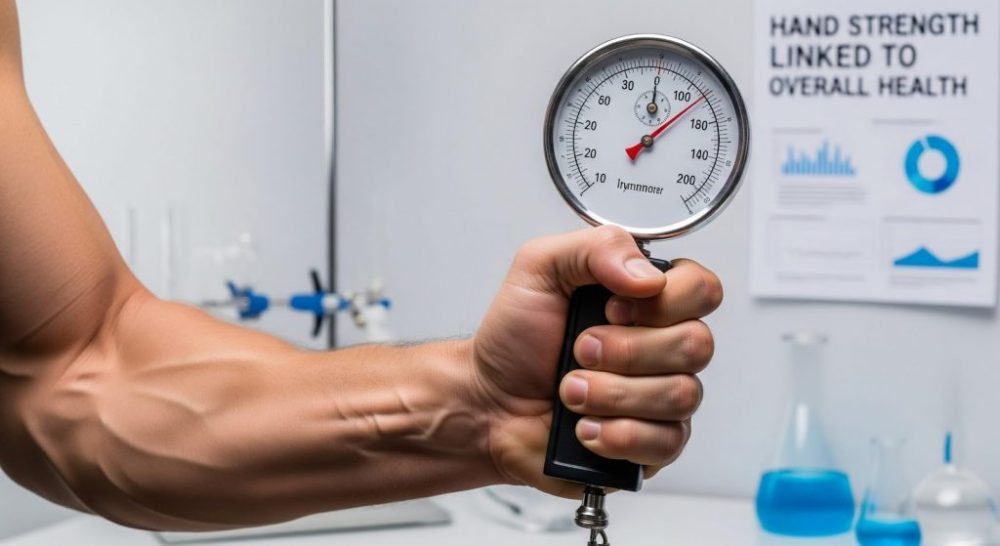
Our grip strength is a huge indication of our overall health. Our grip strength is more important than you can think because it is not just about a strong handshake and opening a pickle jar.
The strength you hold in your hands, wrists, and forearms says a lot about how healthy your body is. It is an indication of your risk for injury, mental health conditions and more.
How is Grip Strength Related to Health?
A hand dynamometer is a device used to measure grip strength. It is understood that a higher grip strength is associated with better health. A lower strength can be an indication of poorer health. The actual cutoffs are still up for debate and differ based on age, BMI and other factors.
Some researchers define weak grip strength as:
- Less than 26 kg for men, that is 57 pounds
- Less than 16 kg for women, that is 35 pounds
Until you begin to lose strength in your hands, you probably never really think about how essential it is.
Does Grip Strength Affect Daily Activities?
Grip strength significantly affects daily activities and is a crucial indicator of overall, long-term health. A strong grip enables tasks like opening jars, carrying groceries, and lifting objects, while weak grip strength is linked to reduced mobility, increased fall risk, and loss of independence. Here is how grip strength impacts daily activities:
- Grip strength is essential for routine, dexterity-dependent tasks such as buttoning shirts, using tools, and turning doorknobs.
- It is a marker of ageing. It acts as a predictor of, and is often used to assess, functional limitations and frailty in older adults.
- A stronger grip is associated with higher bone density, better nutrition, and, in some cases, lower risk of chronic diseases such as heart disease, diabetes, and even dementia.
- It correlates with walking speed and the ability to climb stairs.
Now, how can you improve your grip strength?
Tips to Improve Grip Strength
Here are many techniques to improve grip strength, and we are going to discover some:
Tennis Ball Squeeze
It is an effective, accessible exercise to enhance grip strength, forearm endurance, and finger strength. It is performed by holding a tennis ball in the palm, squeezing firmly for 5 seconds while keeping the elbow bent, and releasing. Perform 3 sets of 10 repetitions per hand, 5-10 times daily for optimal results.
Towel Wringing
It is an effective, accessible exercise for building crush grip, forearm, and finger strength using a simple hand towel. By twisting a wet or dry towel in opposite directions, it engages muscles crucial for everyday, functional grip. Perform 2 sets of 10 repetitions, twisting in both directions daily for optimal results.
It specifically targets the muscles used for gripping and holding objects. It engages the muscles in the forearm that control finger movement.
Reverse Wrist Curls
Reverse wrist curls are an isolation exercise targeting the wrist extensors and forearm muscles to improve overall grip strength, stability, and wrist health. By strengthening the extensors, this movement balances against heavy flexor training (like crushing grips), reducing injury risk. They are best performed using a pronated (palm down) grip with dumbbells or a barbell, focusing on slow, controlled reps to maximise forearm development.
Farmer’s Carry
It is a highly effective, functional exercise for building, strengthening, and improving grip strength by requiring you to walk while holding heavy dumbbells or kettlebells. It engages the forearm, shoulder, back, and core muscles, with recommended goals for longevity, such as carrying body weight for 120 seconds for men or 75% body weight for 90 seconds for women.
Plate Pinch
It is an effective, classic exercise for building intense grip strength, specifically targeting the thumb and fingers (pinch grip) and the forearms. It involves gripping two or more smooth-sided weight plates together with one hand and holding them for a time or walking with them.
Start with two 10 lb plates (or lighter) and increase weight to 25s, 35s, or 45s as strength develops. We recommend asking for help from professionals if you are a beginner to avoid injuries or other complications.
Look for a grip trainer and ask professional advice when proceeding for the first time. It is essential to have someone by your side when performing these exercises for the first time.