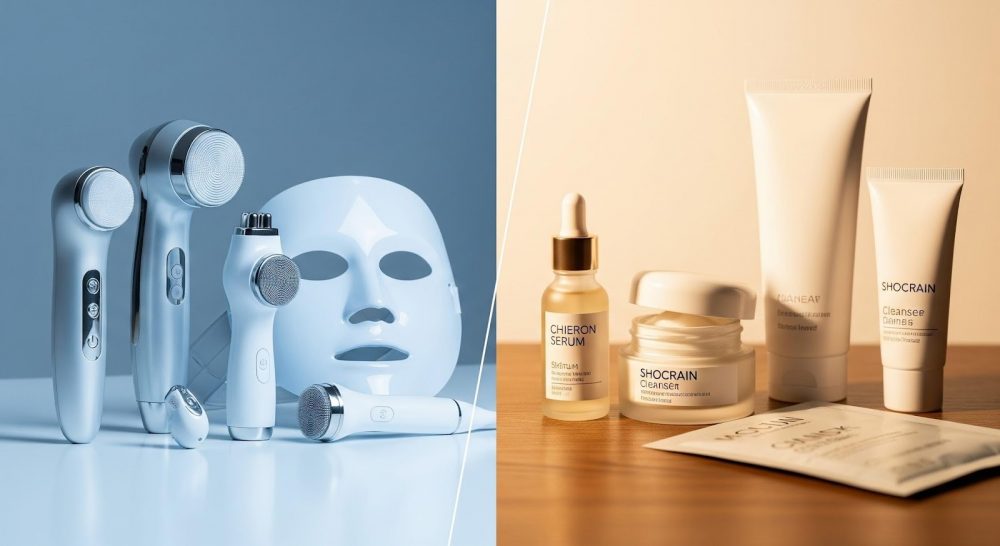
When it comes to deciding how to give your skin what it needs to shine, you’re left with two options: at-home skincare devices, or topical skincare products. Both will give you the results you need, but they work in very different ways and are better suited for different skin types. Your decision will depend on what kind of skin you have, what you want to achieve, how much you want to spend, and how much time you’re willing to put in.
Below, we’ve broken down the ways in which each option works, what they’re best for, and how to decide which one is right for you.
What Are At-Home Skincare Devices?
At-home skincare devices are tools that you use in the comfort of your own home, using technology to give your skin a boost rather than just using creams or serums. They include:
- LED light therapy devices
- Facial cleansing brushes
- Microcurrent devices
- Radiofrequency devices
- Microneedling stamps or rollers
- At-home laser or IPL devices
At-home skincare devices work through physical or energy-based principles, such as light, electricity, vibration, heat, or micro-injuries, to give your skin a boost. The benefits of using these devices may include increased circulation, increased collagen, gentle exfoliation, or deep cleansing.
What Are Topical Skincare Products?
Topical products function as formulations which contain specific preparation methods. The products include:
- Cleansers
- Toners
- Serums (e.g., vitamin C, hyaluronic acid)
- Retinoids
- Exfoliating acids (AHAs/BHAs)
- Moisturizers
- Sunscreens
Topicals deliver active ingredients directly to the surface and their compounds penetrate through the upper skin layers. The product performance depends on the quality of ingredients, their concentration, the product formulation, and the product needs to be used regularly.
Key Differences: Devices vs Products
Mechanism of Action
- Devices use various technologies to create skin effects like light, current, heat, and micro-injury. The devices operate by targeting structural alterations, blood flow, and stimulation pathways in the body.
- Products deliver chemical or biological actives which interact with skin receptors and enzymes and hydration pathways.
Timeline for Results
- Devices: Certain tools which include LEDs and microcurrent devices provide immediate results through skin tightening and facial illumination. The structural modifications through collagen enhancement require multiple weeks of regular product application.
- Topicals: Users will see results after several weeks of consistent use with retinoids and acids for skin texture and exfoliation. Sunscreen protects from skin damage.
Skill and Consistency
- Devices: The devices need operators to use them at correct times with proper methods. Users who handle the equipment improperly will experience skin irritation and physical harm.
- Products: Users need to apply the products consistently because the products provide simple usage instructions for application.
When Devices Work Better
Here’s what home devices can do for your skin:
- More than just surface care: LED, radiofrequency, and microcurrent technology penetrate skin cells more deeply than traditional products.
- Exfoliation upgrade: Cleansing brushes and sonic devices remove dirt more thoroughly than manual washing, allowing your skin to better absorb whatever product you use next.
- Boost collagen and radiance: Low-level light, microcurrent, and radiofrequency technology can firm and brighten your skin.
- Benefits without the ingredients: Devices provide an alternative route to benefits for those with sensitivities.
When Topicals Really Shine
Topicals are likely to shine through in the following scenarios:
1) Skin concerns that are active ingredient-based
To address issues such as skin tone, breakouts, aging, and dryness, it is essential to have the right ingredients, such as retinoids, vitamin C, AHAs/BHAs, niacinamide, and hyaluronic acid.
2) Daily protection and maintenance
Using sunscreen, antioxidants, and moisturizers on a daily basis helps to maintain the skin barrier in a healthy manner, and sunscreen provides unparalleled protection.
3) Sensitive skin or barrier damage
For sensitive skin, topical skincare products can provide hydration and relief without the dangers posed by devices.
4) Safe and steady progress with clear results
Topicals provide predictable side effects and an easy-to-follow regimen, whereas devices can be more damaging and difficult to handle.
Combined Approach: Devices + Topicals
The best results for most people come through strategic use of both methods.
- Cleansing or exfoliating devices help users to achieve better product absorption results.
- The combination of LED therapy and serum application makes your skin glow and repairs it.
- Daily treatment with active products and weekly device use enhances the treatment effects.
People can achieve effective results through combination methods when they understand their skin sensitivities, timing requirements, and skin tolerance levels.
Common Mistakes With Devices and Products
Mistakes With Devices
Users of high-intensity tools make the mistake of using these tools beyond their recommended limits.
Users of devices fail to follow usage guidelines and warning signs.
Users need expert assistance to operate devices that treat their current skin problems.
Mistakes With Topicals
- People who need sun protection skip using sunscreen.
- People who use multiple strong active ingredients together end up with negative results.
- Users stop following their skincare routine before achieving complete results.
Correct use and consistency matter more than brand names or price.
FAQs
1) Can devices completely replace topical skincare?
Not really. Devices and topical products serve different purposes. Sunscreen and certain ingredients are still necessary.
2. Are at-home devices safe for all skin types?
Yes, most are, when used properly. If you have sensitive or damaged skin, use it with care or consult a professional.
3) How often should I use skincare devices?
Depends on the device—some are for daily use, while others are for weekly use. Always follow the manufacturer’s guidelines.
4) Can I use devices and products on the same day?
Yes. Begin with cleansing, followed by device use, and finish with serums and moisturizers.
5) Do devices cause irritation?
Irritation may result from overuse, high settings, or improper device use. Start slow and see how your skin reacts.
6) Which shows results faster: devices or products?
Devices can show immediate results such as improved circulation and radiant skin, but long-term results come from regular use of either, or both.
Conclusion
Both at-home skincare devices and topical products have specific functions that offer different effects. The devices provide users with technological effects which penetrate deeper than the skin surface, while products supply users with specific biochemical advantages and daily protective benefits. The two options show similar value because they depend on your individual goals and skin characteristics together with your usage frequency.
To get the best results, use at-home devices wisely and in combination with effective topical products, such as those from Medicube. Sunscreen is a priority, and a gentle routine is essential. Adjust accordingly based on your skin’s actual needs. A balanced approach to using devices and products gives you results that are impossible to get from using either alone.