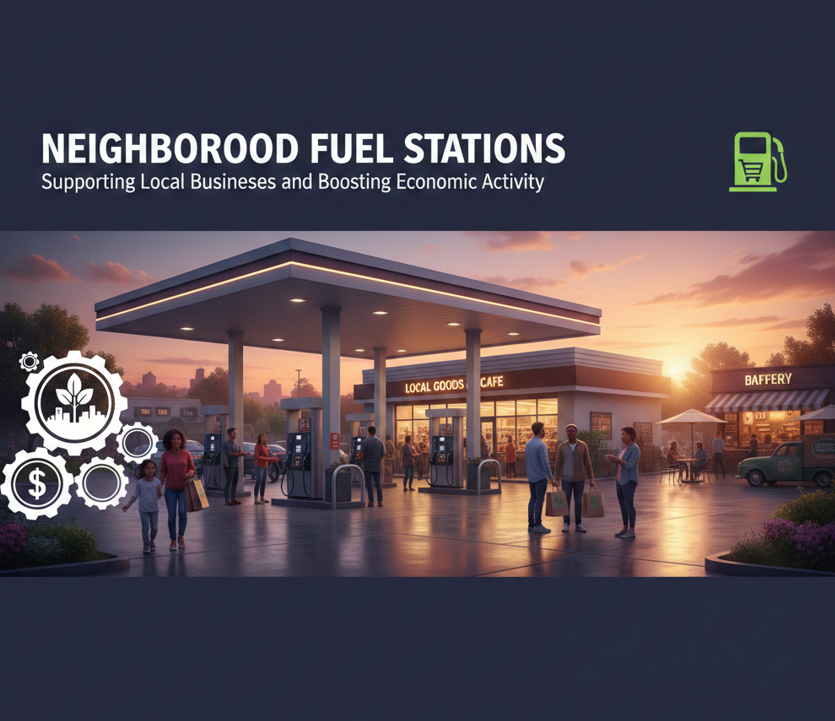
Neighbourhood fuel stations still play a powerful and often underestimated role in local economic life. Fuel stations are more than just a place to fill up the tank, these stations act as micro economic hubs, community connectors, and silent supporters of nearby businesses.
Fuel stations help locals for jobs, support local schools in events or programs. So, local commuters know their money isn’t going anywhere it is surrounding in the local community to support families or local businesses.
Let’s take a closer look at how fuel stations support local businesses and boost economic activity.
More Than a Pit Stop
Neighbourhood fuel stations are woven into the daily rhythm of a community. Localized fuel stations play a central part in local commuters’ lives. As the morning commuters are grabbing coffee, parents pick up snacks after school pickup. These small interactions keep steady foot traffic and that traffic fuels more than vehicles.
Fuel stations might be included with a small convenience store, kids play area,cafes, bakery shops restrooms all under one roof. The commuters walk into gas stations, visit nearby bakery stores or cafes, drop into the pharmacy or may come to just relax in open space.
Keeping Dollars In The Community
Many neighbourhood fuel stations might be independently owned or franchise operated by local families. While global brands like ExxonMobil, Chevron may supply the fuel, the business behind the counter is officially locally managed.
When customers prefer neighbourhood gas stations, they must think that wages are paid to local employees, profits are more likely to be reinvested nearby like in schools events or programmes, local service providers get work like plumbers, electrician.
Small Stores, Big Impact
Inside many neighbourhood stations, convenience stores are evolving. Instead of generic inventory alone some new features include locally baked goods, regional snack brands, fresh sandwiches made daily and community bulletin boards advertising local services.
These small retail ecosystems offer opportunities for local suppliers to distribute products without needing massive supermarket contracts. For small producers, that shelf space can be transformational.
Fueling Local Mobility=Fueling Local Commerce
Transportation underpins economic activity. Reliable access to fuel enables. Like Tradespeople to reach job sites, delivery services to reach efficiently, commuters to access employment, and emergency services to function without interruption.
When local stations thrive, mobility remains accessible, and convenient. Specifically in rural or suburban communities where alternatives may be limited.
A Gathering Place In Disguise
Fuel stations aren’t for fueling vehicles, but they also fuel people around. This place allows daily interaction with commuters, where new visitors can interact with local commuters about weather, or famous places to visit.
Economic impact isn’t always about scale. Sometimes it’s about the frequency of the consistent, everyday exchanges that keep local systems alive.
Adapting to a Changing Energy Landscape
As the industry involves, neighbourhood stations are adapting. Some are adding electric vehicle charges. Others are incorporating solar panels or diversifying into extended grocery offerings.
This transition shows resilience. Rather than disappearing, local stations are repositioning themselves as broader energy and convenience hubs, maintaining relevance while continuing to support community economies.
Final Thoughts
Neighbourhood gas stations are just like supportive friends. Who supports local businesses, offers sponsorship to local events or school events, and offers job opportunities for local commuters. This gradually increases trust among customers where they are safe, secure and knows their invested money isn’t going out, it’s being invested in good faith and for the betterment of local commuters.