Russian food doesn’t sell itself well.
Menus can look beige. Names don’t help. And first impressions are often wrong.
Many travelers arrive expecting heavy, joyless food meant only to survive winter. That’s not completely unfair—but it’s also incomplete. Russian food makes sense when you eat it where it belongs, in the right season, and at the right pace.
This guide comes from eating Russia the practical way. Cafés near metro stations. Small local restaurants. Long dinners that started quietly and ended with tea and stories.
If you’re planning Russia winter and snow tour packages, food will matter more than you expect. Cold weather changes how you eat—and how much you appreciate it.
How Eating in Russia Actually Works
Russian meals aren’t dramatic. They’re structured.
Soup first. Something filling next. Tea at the end.
Lunch is often the main meal. Dinner can be lighter, especially on weekdays. Cafés open early. Kitchens close earlier than in southern Europe.
This is where trips often go wrong: people expect late dinners and miss good food because they show up too late. Check kitchen hours. It matters here.
Soups: The Real Starting Point
Soup isn’t optional in Russia. It’s the foundation.
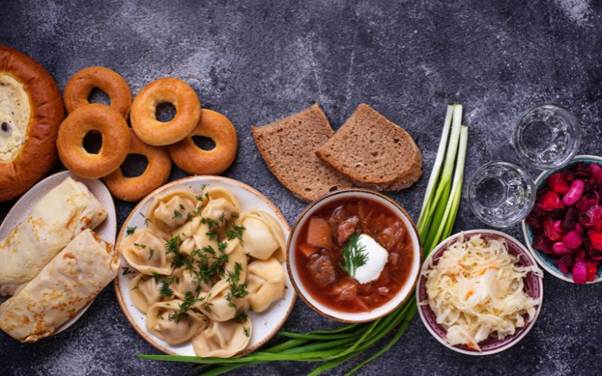
Borscht is the famous one. Beet-based, slightly sweet, usually served with sour cream. It’s better than it sounds.
But don’t stop there:
- Shchi (cabbage soup)
- Solyanka (rich, salty, with meat or fish)
Most people miss this: soups change by season. Winter versions are heavier. Summer soups can be cold and refreshing.
Skipping soup means skipping half the experience.
Dumplings and Dough-Based Comfort
Russia understands dough.
Pelmeni (meat dumplings) are the classic. Small. Simple. Served with butter, sour cream, or vinegar.
In cafés, they arrive fast. At home-style places, they arrive steaming and filling.
One personal note: ordering pelmeni after a long winter walk feels exactly right. This is food doing its job.
Also worth trying:
- Vareniki (often filled with potatoes or cheese)
- Blini (thin pancakes, not just for dessert)
Salads That Aren’t Really Salads
Russian “salads” confuse visitors.
They’re not leafy. They’re chopped, mixed, dressed, and filling.
Olivier salad shows up everywhere. Potatoes, eggs, pickles, peas, mayonnaise. It sounds odd. It works.
This is where trips often go wrong: people dismiss salads as side dishes. In Russia, they’re part of the main meal. Don’t skip them.
Main Dishes: Simple, Hearty, Honest
Russian mains aren’t flashy. They don’t need to be.
You’ll see:
- Cutlets (pan-fried meat patties)
- Stewed meats
- Buckwheat or potatoes as sides
In winter, portions grow. Fat content rises. That’s intentional.
If you’re visiting during colder months, especially on Russia winter and snow tour packages, lean into these dishes. Light meals don’t carry you far in Russian weather.
Eating in Cities vs. Smaller Towns
Food changes subtly depending on where you are.
In Moscow, variety is huge. You’ll find traditional food, modern takes, and cafés doing weekday lunch specials that locals actually eat.
In Saint Petersburg, food feels slightly more European. Presentation matters a bit more. Portions can feel lighter.
In smaller towns, menus shrink. Food gets simpler—and often better.
Travelers who eat only in trendy city spots miss this entirely.
Bread, Sour Cream, and the Table
Bread is always on the table. Often free.
Sour cream isn’t optional. It goes on soups, dumplings, pancakes, even some mains. Try it before judging.
One small warning: ordering too many sides adds up fast. Dishes are heavier than they look.
Desserts and Tea: The Real Ending
Desserts aren’t the focus. Tea is.
Meals end with black tea. Sometimes with lemon. Sometimes with jam instead of sugar.
Desserts are simple:
- Cakes
- Pastries
- Pancakes with jam or honey
Leaving right after eating feels rushed. Tea is part of the meal.
Eating as a Traveler: Practical Notes
English menus exist in big cities, but not everywhere. Pointing works.
Cash still helps in smaller places.
Service can feel reserved. It’s not unfriendly. It’s just not performative.
Common Food Mistakes Travelers Make
- Skipping soups
- Eating too late
- Expecting light meals in winter
- Dismissing traditional cafés
Eat earlier. Eat warmer. Trust simple food.
Final Thoughts
Russian food isn’t about excitement. It’s about purpose.
It warms you. Fills you. Slows you down.
Eat soups. Try dumplings. Sit for tea. Especially in winter.
If you approach food the way locals do, meals in Russia stop feeling confusing—and start feeling comforting.
FAQs
1. Is Russian food bland?
No. It’s subtle, not spicy.
2. Is vegetarian food available?
Limited but possible, especially soups and dumplings.
3. Do I need reservations?
Rarely, except for popular restaurants.
4. Is tipping expected?
Not required, but appreciated in restaurants.
5. Are portions large?
Yes, especially in winter.
6. What’s the biggest food mistake?
Skipping traditional dishes for international food.